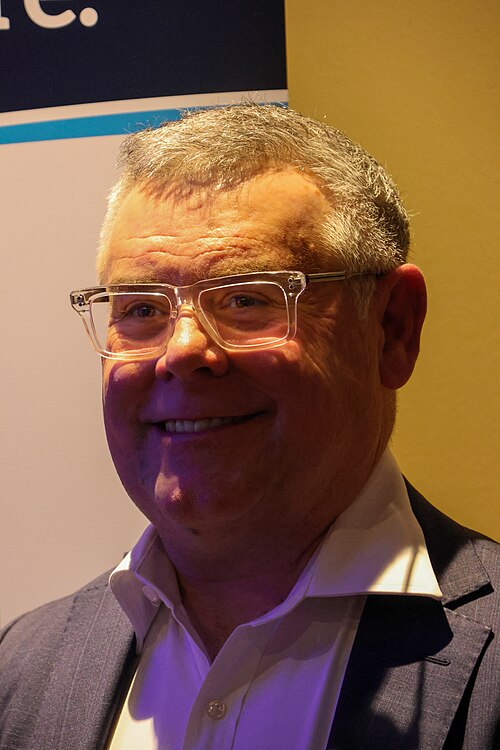
Murray Watt
Australian Labor Party Senator for QLD
Currently sitting
Photo: Yu Chu Chin, CC BY-SA 4.0, via Wikimedia Commons
Seat and party history (1)
- Australian Labor Party - QLD (Senate) - 1 Jul 2016 to present
- Seat and party records: OpenAustralia member data.
Contact
Office: (07) 5531 1033
Suite 29.07, Level 29, 1 Eagle Street, Brisbane QLD 4000
Office details: Parliament of Australia, CC BY-NC-ND 4.0.
Contact details on aph.gov.au Profile on OpenAustraliaThese counts cover what is on this site only. They do not measure electorate work or committee work.
Compared with other members
Murray Watt compared with all 76 sitting senators.
Questions asked in Question Time
Lower than 87% of senators- This member
- 0
- Average
- 10.4
- Median
- 10
Debates spoken in
Lower than 53% of senators- This member
- 38
- Average
- 44.8
- Median
- 40
Votes cast
Lower than 87% of senators- This member
- 442
- Average
- 743.0
- Median
- 730
Share of divisions voted in
Lower than 89% of senators- This member
- 39%
- Average
- 69%
- Median
- 69%
Read these with care
- The median is the middle member: half did more, half did less. It is less affected by a few very active members than the average.
- Ministers answer questions rather than ask them, and the presiding officers rarely vote, so their patterns differ.
- Government backbenchers are often given arranged "Dorothy Dixer" questions, which raises their question counts.
- Votes only record ayes and noes, so a missed vote cannot be told apart from a pair (an agreed absence).
- Counts cover only what is on this site, and do not measure electorate or committee work. New members have less history.
Question Time
No questions recorded for this member.
Question from Larissa Waters
The senator asked why the government was adopting strict enforcement measures similar to US ICE squads and why it was not working with the Greens to prioritize family reunion and humanitarian obligations.
Background: The Immigration Minister announced plans to return to Abbott-era policies, including new detention centers and compliance officers to enforce visa conditions.
Answer from Murray Watt
The minister dismissed the comparison to ICE as predictable political maneuvering. He stated that the government's policy ensures those without valid visas do not remain in Australia, noting that previous changes diverted resources to criminal deportations rather than visa overstayers. In response to supplementary questions about bridging visas, he argued that some visa holders abuse the system by hopping between visas, undermining public confidence. He rejected the suggestion that the government's policy was influenced by One Nation, citing significant differences in migration numbers, and emphasized maintaining social harmony and a sustainable migration system.
Question from Tyron Whitten
The senator asked why the government insisted on a higher immigration rate than other developed nations and how it reconciled its stance with Canada's economic performance under negative migration.
Background: One Nation argued that Australia's targeted migration rate of 0.8 per cent is too high compared to the developed world average of 0.37 per cent.
Answer from Murray Watt
The minister cited Bureau of Statistics data showing a 47 per cent reduction in net overseas migration due to government reforms. He argued that while numbers need to be sustainable, drastic cuts would crush the economy and remove essential workers from hospitals, aged care, and agriculture. In response to supplementary questions, he noted that Canada experienced a recession after cutting migration, contrasting this with Australia's need to balance migration with economic stability. He dismissed One Nation's policies as reckless and aligned with US political trends.
Question from Carol Brown
The senator asked what policies the government had implemented to get wages moving again and how changes to workplace laws facilitated these rises.
Background: Australians face cost-of-living pressures, and the government has implemented policies to boost wages.
Answer from Murray Watt
The minister highlighted that wages have grown above three per cent for 16 consecutive quarters under the government, compared to zero quarters under the previous administration. He noted that from 1 July, minimum-wage workers received a real increase of at least 4.75 per cent. He attributed this to government advocacy at the Fair Work Commission and enterprise bargaining. In response to supplementary questions, he criticized the opposition and One Nation for opposing wage rises and described their internal conflicts as a 'soap opera', asserting that the government remains focused on supporting workers.
Question from David Shoebridge
The senator asked why the government chose to align with right-wing parties on migration rather than supporting multicultural Australia. In supplementary questions, he asked if the government intended to treat migrants as economic levers given the rise in temporary visas and slowdown in permanent family visas, and whether the government would take responsibility for failing to address material needs that allowed scapegoating of migrants.
Background: The government is preparing migration changes amid criticism of offshore processing and visa delays.
Answer from Murray Watt
The minister rejected the comparison to One Nation, arguing the previous migration system was broken and unsustainable with net overseas migration exceeding half a million annually. He stated the government is implementing calm, considered reforms to balance workforce needs with family reunion at sustainable levels. He accused the Greens of blocking public housing construction in the past and lacking self-awareness regarding the housing crisis.
Question from Steph Hodgins-May
The senator asked why the government had not mandated a national packaging scheme to address plastic waste, despite industry and environmental groups calling for it.
Background: The Greens accused the government of walking away from promised national packaging reforms, citing previous concessions that voluntary targets were ineffective.
Answer from Murray Watt
The minister highlighted the government's investment of over $200 million in more than 70 new recycling facilities, including plastic recycling sites. He stated that the government intended to propose reforms for greater harmonisation of packaging rules at the upcoming Environment Ministers' Meeting. The minister criticized the Greens for their inconsistent stance on native forests and asserted that the government was actively increasing recycling capacity by over 1.3 million tonnes annually.
Question from Jacqui Lambie
The senator asked what additional annual funding the AFP would need for AUKUS security from 2027-28 to 2035-36 and how much would be met by the defence budget.
Background: The AFP was tasked with providing security for the AUKUS submarine program, with $199.1 million allocated for 2026-27 and 2027-28.
Answer from Murray Watt
The minister stated that the budget had made provision for the protective service framework across the budget years and that the AFP was not using contractors for this role. He confirmed that $199.1 million was assigned in the 2025-26 budget to deliver 199 protective force officers and 245 additional staffing levels at HMAS Stirling. The minister noted that the AFP headcount had increased by about 435 between June of the previous year and June of the current year, and he offered to provide further information if available.
Question from Sean Bell
The senator asked whether the government would adopt One Nation's policy to end visa hopping and refuse student visas for low-quality courses.
Background: One Nation proposed stopping visa hopping and low-quality student courses, citing support from economic expert Professor Robert Breunig.
Answer from Murray Watt
The minister stated that the government was considering changes to the migration system but would not adopt One Nation's policies, arguing they would cause a recession and staff shortages in hospitals and aged care. He noted that net overseas migration had fallen by 45 per cent in the previous four years. The minister emphasized that the government's approach aimed to balance migration reduction with economic needs, rejecting suggestions that would harm the economy or turn Australians against each other.
Question from Marielle Smith
The senator asked the minister to outline the impact of government policies on trade apprenticeship completions and commencements.
Background: New national apprenticeship data showed increases in trade apprenticeship completions and commencements, particularly in housing construction.
Answer from Murray Watt
The minister reported that trade apprenticeship completions rose by 10 per cent, marking the strongest outcome in ten years, and commencements increased by 2 per cent year-on-year. He highlighted significant jumps in electrical (19 per cent), carpentry and joinery (10 per cent), and plumbing (5 per cent) commencements. The minister noted a 15 per cent increase in school student commencements and increases in women entering construction and electrotechnology trades, attributing these results to targeted government incentives.
Question from Fatima Payman
The member asked what work had been done consulting stakeholders on the fair work court proposal. She also asked if the government was open to allowing unions to initiate proceedings on behalf of members and when legislation would be introduced.
Background: The government announced it would establish a fair work court to resolve workplace disputes, including wage theft, following a Senate inquiry.
Answer from Murray Watt
The minister stated that the government is seeking input regarding the structure and main characteristics of the planned tribunal to enhance dispute resolution for vulnerable workers. He noted that no decision had yet been made specifically on incorporating union standing, but it would be part of the consultation. He expressed confidence that Minister Rishworth would progress the legislation quickly, highlighting that low-paid workers are currently shut out of the legal system. He criticized opposition parties for previously voting against criminalizing wage theft.
Question from Helen Polley
The member asked how the government is delivering change through greater access to TAFE. She requested an update on free TAFE figures and asked about programs to keep workers in industries like early childhood education.
Background: National TAFE Day was being celebrated, recognizing the role of TAFE in training workers.
Answer from Murray Watt
The minister reported over 850,000 free TAFE enrolments, including 236,000 in care sector courses and 78,000 in construction. He noted that course completions had grown to over 275,000. Regarding retention, he highlighted the Key Apprenticeship Program, which encourages apprentices to complete their training in housing construction. He criticized the coalition for opposing free TAFE and suggested they could benefit from retraining.
Question from Varun Ghosh
The senator asked for details on the latest labour force figures, specifically regarding unemployment rates and participation. He followed up by asking how the government is supporting workers facing cost-of-living pressures and what measures are in place to support women in the workforce.
Background: New Australian Bureau of Statistics labour force data was released.
Answer from Murray Watt
The minister reported that the labour market remains resilient, with over 1.3 million jobs added since the election. He noted that while employment decreased by 15,800 in July, there was a net increase of over 190,000 jobs over the year, with full-time employment reaching a record 10.2 million. The unemployment rate remained low by historical standards, and the underemployment rate fell slightly. He highlighted that annual nominal wages have grown above three per cent for four years. Regarding cost-of-living pressures, he cited higher wages and tax cuts. On women's workforce participation, he mentioned tackling the gender pay gap through minimum wage rises, expanded paid parental leave with superannuation, and wage boosts in care sectors.
Question from Tyron Whitten
The senator asked how many cases involving child sex offenders the Home Affairs Minister had intervened in to prevent visa retention. He followed up by asking about specific actions taken regarding a Federal Court decision overturning a cancellation and whether the government would strengthen ministerial directives to the tribunal.
Background: Reports indicated that the Administrative Appeals Tribunal had set aside visa cancellations for individuals with serious criminal records.
Answer from Murray Watt
The minister stated he did not have precise numbers but confirmed that the government takes strong action to cancel visas for serious offenders. He explained that when the tribunal sets aside a cancellation, the matter returns to the minister for reconsideration, and in many cases, the visa is cancelled again. Regarding the specific Federal Court case, he confirmed it was being examined and that appropriate action would be taken. He noted that the government had already strengthened ministerial directions to the tribunal in its first term and reminded the senator that One Nation had previously voted against legislation to deport hate preachers.
Question from David Pocock
The senator asked how long the bird flu risk list had existed and challenged the government's commitment to preventing extinctions given alleged nine per cent real-term cuts to on-ground nature programs.
Background: A risk assessment document identified nearly 380 species at high to extreme risk from H5 bird flu, with conservation groups claiming budget cuts undermined preparedness.
Answer from Murray Watt
The minister rejected claims of funding cuts, highlighting extensions to the Saving Native Species program and Natural Heritage Trust funding. He noted that $47 million of the $113 million bird flu preparedness budget was allocated to wildlife resilience. He stated the government had an open mind on further funding but defended investments in manufacturing and jobs.
Question from Marielle Smith
The senator asked the minister to provide details on the wage growth data and outline the factors contributing to the increase in Australian workers' wages.
Background: New ABS data showed real wages grew in the June quarter, with annual nominal wages growing above three per cent for the fourth consecutive year.
Answer from Murray Watt
The minister attributed wage growth to the government's workplace laws and cost-of-living relief, including tax cuts for 14 million taxpayers and pay boosts for 2.8 million minimum wage workers. He emphasized that higher productivity was key to long-term wage growth and criticized the opposition for historically opposing wage increases.
Question from Glenn Sterle
The senator asked how the government is backing wage rises to support workers. He asked for details on other measures to help Australians keep more of their earnings and what obstacles stand in the way.
Background: The question sought to highlight government actions supporting wage rises and cost-of-living relief for workers.
Answer from Murray Watt
The minister cited strong wage growth, including a 4.75 per cent increase in the national minimum wage affecting 2.7 million workers. He highlighted tax cuts, cheaper medicines, and housing funding as additional supports. He identified the opposition and One Nation as obstacles, accusing them of opposing wage increases, penalty rates, and superannuation contributions. He characterized the opposition's agenda as determined to cut wages and cost-of-living relief.
Question from Penny Allman-Payne
The member asked what specific actions the department had taken to implement Commonwealth Ombudsman recommendations and prevent further misconduct by private employment services providers. She questioned why the department had failed to carry out an independent assessment to establish the precise count of people affected by the Targeted Compliance Framework dysfunction.
Background: The Department of Employment and Workplace Relations announced the resumption of welfare payment cancellations and suspensions from October, following a two-year suspension due to unlawful breaches by private providers.
Answer from Murray Watt
The minister emphasized the government's support for mutual obligation, stating that those out of work have an obligation to seek employment. He noted that a review of the Targeted Compliance Framework had been initiated by Deloitte during his previous tenure as minister, and the department was implementing those recommendations. He stated that the government did not support unlawful deprivation of social security payments and that the department had undertaken significant work to address findings from the Ombudsman. The minister confirmed that funding had been provided to introduce additional safeguards to ensure individual circumstances are considered before compliance decisions are applied.
Question from Sean Bell
The member asked why the government continued to accept migration from countries deemed too dangerous for Australians to visit. He cited specific countries like Afghanistan, Iran, and Syria, and asked why the government did not adopt One Nation's security test for migration.
Background: One Nation called for stopping migration from countries where DFAT advises against travel due to terrorism, crime, or unrest.
Answer from Murray Watt
The minister stated that migration policies are based on security agency advice and involve strong vetting processes. He criticized One Nation for selectively applying restrictions and copying policies from other parts of the world, suggesting their approach was divisive rather than protective. He noted that the previous restriction on Iranian visas was an immediate response to specific events, not a blanket ban. The minister affirmed that the Labor government would not take policy advice from One Nation, contrasting their approach with the government's focus on protecting Australians while encouraging beneficial migration.
Question from Tony Sheldon
The member asked the minister to outline how many changes would benefit gig workers and how the government was providing stronger protections for workers beyond the gig economy. He sought details on threats to the worker safety net.
Background: New minimum workplace standards for gig economy workers came into effect, including a safety net wage.
Answer from Murray Watt
The minister stated that gig economy workers, such as food delivery drivers, would now receive a guaranteed minimum wage of $32 an hour, as determined by the Fair Work Commission. He highlighted that these world-leading laws closed loopholes that previously left workers without fair pay or sick leave. The minister emphasized that the government was pro-worker and pro-superannuation, contrasting this with the opposition's stance. He listed other protections including enshrining penalty rates in law, closing the gender pay gap, and ensuring equal pay for equal work, arguing that the opposition and One Nation posed a threat to these gains.
Question from Peter Whish-Wilson
The member asked if the minister could confirm receiving over 70,000 submissions opposing the project and what he would say to Australians concerned about marine life.
Background: The Western Australian EPA had previously recommended against the Woodside gas project due to environmental concerns, and new science links emissions to coral deaths.
Answer from Murray Watt
The minister acknowledged the controversy and confirmed that the number of submissions was roughly in the order of 70,000. He stated that the decision would be made in accordance with the EPBC Act, focusing on whether the project significantly impacts matters of national environmental significance. He noted that an additional matter of national environmental significance was being considered and that a public announcement would follow the decision.
Question from Pauline Hanson
The member asked why the government was interfering in land purchases to turn farmland into carbon credits, risking national food security, and whether a conflict of interest existed regarding the Clean Energy Finance Corporation chair.
Background: The government approved the sale of Rushy Lagoon to foreign owners for conversion to forest for carbon credits, with Clean Energy Finance Corporation funding.
Answer from Murray Watt; Tim Ayres
Minister Watt initially deferred to the Treasurer or Climate Change Minister. Minister Ayres then responded, stating the land is classified as Class 5 and 6, not prime agricultural land, and that both agriculture and forestry will continue. He confirmed that Steven Skala recused himself from the Foreign Investment Review Board decision. He noted the project would create around 190 jobs and that the land was previously targeted for forestry by the Liberal government.
Question from Josh Dolega
The member asked how important the government's position on boosting wages was to improving Australians' lives and how unity in policy provided certainty.
Background: New ABS data showed an increase in average weekly earnings.
Answer from Murray Watt
The minister cited ABS data showing average weekly full-time earnings had increased by more than $300 since the government was elected, with an annualized growth of 4.2 per cent versus 2.5 per cent under the previous government. He noted the gender pay gap had fallen to 11.3 per cent. He emphasized the government's unity on raising wages and tax cuts, contrasting it with opposition disunity.
Question from Pauline Hanson
The senator asked why the government would not make safety the top priority by stopping charged terrorists from being released on bail. She questioned the government's inaction on addressing the return of ISIS brides and fighters.
Background: The question referenced the bail granted to Rayann El Houli, an Islamic State bride accused of indoctrinating her children, and proposed legislation on temporary exclusion orders.
Answer from Murray Watt
The minister stated that the government does not intervene in independent court decisions regarding bail. He argued that the proposed temporary exclusion orders bill was likely unconstitutional and would be struck down by the High Court, thereby increasing risk. He noted that current laws already take steps to the maximum constitutional limit. He accused One Nation of voting against laws to deport hate preachers and of being dishonest about their support for battlers, citing their votes against wage rises and housing measures.
Question from Karen Grogan
The senator asked the minister to outline the latest wage increases for workers in care industries and how these measures help narrow the gender pay gap. She sought an explanation of barriers to further wage increases.
Background: The question highlighted the government's wage increases for care industry workers and the impact on the gender pay gap.
Answer from Murray Watt
The minister stated that aged-care workers have received five wage increases since 2022, with registered nurses seeing pay rise by up to $36,000 per year and enrolled nurses by almost $32,000. He noted that the gender pay gap has reached its lowest recorded level, with women earning more than $250 a week more than before the government took office. He argued that the only barrier to further wage rises is a potential Liberal-One Nation coalition government, citing opposition comments questioning the necessity of pay rises for care workers.
Question from Josh Dolega
The member asked how the government's support ensured workers would earn more and how enterprise agreements were contributing to wage growth.
Background: The member noted that cost-of-living measures, including wage rises, came into effect on 1 July.
Answer from Murray Watt
The minister stated that millions of workers saw their real wages rise by a minimum of 4.75 per cent. He provided examples: personal care workers gained $59 per week, registered nurses $86, and enrolled nurses $67. He noted that the government had advocated for pay rises for five consecutive years. Regarding enterprise agreements, he cited ABS data showing 3.2 per cent annual private sector wage growth and 4.1 per cent increases in newly approved agreements. He contrasted this with the previous government's suppression of enterprise bargaining.
Question from Pauline Hanson
The member asked why the government imposed new regulations on farmers but not on wind turbines in rainforests. She further asked when the minister would acknowledge double standards in the government's approach to agriculture, citing destruction of native vegetation for wind turbines.
Background: The senator criticized the government's EPBC reforms for removing the continuous use exemption for vegetation, arguing it imposed double standards on farmers compared to wind turbines.
Answer from Murray Watt
The minister stated that the reforms levelled the playing field by requiring farmers to comply with the same rules as other sectors, including renewables and mining developers. He argued that the previous exemption was removed to ensure consistent standards. He emphasized that the regulations were necessary to protect the Great Barrier Reef, which supported 77,000 jobs and generated $9 billion in economic turnover. He dismissed the claim of double standards, stating that all industries proposing projects with significant environmental impacts were required to undergo federal assessment.
Question from Larissa Waters
The member asked if the minister would commit to properly assessing the climate impacts of the Browse gas project on the Great Barrier Reef, citing evidence that emissions would contribute to coral bleaching. She questioned whether the government would protect the reef or approve more fossil fuel projects.
Background: Woodside's proposed Browse gas project was under assessment, with critics citing its potential to release 1.6 billion tonnes of carbon pollution and harm the Great Barrier Reef.
Answer from Murray Watt
The minister stated that the project was currently under assessment under the EPBC Act and Western Australian law, with a final decision pending regulatory advice. He noted that it would be inappropriate to comment further before a decision was made. He emphasised that the government assesses projects on their merits and has approved over 140 renewable energy projects. He also mentioned that the government was presenting evidence to the World Heritage Committee to demonstrate the reef is well-managed.
Question from Josh Dolega
The member asked for an update on free TAFE enrolments and their impact on the economy. He also asked about other programs supporting skilled workers in housing construction and the care sector.
Background: The government's free TAFE program had seen significant enrolments, particularly in construction and care sectors.
Answer from Murray Watt
The minister reported 742,000 free TAFE enrolments in three years, with over 58,000 in construction courses. He highlighted the Key Apprenticeship Program, which provided $10,000 incentives for new apprentices in housing construction, resulting in 29,000 starts since July 2025. He noted that care sector courses represented one in four enrolments, with over 60 per cent of enrolments being women. He criticised the opposition for voting against these programs.
Question from Jana Stewart
The senator asked how the government's position on boosting wages was helping workers in the health sector. She also asked about strategies to attract more workers to the healthcare industry given an ageing population.
Background: The government advocated for wage rises and tax cuts to address cost-of-living pressures.
Answer from Murray Watt
The minister stated that the Fair Work Commission increased the minimum wage by at least 4.75 per cent from 1 July. He cited analysis showing allied health workers gained between $8,000 and $13,000 annually, with further gains from multi-employer bargaining and gender undervaluation reforms. He contrasted this with One Nation's policies, which he claimed would make workers significantly worse off, and criticised the Liberal Party's alignment with One Nation.
Question from Tony Sheldon
The member asked how the wage review decision would provide cost-of-living relief for workers. He also sought details on the importance and support for the recent pay rise extension for early childhood educators.
Background: The Fair Work Commission had released its 2026 annual wage review decision, and the government had announced funding for early childhood educator pay rises.
Answer from Murray Watt
The minister stated that the Fair Work Commission raised modern award pay by 4.75 per cent and the national minimum wage by six per cent starting 1 July, marking the fifth consecutive real wage increase under the government. He noted that the minimum wage would rise above $1,000 per week, representing a $12,079 annual increase since the government took office. Regarding early childhood educators, the minister highlighted a $3.6 billion investment providing a $255 weekly pay rise, aimed at helping educators stay in the sector and reducing costs for parents.
Question from Sarah Hanson-Young
The member asked whether the government would support a $200 million two-year boost for wildlife resilience and habitat protection. She sought information on modelling regarding the impact on native species and when a moratorium on habitat clearing would be implemented.
Background: Australia confirmed its first cases of H5N1 bird flu, raising concerns about impacts on endangered wildlife and agriculture.
Answer from Murray Watt
The minister stated that the government had already invested $113 million in preparedness efforts, including $11 million in the current budget, based on susceptibility analyses of at-risk species. He noted that only two cases had been confirmed and that the government was treating the matter seriously. Regarding habitat clearing, the minister referenced recent environmental law reform legislation supported by the Greens, which included protections for threatened species. He declined to implement a moratorium, citing the existing legislative framework.
Question from Tony Sheldon
The member asked the minister to outline how the budget would deliver better outcomes for workers, particularly regarding wages growth. He further asked how the government was helping younger workers earn more and why parliamentary support for these measures was important.
Background: The member asked how the budget would deliver better outcomes for workers, citing ABS data showing wages growth above three per cent.
Answer from Murray Watt
The minister stated that the budget included a $250 Working Australians Tax Offset for 13.3 million workers, representing the most meaningful increase to the tax-free threshold in over a decade. He noted that the government would advocate for a real wage increase for minimum award wage earners, benefiting 2.7 million workers. The minister highlighted that the minimum wage had increased by more than $9,000 per year since Labor took office. Regarding young workers, he pointed to the removal of lower pay scales for those aged 18 to 20 in some sectors, allowing tens of thousands to earn adult wages.
Question from Lisa Darmanin
The senator asked how the government was supporting the recent environmental law changes. Supplementary questions asked for an update on the progress of the housing strike team and the level of support for the law changes from business and environmental groups.
Background: The government had passed reforms to the Environment Protection and Biodiversity Conservation Act to speed up approvals for priority projects.
Answer from Murray Watt
The minister announced $500 million in new funding to streamline environmental approvals, including $250 million to establish a national EPA. He stated that the housing strike team had assessed more than 20,000 homes and given the green light to 28 projects, with a goal of assessing 26,000 homes by July. He noted that the funding announcement was welcomed by various organizations, while criticizing the opposition for lacking ideas and relying on outdated policies.
Question from Ross Cadell
The senator asked why the government would not support a proper inquiry into how taxpayer money and environmental water were being used, given that the Commonwealth Environmental Water Holder rarely used all its allocated water.
Background: The Liberal and National parties had introduced a bill for a commission of inquiry into environmental water use in the Murray-Darling Basin.
Answer from Murray Watt
The minister criticized the National Party for raising the issue only after the Farrer by-election was called and for following requests from other parties. He stated the government would not support the inquiry. In response to supplementary questions about Narrandera's water supply, he noted that the government had funded a business case for a water purification plant, unlike the previous coalition government. He defended water buybacks as necessary for sustaining the Murray-Darling Basin.
Question from Penny Allman-Payne
The senator asked whether the government would suspend mutual obligations to relieve the burden on people living on below-poverty-line payments, given the skyrocketing fuel prices.
Background: Rising fuel prices were impacting welfare recipients who were required to travel for appointments and Work for the Dole activities.
Answer from Murray Watt
The minister stated that the government supported the concept of mutual obligations, expecting unemployed people to seek work. He highlighted that the government had increased support payments for unemployed people and single mothers. In response to supplementary questions, he noted that large-scale reforms to the employment services system were underway and that the government had halved the petrol excise to provide relief. He rejected the comparison to pandemic measures, stating that further decisions would be made in the context of the budget.
Question from Marielle Smith
The senator asked how the government was delivering better outcomes for low-paid workers and supporting them to earn more amid cost-of-living pressures.
Background: The government had advocated for wage rises and the Fair Work Commission had recently made a decision regarding junior rates.
Answer from Murray Watt
The minister highlighted the government's submission to the Fair Work Commission for a real wage increase and noted that the minimum wage had increased by over $9,000 per year since the government took office. He mentioned workplace reforms, including funding wage increases for aged-care and early childhood workers, and protecting penalty rates. The minister welcomed the Fair Work Commission's ruling to end lower pay scales for employees aged 18 to 20, stating that tens of thousands of young workers would benefit.
Question from David Pocock
The senator asked if the government could meet its environmental commitments without substantially increasing funding for nature, including the Saving Native Species program. He highlighted that only 0.1 per cent of the federal budget was spent on nature protection in 2025, while $26 billion in subsidies flowed to harmful activities.
Background: Critics noted low federal spending on nature protection compared to subsidies for harmful activities.
Answer from Murray Watt
The minister stated that the government had committed substantial funding to native species preservation over the last four years, citing examples like the Lord Howe Island stick insect. He noted that the Saving Native Species program was funded for four years, expiring on 30 June 2026, and that future funding would be considered in the upcoming budget. He defended the government's record on environmental law reforms and biodiversity protection.
Question from Malcolm Roberts
The senator asked why the government was not offering refugee status to Christians persecuted in Nigeria and South Africa, alleging the program favored Muslim countries. He asked if the government would reduce Islamic refugee intake to balance it with Christian and Alawite refugees from Syria.
Background: The member claimed the government was excluding Christian refugees from Nigeria and South Africa.
Answer from Murray Watt
The minister rejected the premise that the government discriminated based on religion, stating that all applications were assessed on merit and character. He criticized the senator's rhetoric as divisive and reminiscent of comments by Pauline Hanson. He affirmed that the government did not have blanket rules excluding people from any faith and that security risks were assessed individually.
Question from Charlotte Walker
The senator asked for an update on the progress of the housing strike team, including how many new homes had been approved. She also asked how the government was ensuring environmental protection while approving homes and how new environmental laws would smooth approval pathways.
Background: The government set up a housing strike team to accelerate project approvals.
Answer from Murray Watt; Penny Wong
The minister stated that 26 housing projects supporting 19,889 new homes had been approved since the strike team's announcement in August 2025. He noted that approvals included conditions to protect threatened species, such as the Sloan's froglet. He highlighted that reforms to the EPBC Act would streamline assessments, and that 79 housing projects totaling 62,000 homes had been approved since the government took office.
Question from Glenn Sterle
The member asked how the government was supporting truck drivers to get a fair go amidst rising input costs. He sought to highlight government measures helping workers deal with cost-of-living pressures.
Background: Rising fuel costs were impacting the road transport industry and low-paid workers.
Answer from Murray Watt
The minister announced an amendment to the Fair Work Act to create an urgent pathway for truckies to seek fair pay at the Fair Work Commission. He stated that the government had passed reforms to crack down on sham contracting and increase penalties for employers dodging obligations. He confirmed that the government would lodge a submission to the Annual Wage Review recommending a real wage increase for 2.7 million workers reliant on minimum wages and awards. He linked these measures to helping low-paid workers cope with financial shocks and inflation.
Question from Fatima Payman
The member asked if it remained the case that no referrals for wage theft had been made to the Federal Police or Commonwealth DPP, despite the team having $49 million allocated over four years. She later asked what else the government was doing to ensure workers are paid.
Background: A review of wage theft laws was underway, and it was revealed that the Fair Work Ombudsman team investigating wage theft had not referred any matters to police or the DPP.
Answer from Murray Watt
The minister stated he would attempt to provide specific information on referrals later. He emphasized that the Labor government had criminalised wage theft, reversing previous laws that did not allow for criminal penalties against employers. He noted that the Liberal, National, and One Nation parties had voted against these laws. In response to supplements, he highlighted other measures including increases to the minimum wage and the introduction of same job, same pay laws, asserting that the government was focused on restoring balance in workplace relations.
Question from Tony Sheldon
The member asked how the same-job same-pay laws and other reforms were helping Australians deal with cost-of-living pressures. He sought details on the benefits to workers.
Background: Same-job same-pay laws had been in effect for nearly 18 months. The government had also criminalized wage theft and reformed paid parental leave.
Answer from Murray Watt
The minister stated that over 8,000 workers had benefited from same-job same-pay laws, including Qantas flight attendants receiving up to $20,000 annual raises and BHP mine workers receiving up to $30,000. He noted that wage theft was now a criminal offence. He also highlighted paid parental leave reforms that increased leave by two weeks, added $775 to entitlements, and included superannuation payments.
Question from Jonathon Duniam
The member asked what actions the minister was taking to ensure the visa of Lucien Daher was cancelled. He sought to know how the government would send a message to visa holders that sexual crimes against children would not be tolerated.
Background: A Lebanese man found guilty of inappropriately touching a 15-year-old girl had his visa cancellation overturned by the Administrative Review Tribunal.
Answer from Murray Watt
The minister stated he did not have specifics on the individual case but would provide information if possible. He noted the government had issued a new ministerial direction to the Administrative Review Tribunal regarding visa cancellations. He highlighted that the government had cancelled 85 visas by ministers in 2024-25 compared to 20 in 2021, asserting a strong track record on visa cancellations.
Question from Charlotte Walker
The member asked how many Australians had signed up for apprenticeships under the Key Apprenticeship Program. She also asked if there were any risks to the program.
Background: The government introduced the Key Apprenticeship Program to address skills shortages in housing and clean energy.
Answer from Murray Watt
The minister reported that nearly 30,000 Australians had signed up for apprenticeships under the program, which offers $10,000 incentives. He noted the clean energy stream had an 85 per cent retention rate after the first year. He criticized the opposition for proposing to scrap the program, citing a secret Liberal Party review.
Question from Fatima Payman
The member asked whether the government had agreed to share Australians' biometric information with the US government and whether negotiations were underway.
Background: Reports indicated the government could be discussing a stronger border security alliance with the US that might include exchanging biometric information.
Answer from Murray Watt
The minister confirmed that the Department of Home Affairs does not share biometric data of Australian citizens applying for US visas with the United States. He stated that the government had not entered into any agreements concerning an enhanced border security partnership. He noted that the requirement for such data sharing was introduced by the US in 2022 for visa waiver program countries. He declined to table any agreements as none had been made.
Question from Tony Sheldon
The member asked about the importance of higher wages for workers. He followed up by asking how the government had improved working conditions and helped keep Australians in their jobs.
Background: The government highlighted wage growth and job creation as key achievements in addressing cost-of-living pressures.
Answer from Murray Watt
The minister stated that pay rose by 3.4 per cent through to December 2025. He pointed to more than 1.2 million new jobs created since May 2022. He noted law reforms such as closing loopholes, repairing the labour hire system, and improving flexible work options. He condemned the opposition’s previous policies and their confidential election review, alleging it acknowledged blame for their loss.
Question from Tony Sheldon
The member asked how much wages had risen since the reforms and how this helped with cost-of-living challenges.
Background: The Secure Jobs, Better Pay reforms had been in effect for over three years.
Answer from Murray Watt
The minister stated that employees covered by enterprise agreements received a mean weekly wage of $1,746.10 during May 2025, representing a 9.6 per cent increase from 2023. She observed that 4.5 million individuals had their remuneration determined via such agreements. Addressing supplementary queries, she highlighted the significance of wage growth and referenced record job numbers of 14.6 million Australians, with joblessness at 4.1 per cent. She juxtaposed these figures against the opposition's internal leadership conflicts.
Question from Deborah O'Neill
The member asked what steps the government was taking to address the motivation and means of the Bondi attack to prevent recurrence.
Background: The question addressed the December 14 Bondi Beach attack, described as the deadliest terror attack on Australian soil, and sought details on government steps to address both motivation and means.
Answer from Murray Watt
The minister stated that the government was acting on both hatred and guns, noting that Australia had more than four million firearms in circulation. He outlined reforms to strengthen background checks, improve intelligence sharing, and establish a national gun buyback scheme. The minister clarified that the reforms were not a blanket ban and would not affect legitimate gun owners such as farmers, sporting shooters, and pest controllers. He asserted that under the proposed laws, the attackers would not have been eligible to hold firearms, as the father was not a citizen and the son lacked a licence.
Question from David Pocock
The member asked for an update on the status of the funding request for security upgrades at the National Jewish Memorial Centre.
Background: The member had written to the Minister for Home Affairs on December 7, 2025, seeking urgent funding for critical security upgrades at the National Jewish Memorial Centre, estimated at over $100,000.
Answer from Murray Watt
The minister noted that the Prime Minister had announced $102 million in measures to support the Jewish community since the Bondi attack. He stated that Senator Gallagher had been working closely with the organisation and that a grant opportunity for additional security funding was being prioritised. The minister explained that previous funding decisions were made at arm's length and that the organisation was advised to undertake a full site risk assessment to strengthen its application. He confirmed that the Executive Council of Australian Jewry would administer the funding when available.
Question from Ross Cadell
The member asked how the government justified spending $96 million on a website that performed worse than free apps, particularly given its impact on food security and safety.
Background: Farmers and fishers reported difficulties accessing local weather data due to failures in the new Bureau of Meteorology platform.
Answer from Murray Watt
The minister expressed dissatisfaction with the Bureau's handling of the website upgrade and noted he had met with the acting CEO to request urgent changes. He clarified that the initial $4 million estimate was for the public-facing site, while the total program cost was higher. He emphasized the independence of the Bureau and stated he had confidence in the new CEO to investigate the issues and ensure taxpayer money was spent wisely.
Question from Malcolm Roberts
The member asked why the humanitarian visa program appeared to favour Islamic refugees over Christian refugees, citing the religious demographics of the top source countries. He followed up by noting that no visas had been issued to Nigeria, despite UN guidance protecting Nigerian Christians, and asked if the government was cherry-picking UN guidance to exclude Christians.
Background: The question referenced data showing that the top five countries for humanitarian visas were Afghanistan, Syria, Myanmar, Iraq, and Malaysia, with four having Islam as the dominant religion.
Answer from Murray Watt
The minister stated that the government supported a non-discriminatory immigration policy and did not rule people out based on faith, race, or country of origin. He argued that the common feature of the listed countries was that they were war-torn and that people were fleeing for safety reasons. He denied that the government was cherry-picking UN guidance or excluding Christians, and he predicted that the opposition would eventually adopt similar restrictive immigration policies.
Other Parliamentary Activity
-
A New Tax System (Family Assistance) Amendment (No Jab No Pay Repeal) Bill 2025; Second Reading
Senate · Wednesday 16 September 2026 · Second Reading
Responded as minister
-
News Journalism Payments Bill 2026, News Journalism Payments (Consequential Amendments) Bill 2026, News Media Bargaining (Administration) Bill 2026, News Media Bargaining Charge Bill 2026, Treasury Laws Amendment (News Media Bargaining) (Consequential) Bill 2026; First Reading
Senate · Thursday 20 August 2026 · First Reading
Contributed to this debate
-
News Journalism Payments Bill 2026, News Journalism Payments (Consequential Amendments) Bill 2026, News Media Bargaining (Administration) Bill 2026, News Media Bargaining Charge Bill 2026, Treasury Laws Amendment (News Media Bargaining) (Consequential) Bill 2026; Second Reading
Senate · Thursday 20 August 2026 · Second Reading
Opened this debate
-
National Security
Senate · Tuesday 11 August 2026 · General Debate
Responded as minister
-
Online Safety and Other Legislation Amendment (My Face, My Rights) Bill 2025; Second Reading
Senate · Thursday 25 June 2026 · Second Reading
Responded as minister
-
Commonwealth Electoral Amendment (Banning Dirty Donations) Bill 2026; Second Reading
Senate · Thursday 14 May 2026 · Second Reading
Responded as minister
-
Criminal Code Amendment (Keeping Australia Safe) Bill 2026; Second Reading
Senate · Wednesday 1 April 2026 · Second Reading
Responded as minister
-
Commonwealth Environmental Water Holder Commission of Inquiry Bill 2026; Second Reading
Senate · Wednesday 1 April 2026 · Second Reading
Responded as minister
-
Defence Amendment (Parliamentary Approval of Overseas Service) Bill 2020; Second Reading
Senate · Wednesday 25 March 2026 · Second Reading
Responded as minister
-
High Seas Biodiversity Bill 2026; Third Reading
Senate · Monday 23 March 2026 · Third Reading
Contributed to this debate
-
International Day to Combat Islamophobia
Senate · Wednesday 11 March 2026 · General Debate
Responded as minister
-
Combatting Antisemitism, Hate and Extremism (Firearms and Customs Laws) Bill 2026; Second Reading
Senate · Tuesday 20 January 2026 · Second Reading
Opened this debate
-
Combatting Antisemitism, Hate and Extremism (Firearms and Customs Laws) Bill 2026; First Reading
Senate · Tuesday 20 January 2026 · First Reading
Contributed to this debate
-
Combatting Antisemitism, Hate and Extremism (Criminal and Migration Laws) Bill 2026; Second Reading
Senate · Tuesday 20 January 2026 · Second Reading
Opened this debate
-
Combatting Antisemitism, Hate and Extremism (Criminal and Migration Laws) Bill 2026; First Reading
Senate · Tuesday 20 January 2026 · First Reading
Contributed to this debate
-
Environment Protection Reform Bill 2025, National Environmental Protection Agency Bill 2025, Environment Information Australia Bill 2025, Environment Protection and Biodiversity Conservation (Customs Charges Imposition) Bill 2025, Environment Protection and Biodiversity Conservation (Excise Charges Imposition) Bill 2025, Environment Protection and Biodiversity Conservation (General Charges Imposition) Bill 2025, Environment Protection and Biodiversity Conservation (Restoration Charge Imposition) Bill 2025; In Committee
Senate · Thursday 27 November 2025 · In Committee
Responded as minister
-
Environment Protection Reform Bill 2025, National Environmental Protection Agency Bill 2025, Environment Information Australia Bill 2025, Environment Protection and Biodiversity Conservation (Customs Charges Imposition) Bill 2025, Environment Protection and Biodiversity Conservation (Excise Charges Imposition) Bill 2025, Environment Protection and Biodiversity Conservation (General Charges Imposition) Bill 2025, Environment Protection and Biodiversity Conservation (Restoration Charge Imposition) Bill 2025; Limitation of Debate
Senate · Thursday 27 November 2025 · Limitation of Debate
Responded as minister
-
Environment
Senate · Tuesday 4 November 2025 · Ministerial Statement
Opened this debate
-
Fair Work Amendment (Protecting Penalty and Overtime Rates) Bill 2025; Third Reading
Senate · Thursday 28 August 2025 · Third Reading
Contributed to this debate
-
Fair Work Amendment (Protecting Penalty and Overtime Rates) Bill 2025; In Committee
Senate · Thursday 28 August 2025 · In Committee
Responded as minister
-
Right to Protest Bill 2025; Second Reading
Senate · Wednesday 27 August 2025 · Second Reading
Responded as minister
-
Fair Work Amendment (Protecting Penalty and Overtime Rates) Bill 2025; In Committee
Senate · Wednesday 27 August 2025 · In Committee
Responded as minister
-
Fair Work Amendment (Protecting Penalty and Overtime Rates) Bill 2025; Second Reading
Senate · Tuesday 26 August 2025 · Second Reading
Responded as minister
-
Aboriginal Deaths in Custody
Senate · Thursday 31 July 2025 · General Debate
Responded as minister
-
Construction, Forestry and Maritime Employees Union
Senate · Tuesday 25 March 2025 · General Debate
Responded as minister
-
AusCheck Amendment (Global Entry Program) Bill 2025, Transport Security Amendment (Security of Australia's Transport Sector) Bill 2025; Second Reading
Senate · Tuesday 25 March 2025 · Second Reading
Opened this debate
-
AusCheck Amendment (Global Entry Program) Bill 2025, Transport Security Amendment (Security of Australia's Transport Sector) Bill 2025; First Reading
Senate · Tuesday 25 March 2025 · First Reading
Contributed to this debate
-
Veterans' Entitlements, Treatment and Support (Simplification and Harmonisation) Bill 2024; Third Reading
Senate · Thursday 13 February 2025 · Third Reading
Contributed to this debate
-
Human Rights (Parliamentary Scrutiny) Amendment (Consideration of UNDRIP) Bill 2023; Second Reading
Senate · Thursday 13 February 2025 · Second Reading
Responded as minister
-
Electricity Infrastructure Legislation Amendment Bill 2025; Second Reading
Senate · Thursday 13 February 2025 · Second Reading
Opened this debate
-
Electricity Infrastructure Legislation Amendment Bill 2025; First Reading
Senate · Thursday 13 February 2025 · First Reading
Contributed to this debate
-
Scams Prevention Framework Bill 2025; Second Reading
Senate · Tuesday 11 February 2025 · Second Reading
Opened this debate
-
Scams Prevention Framework Bill 2025; First Reading
Senate · Tuesday 11 February 2025 · First Reading
Contributed to this debate
-
Tambling, Hon. Grant Ernest John, AM
Senate · Thursday 6 February 2025 · Condolence
Contributed to this debate
-
Hodges, Hon. John Charles
Senate · Thursday 6 February 2025 · Condolence
Contributed to this debate
-
Criminal Code Amendment (Hate Crimes) Bill 2024; In Committee
Senate · Thursday 6 February 2025 · In Committee
Responded as minister
-
Future Made in Australia (Production Tax Credits and Other Measures) Bill 2024, Health Insurance (Pathology) (Fees) (Repeal) Bill 2024, Health Legislation Amendment (Modernising My Health Record--Sharing by Default) Bill 2024, Navigation Amendment Bill 2024; First Reading
Senate · Tuesday 4 February 2025 · First Reading
Contributed to this debate
-
Future Made in Australia (Production Tax Credits and Other Measures) Bill 2024, Health Insurance (Pathology) (Fees) (Repeal) Bill 2024, Health Legislation Amendment (Modernising My Health Record--Sharing by Default) Bill 2024, Navigation Amendment Bill 2024; Second Reading
Senate · Tuesday 4 February 2025 · Second Reading
Opened this debate
- Votes recorded
- 442
- Aye votes (35.3%)
- 156
- No votes (64.7%)
- 286
Showing the latest 50 votes.
-
Military Rehabilitation and Compensation Amendment (Veterans' Healthcare With...
17 Sep 2026 · Ayes 34, Noes 19 · Passed
VOTED NO -
Manufacturing Industry
16 Sep 2026 · Ayes 20, Noes 27 · Failed
VOTED NO -
Wage Justice for Early Childhood Education and Care Workers (Special Account)...
15 Sep 2026 · Ayes 25, Noes 36 · Failed
VOTED NO -
Rural and Regional Affairs and Transport References Committee; Reference
14 Sep 2026 · Ayes 25, Noes 31 · Failed
VOTED NO -
Water
14 Sep 2026 · Ayes 16, Noes 24 · Failed
VOTED NO -
Cost of Living
14 Sep 2026 · Ayes 22, Noes 32 · Failed
VOTED NO -
Wage Justice for Early Childhood Education and Care Workers (Special Account)...
14 Sep 2026 · Ayes 24, Noes 35 · Failed
VOTED NO -
Wage Justice for Early Childhood Education and Care Workers (Special Account)...
14 Sep 2026 · Ayes 12, Noes 25 · Failed
VOTED NO -
Carbon Farming Initiative--Improved Forest Management in Multiple-use Public ...
10 Sep 2026 · Ayes 27, Noes 34 · Failed
VOTED NO -
Statute Update Bill 2026; Limitation of Debate
10 Sep 2026 · Ayes 35, Noes 20 · Passed
VOTED NO -
Statute Update Bill 2026; Limitation of Debate
10 Sep 2026 · Ayes 22, Noes 32 · Failed
VOTED NO -
Statute Update Bill 2026; Limitation of Debate
10 Sep 2026 · Ayes 35, Noes 20 · Passed
VOTED NO -
Statute Update Bill 2026; Limitation of Debate
10 Sep 2026 · Ayes 35, Noes 20 · Passed
VOTED NO -
Regulatory Reform Omnibus Bill 2026; In Committee
10 Sep 2026 · Ayes 12, Noes 24 · Failed
VOTED NO -
Selection of Bills Committee; Report
10 Sep 2026 · Ayes 17, Noes 26 · Failed
VOTED NO -
Treasury Laws Amendment (Strengthening Accountability for Tax Adviser Miscond...
10 Sep 2026 · Ayes 36, Noes 4 · Passed
VOTED AYE -
Treasury Laws Amendment (Strengthening Accountability for Tax Adviser Miscond...
10 Sep 2026 · Ayes 37, Noes 4 · Passed
VOTED AYE -
Protecting Australians from Foreign Terrorist Fighters Bill 2026; Second Read
10 Sep 2026 · Ayes 21, Noes 32 · Failed
VOTED NO -
Defence Properties
8 Sep 2026 · Ayes 39, Noes 23 · Passed
VOTED NO -
Australian Security Intelligence Organisation Amendment Bill (No. 2) 2025; Li...
20 Aug 2026 · Ayes 26, Noes 15 · Passed
VOTED AYE -
Australian Security Intelligence Organisation Amendment Bill (No. 2) 2025; Li...
20 Aug 2026 · Ayes 11, Noes 26 · Failed
VOTED NO -
Australian Security Intelligence Organisation Amendment Bill (No. 2) 2025; Li...
20 Aug 2026 · Ayes 26, Noes 11 · Passed
VOTED AYE -
Australian Security Intelligence Organisation Amendment Bill (No. 2) 2025; Li...
20 Aug 2026 · Ayes 26, Noes 36 · Failed
VOTED NO -
Australian Security Intelligence Organisation Amendment Bill (No. 2) 2025; Li...
20 Aug 2026 · Ayes 15, Noes 27 · Failed
VOTED NO -
Australian Security Intelligence Organisation Amendment Bill (No. 2) 2025; Li...
20 Aug 2026 · Ayes 3, Noes 37 · Failed
VOTED NO -
Australian Security Intelligence Organisation Amendment Bill (No. 2) 2025; Li...
20 Aug 2026 · Ayes 12, Noes 28 · Failed
VOTED NO -
Australian Security Intelligence Organisation Amendment Bill (No. 2) 2025; Li...
20 Aug 2026 · Ayes 26, Noes 15 · Passed
VOTED AYE -
Australian Security Intelligence Organisation Amendment Bill (No. 2) 2025; Li...
20 Aug 2026 · Ayes 12, Noes 27 · Failed
VOTED NO -
Australia's Foreign Relations (State and Territory Arrangements) Amendment Bi...
20 Aug 2026 · Ayes 30, Noes 9 · Passed
VOTED AYE -
Australia's Foreign Relations (State and Territory Arrangements) Amendment Bi...
20 Aug 2026 · Ayes 30, Noes 9 · Passed
VOTED AYE -
Combatting Illicit Tobacco Bill 2026; Limitation of Debate
20 Aug 2026 · Ayes 27, Noes 36 · Failed
VOTED NO -
Customs Tariff Amendment (Incorporation of Proposals) Bill (No. 1) 2026; Limi...
20 Aug 2026 · Ayes 28, Noes 35 · Failed
VOTED NO -
Cash Distribution Framework Bill 2026, Cash Distribution Framework (Consequen...
20 Aug 2026 · Ayes 34, Noes 26 · Passed
VOTED AYE -
Crimes and Other Legislation Amendment (Omnibus No. 1) Bill 2026; Limitation ...
20 Aug 2026 · Ayes 33, Noes 9 · Passed
VOTED AYE -
Crimes and Other Legislation Amendment (Omnibus No. 1) Bill 2026; Limitation ...
20 Aug 2026 · Ayes 33, Noes 10 · Passed
VOTED AYE -
Crimes and Other Legislation Amendment (Omnibus No. 1) Bill 2026; Limitation ...
20 Aug 2026 · Ayes 25, Noes 35 · Failed
VOTED NO -
Crimes and Other Legislation Amendment (Omnibus No. 1) Bill 2026; Limitation ...
20 Aug 2026 · Ayes 10, Noes 33 · Failed
VOTED NO -
News Journalism Payments Bill 2026, News Journalism Payments (Consequential A...
20 Aug 2026 · Ayes 10, Noes 33 · Failed
VOTED NO -
News Journalism Payments Bill 2026, News Journalism Payments (Consequential A...
20 Aug 2026 · Ayes 33, Noes 10 · Passed
VOTED AYE -
News Journalism Payments Bill 2026, News Journalism Payments (Consequential A...
20 Aug 2026 · Ayes 10, Noes 34 · Failed
VOTED NO -
News Journalism Payments Bill 2026, News Journalism Payments (Consequential A...
20 Aug 2026 · Ayes 23, Noes 35 · Failed
VOTED NO -
News Journalism Payments Bill 2026, News Journalism Payments (Consequential A...
20 Aug 2026 · Ayes 13, Noes 29 · Failed
VOTED NO -
Selection of Bills Committee; Report
20 Aug 2026 · Ayes 38, Noes 21 · Passed
VOTED AYE -
Selection of Bills Committee; Report
20 Aug 2026 · Ayes 34, Noes 26 · Passed
VOTED AYE -
Selection of Bills Committee; Report
20 Aug 2026 · Ayes 26, Noes 34 · Failed
VOTED NO -
National Disability Insurance Scheme Amendment (Securing the NDIS for Future ...
18 Aug 2026 · Ayes 30, Noes 12 · Passed
VOTED AYE -
National Disability Insurance Scheme Amendment (Securing the NDIS for Future ...
18 Aug 2026 · Ayes 12, Noes 29 · Failed
VOTED NO -
National Disability Insurance Scheme Amendment (Securing the NDIS for Future ...
18 Aug 2026 · Ayes 29, Noes 12 · Passed
VOTED AYE -
National Disability Insurance Scheme Amendment (Securing the NDIS for Future ...
18 Aug 2026 · Ayes 12, Noes 30 · Failed
VOTED NO -
National Disability Insurance Scheme Amendment (Securing the NDIS for Future ...
18 Aug 2026 · Ayes 30, Noes 12 · Passed
VOTED AYE
About this page
This page tracks Murray Watt's parliamentary activity: questions asked and answered in Question Time, debates spoken in, and votes in divisions. Summaries are in reported speech, not transcripts; each one links to the official record.