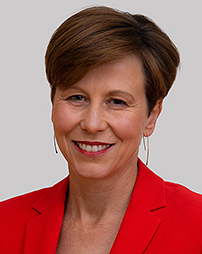
Jenny McAllister
Australian Labor Party Senator for NSW
Currently sitting
Photo: Department of Climate Change, Energy, the Environment and Water, CC BY 4.0, via Wikimedia Commons
Seat and party history (1)
- Australian Labor Party - NSW (Senate) - 6 May 2015 to present
- Seat and party records: OpenAustralia member data.
Contact
Office: (02) 9719 8100
Suite 501, Level 5, 54-66 Wentworth Avenue, Surry Hills NSW 2010
Office details: Parliament of Australia, CC BY-NC-ND 4.0.
Contact details on aph.gov.au Profile on OpenAustraliaThese counts cover what is on this site only. They do not measure electorate work or committee work.
Compared with other members
Jenny McAllister compared with all 76 sitting senators.
Questions asked in Question Time
Lower than 87% of senators- This member
- 0
- Average
- 10.4
- Median
- 10
Debates spoken in
Higher than 84% of senators- This member
- 66
- Average
- 44.8
- Median
- 40
Votes cast
Higher than 71% of senators- This member
- 948
- Average
- 743.0
- Median
- 730
Share of divisions voted in
Higher than 67% of senators- This member
- 84%
- Average
- 69%
- Median
- 69%
Read these with care
- The median is the middle member: half did more, half did less. It is less affected by a few very active members than the average.
- Ministers answer questions rather than ask them, and the presiding officers rarely vote, so their patterns differ.
- Government backbenchers are often given arranged "Dorothy Dixer" questions, which raises their question counts.
- Votes only record ayes and noes, so a missed vote cannot be told apart from a pair (an agreed absence).
- Counts cover only what is on this site, and do not measure electorate or committee work. New members have less history.
Question Time
No questions recorded for this member.
Question from Chris Gatenby
The senator asked why the government insisted that older Tasmanians on fixed incomes bear the cost of budget mismanagement, noting that many seniors live on less than $30,000 annually and pay significant premiums.
Background: Tasmania has the oldest population in Australia and high rates of chronic illness. The government proposed removing an additional private health insurance rebate for those over 65, affecting over 71,000 Tasmanians.
Answer from Jenny McAllister
The minister stated that the government prioritizes directing taxpayer dollars to aged care, citing $3 billion in budget funding for beds and care packages. She explained that returning the rebate to standard rates helps fund these investments to repair a system neglected by the previous government. Regarding the supplementary questions, she highlighted $25 billion in additional funding for public hospitals and an $812 billion investment in Medicare. She asserted that the government monitors private hospital viability while making substantial investments in the public system, contrasting this with the previous administration's record.
Question from Michelle Ananda-Rajah
The senator asked how the government is making medicines cheaper and delivering change for Australians. In supplementary questions, she asked how the government is making it easier to see bulk-billed GPs and strengthening Medicare.
Background: The government has implemented the largest cut to PBS medicine costs in history.
Answer from Jenny McAllister
The minister stated that PBS medicines now cost no more than $25 and that new treatments, such as Qalsody for motor neurone disease, are being listed. She noted that bulk billing has risen to more than eight out of 10 GP visits. She highlighted investments in GP training, with 2,100 doctors beginning government-funded training in 2026, the largest cohort on record.
Question from Josh Dolega
The senator asked how the government was strengthening Medicare and making medicines more affordable for Australians.
Background: The government had delivered the largest investment in Medicare since its creation, aiming to increase bulk-billing and reduce medicine costs.
Answer from Jenny McAllister
The minister reported that over 3,800 GP practices were fully bulk-billing, two years ahead of schedule, with more than eight out of 10 GP visits in Tasmania being free. She noted the establishment of 137 permanent Medicare urgent care clinics nationwide. Regarding medicines, she stated that the government had reduced the maximum PBS co-payment to $25 from 1 January, the lowest level since 2004, contrasting this with opposition policies that would have resulted in higher costs.
Question from Anne Ruston
The senator asked if it was compassionate to expect pensioners to sacrifice holidays and meals to pay for the policy, given that $1.6 billion of the $3 billion savings came from pensioners. She also asked if the minister was aware that the Health Minister had previously directed elderly Australians to use the rebate for cochlear implant replacements before announcing the cut. Finally, she asked if the government accepted that officials called the policy the 'least worst option'.
Background: The government intended to reduce the extra private health insurance rebate for senior Australians to finance aged care.
Answer from Jenny McAllister
The minister stated that the government's priority was directing tax dollars to aged care services, which required bringing older Australians' private health insurance rebate back to the same rate as everyone else's. She acknowledged the decision was difficult and unwelcome but necessary to fund aged care beds and packages. She criticized the Coalition for having no costed aged care policies. Regarding cochlear implants, she noted that implants were funded through public hospitals, and processor upgrades were available through the NDIS and Veterans' Affairs. She confirmed that over-65s would still receive up to 24 per cent subsidy on premiums, the same as the rest of the population, based on income rather than age.
Question from Deborah O'Neill
The member asked how the government was collaborating with states and territories to get ready for the upcoming high-risk weather season. She sought details on specific investments and messages for communities regarding disaster readiness.
Background: The National Emergency Management Agency was hosting the National Preparedness Summit in Canberra. The question sought to outline the government's efforts to prepare for the high-risk weather season, including El Nino conditions.
Answer from Jenny McAllister
The minister highlighted the National Preparedness Summit and Exercise Nexus as key preparation activities. She noted that over 70 per cent of local government areas had been affected by disasters since 2022 and that El Nino conditions were present. She outlined investments in the National Emergency Management Stockpile, the national aerial firefighting fleet, and the Disaster Ready Fund, which had committed over $1.1 billion to 449 projects. She advised communities to prepare plans and use multiple trusted information sources, including the new AusAlert system.
Question from Marielle Smith
The senator asked how the government was strengthening Medicare to provide more choice and lower costs for women and girls. She specifically inquired about measures to help women with endometriosis and pelvic pain receive earlier care, noting that diagnosis often takes seven years.
Background: Women's Health Week provided an opportunity to highlight government actions on women's health issues such as endometriosis, menopause, and contraception access.
Answer from Jenny McAllister
The minister outlined a $792 million women's health package aimed at providing affordable care. She noted that over one million women had reduced costs for contraceptives, IVF, and medicines for endometriosis and menopause. New oral contraceptive pills, including Yaz and Slinda, were listed on the Pharmaceutical Benefits Scheme for the first time in 30 years. Additionally, 33 endometriosis and pelvic pain clinics were established across Australia to facilitate earlier diagnosis and treatment, alongside perimenopause and menopause care.
Question from Carol Brown
The senator asked how the government is strengthening Medicare to provide free care and how it is delivering cheaper medicines. She followed up by asking if any obstacles stand in the way of the government's healthcare approach.
Background: The government highlighted improvements in healthcare accessibility and affordability.
Answer from Jenny McAllister
The minister reported that bulk-billing rates had risen to 84 per cent and that 137 Medicare urgent care clinics were now permanent, with four out of five Australians living within a 20-minute drive of one. She stated that PBS medicines were the cheapest in 20 years, saving Australians more than $2.9 billion since July 2022, and noted the listing of a new treatment for rare brain cancer. Regarding obstacles, she criticized the opposition for attempting to dismantle safety nets like Medicare and the PBS, contrasting this with their protection of tax concessions for the wealthy.
Question from Tyron Whitten
The senator asked why the government refuses to help veterans suffering under the $5,000 allied health cap. He asked if the government would commit to allowing veterans to choose their own assessors rather than using preferred suppliers.
Background: One Nation criticized the $5,000 allied health cap, arguing it disproportionately affects remote veterans and that assessments are funneled through a sole supplier.
Answer from Jenny McAllister
The minister acknowledged Vietnam Veterans' Day and highlighted a significant increase in allied health provider fees, the largest in 20 years, responding to Royal Commission recommendations. She clarified that the $5,000 threshold reduces the need for veterans to return to a GP for referrals every 12 visits. Regarding assessor choice, she stated that DVA already prefers reports from a veteran's usual treating doctor, with independent exams only required when necessary due to complexity or lack of access.
Question from Ellie Whiteaker
The member asked how the government was cracking down on fraud and better protecting NDIS participants. She sought an explanation of why investments in fraud prevention were necessary and how the system was being secured for future generations.
Background: The member highlighted the importance of the NDIS being safe for participants and asked about government efforts to crack down on fraud.
Answer from Jenny McAllister
The minister stated that the government established the Fraud Fusion Taskforce and invested in the NDIS Quality and Safeguards Commission to combat fraud. She reported that the commission issued 111 banning orders in the last quarter, the highest ever recorded. Since the taskforce's establishment, more than 2,600 providers submitting incorrect claims have been disrupted, over 600 investigations launched, 27 individuals convicted, and $50 million in assets seized. The minister noted that $1.35 billion had been invested to stamp down on fraud, citing previous government failures where basic prevention controls were lacking, such as the inability to review claims submitted outside standard business hours.
Question from Michelle Ananda-Rajah
The member asked how the government's investment in Medicare was helping more Australians see their GP for free. She also inquired about support for Australians who become ill or injured outside of regular business hours.
Background: The member highlighted the government's investment in Medicare to ensure Australians can see a doctor without out-of-pocket costs.
Answer from Jenny McAllister
The minister reported that the bulk-billing rate rose to 84.1 per cent in the last June quarter, with over 85 per cent of GP visits in Victoria being bulk-billed. She attributed this to historic investments in Medicare. Regarding after-hours care, she highlighted the 1800MEDICARE service, which provides free health advice 24 hours a day and can connect patients with free telehealth appointments. She noted that bulk-billing rates were rising in every state and territory, including a 13 per cent increase in the Northern Territory.
Question from Jacqui Lambie
The senator asked how many liability and personal injury report invoices were currently unpaid and how many doctors were waiting for payment. She sought a commitment to pay outstanding invoices and interest.
Background: Doctors reported that the Department of Veterans' Affairs (DVA) was failing to pay for medical reports, leading some to refuse further work, which delayed veteran claims.
Answer from Jenny McAllister
The minister stated she did not have the specific information regarding the number of unpaid invoices or doctors. She noted that the government had made significant investments in improving DVA's claims-handling architecture. She affirmed the government's commitment to paying suppliers within ordinary program requirements, including integrity and record-keeping standards. She offered to return to the chamber if further information became available.
Question from Marielle Smith
The senator asked how the government is strengthening the future health workforce and easing financial pressure on students. She also sought details on how the government is backing aged-care workers to earn more.
Background: The question addressed the expansion of the Commonwealth Prac Payment to more frontline health professions and wage increases for aged-care nurses.
Answer from Jenny McAllister
The minister stated that the Commonwealth Prac Payment is being expanded to 10 more professions, including psychologists, pharmacists, and podiatrists, providing up to $338.60 a week. She noted that this builds on previous cuts to student debt. Regarding aged care, she confirmed the fifth wage increase for nurses, resulting in a pay rise of more than $36,000 per year for registered nurses since 2022. She argued that these measures help attract and retain staff, improving care quality, and criticised the opposition for complaining about pay increases for unionised workers.
Question from Wendy Askew
The member asked how many older Australians had died waiting for assessed care in the past 12 months and questioned whether the government was waiting for people to die before providing support.
Background: The member cited reports that 4,812 Australians died in 2024-25 waiting for approved care and referenced a specific case of an elderly man who died while waiting.
Answer from Jenny McAllister
The minister did not provide a specific death toll, instead stating that no one wished to see older people die waiting for care. She argued that the previous government had cut $212 billion from aged care and that the current government was investing $47 billion in the upcoming financial year. She described the reforms as a long-term project to address generational demand. In supplementary answers, she announced an additional $3.7 billion investment to deliver 5,000 extra aged care beds annually and free personal care services. She asserted that every person assessed as urgent priority received full funding within a month.
Question from Helen Polley
The member asked how new health investments would deliver change for Australians. She later asked about investments in treatments and the threats to these investments.
Background: The member asked about government investments in the health system to make it more affordable and accessible.
Answer from Jenny McAllister
The minister stated that the government was delivering a record $220 billion to the public health system, including $5.1 billion for Tasmania over five years. She highlighted the permanence of 137 Medicare urgent care clinics, which had served three million Australians. The minister noted the expansion of the pneumococcal vaccine program for those over 65 and the addition of cheaper medicines to the PBS, including long-acting insulin and anaphylaxis treatment, capped at $25. She identified the opposition's history of cuts to Medicare and public hospitals, and One Nation's commitment to abolish the TGA, as threats to public health.
Question from Carol Brown
The member asked how the government was delivering real change for Australians by investing in the public health system after a decade of cuts. She further asked how the government was helping Australians access cheaper medicines from 1 July and why the government had chosen this approach.
Background: A government senator asked the minister to outline the government's investments in the public health system, including hospital funding and urgent care clinics, commencing on 1 July.
Answer from Jenny McAllister
The minister announced $25 billion in additional funding for public hospitals, including $5.1 billion for Tasmania over five years. She stated that all 137 urgent care clinics would become permanent and bulk-bill from 1 July. Regarding medicines, she noted that 10 new listings on the PBS would provide expanded access to cheaper treatments for conditions such as severe asthma, anaphylaxis, type 1 diabetes, and cancers, capping costs at $25. She explained that the government's approach was based on the principle that patients should only need their Medicare card, not their credit card, and contrasted this with the previous government's cuts.
Question from Anne Ruston
The member asked how many pensioners would lose the private health insurance additional rebate under the government's tax changes. She further asked how pensioners on fixed incomes could absorb estimated cost increases of up to $1,614 for couples over 65, and why a specific pensioner struggling with costs should be forced to struggle more.
Background: The opposition asked about the impact of removing the private health insurance additional rebate for older Australians, citing estimates of increased costs for pensioners.
Answer from Jenny McAllister
The minister stated that the government was investing over $3 billion in aged care beds and packages, funded by returning the PHI rebate for older Australians to the same level as others. She argued that the additional rebate was not the best use of taxpayer dollars and that the changes would restore fairness. She noted that people over 65 would still receive up to 24 per cent in government-subsidised discounts on premiums. She stated that the average impact on those 65 and older was less than a dollar a day, or approximately $250 a year, and that the changes were necessary to ensure the aged-care system's long-term viability.
Question from Kerrynne Liddle
The member asked how many more older Australians would die waiting for care. She further asked how the system could assess a man with severe disabilities as needing only entry-level help, and how the government could claim the system was not failing thousands of others given that one in four assessments is conducted over the phone.
Background: The opposition cited the case of a 91-year-old man who died waiting for care, noting that the median wait for a Support at Home package assessment was 12 months.
Answer from Jenny McAllister
The minister expressed sadness at the death of an older Australian waiting for care and emphasized the importance of the government's reforms. She stated that the previous government had cut $212 billion from the sector and failed to meet growing needs. Regarding the assessment process, she argued that the old system was inaccurate and produced unfair outcomes. She explained that the current system involved trained human assessors working with older people to understand functional needs, with a second person reviewing the outcome before sign-off. She noted that delegates could send assessments back if errors were identified, countering claims of misinformation about the process.
Question from Michelle Ananda-Rajah
The senator asked how the government had delivered on its commitment to provide affordable and accessible urgent care. She sought details on the impact of the new clinics.
Background: The government had committed to opening additional Medicare urgent care clinics to improve access to healthcare.
Answer from Jenny McAllister
The minister confirmed that all 137 promised Medicare urgent care clinics were now open, including 29 in Victoria. She stated that about four out of five Australians lived within a 20-minute drive of a clinic, and there had been 3.1 million visits since the first opened in June 2023. She noted that 45 per cent of patients would have otherwise visited an emergency department or called an ambulance. In response to supplementary questions, she reported that the proportion of bulk-billed services reached 81.9 per cent in the first quarter of the year, a 4.6 percentage point increase. She attributed this to an $812 billion investment in bulk-billing and criticised the previous government for neglecting Medicare and allowing bulk-billing rates to fall.
Question from David Pocock
The member asked how many people were currently waiting for a Support at Home package and how many were waiting for an assessment. He further asked how many new Support at Home packages were funded in the budget, given the large number of Australians waiting for care.
Background: The member asked for current figures on people waiting for Support at Home packages and assessments, noting that over 200,000 older Australians were waiting for care.
Answer from Jenny McAllister
The minister stated that as at 31 December, 94,963 people were waiting for a Support at Home place and 103,527 were waiting for an assessment. She explained that the government had invested over $4.3 billion in the new Support at Home program. In response to the supplementary, she confirmed that the budget would deliver an additional 32,000 Support at Home places in 2026-27, bringing the total to more than 420,000 places. She also noted that the budget included $3.7 billion for more aged-care beds and better care, including 5,000 additional beds annually.
Question from Jordon Steele-John
The senator asked which cohorts of disabled people would make up the 160,000 individuals intended to be removed from the NDIS. Supplementary questions challenged the minister's claim that 8 per cent of funding was lost to fraud, noting that this figure included accidental errors, and asked why the government was cutting $35 billion from the scheme instead of taxing billionaires and gas corporations.
Background: Reports indicated the government intended to remove 160,000 people from the NDIS and cut billions from the scheme, raising concerns about transparency and impact on the disability community.
Answer from Jenny McAllister
The minister explained that reforms were necessary because the scheme was growing too fast, costing more than anticipated, and distorting the care economy. She stated that changes to eligibility aimed to return the scheme to its original intent of supporting those with significant and permanent disabilities. Regarding fraud, she emphasized the need to stamp out exploitation and harm. She argued that sustainability measures were essential to ensure the scheme existed for future generations, noting that other supports like Thriving Kids would assist those no longer eligible for the NDIS.
Question from Dorinda Cox
The senator asked why the government was taking steps to reform the NDIS and how this contributed to a responsible budget. Supplementary questions asked for details on the steps being taken to implement reforms and why this approach was chosen.
Background: The government was implementing reforms to ensure the long-term sustainability of the NDIS.
Answer from Jenny McAllister
The minister explained that reforms were necessary because the scheme was growing too fast and costing more than anticipated, with spending blown out by $13 billion over four years. She stated that new laws would end cost blowouts, reset social and community participation costs, and reduce spending on intermediaries by 30 per cent. A new digital payment system would be introduced to combat fraud. She argued that these measures would reduce annual growth from 22 per cent to 10 per cent, ensuring the scheme's sustainability for future generations.
Question from Tammy Tyrrell
The senator asked what had happened to the funding for No. 34 and why the service had lost its financial support, resulting in the loss of full-time roles.
Background: No. 34, an Aboriginal rural health service in north-west Tasmania, had lost its federal primary health funding, leading to job losses.
Answer from Jenny McAllister
The minister explained that No. 34 was funded under the Indigenous Australians' Health Programme, which was being evaluated and rebalanced to prioritize community-controlled services. She affirmed the government's commitment to culturally safe services and partnership with the Aboriginal and Torres Strait Islander community controlled health sector. The minister stated that the Minister for Health and Ageing was aware of the case and considering options for funding.
Question from Tammy Tyrrell
The member asked what the government was doing to reduce the burden of diabetes and if more funding would be committed in the budget. She also asked why the government had not responded to the 2024 diabetes inquiry report and whether it would commit to expanding subsidies for continuous glucose monitors.
Background: Diabetes prevalence has quadrupled since the 1990s, costing $190 million annually in Tasmania alone.
Answer from Jenny McAllister
The minister declined to comment on budget specifics but highlighted an $812 billion investment in Medicare to improve primary care access and bulk-billing rates, which had risen by 6.3 percentage points in Tasmania since October 2023. She stated that the government was committed to delivering for Australians with diabetes, including securing the PBS listing of Fiasp and providing subsidised continuous glucose monitors to all 130,000 Australians with type 1 diabetes under the National Diabetes Services Scheme.
Question from Anne Ruston
The member asked why the government was waiting for states to provide a plan for proton beam therapy instead of leading the charge. She highlighted that patients, including children, were forced to travel overseas or go without treatment.
Background: A petition signed by over 27,000 people called for the establishment of proton beam therapy in Australia, which is currently unavailable domestically.
Answer from Jenny McAllister
The minister explained that the Commonwealth was not party to the specific project contract in South Australia, which had received $68 million in 2017. She stated the government was working with the South Australian government to explore alternative technology suppliers. She noted patients could apply through the Medical Treatment Overseas Program and that Cancer Australia projected a need for one unit nationally.
Question from Michelle Ananda-Rajah
The member asked how the government was making it easier for Australians to access urgent care and cheaper medicines via the PBS.
Background: The government had invested in Medicare urgent care clinics and bulk-billing incentives to improve healthcare access.
Answer from Jenny McAllister
The minister reported that 130 Medicare urgent care clinics were open, with 2.6 million visits recorded. She stated that once fully implemented, four out of five Australians would live within a 20-minute drive of a clinic. She highlighted an $8.5 billion investment in bulk-billing, which had increased bulk-billing rates across all states. She noted that PBS medicines were at their cheapest in 20 years, with a 20 per cent cut in maximum costs, saving Australians around $200 million annually.
Question from Anne Ruston
The member asked if the government would take responsibility for the aged care crisis leaving thousands stranded in hospitals. She further asked if the minister accepted that excessive wait times caused by rationing care were causing distress and pressure on hospitals, and agreed that more needed to be done to move patients out of hospitals.
Background: Senator Ruston cited cases of older Australians waiting months for aged care placements, including one man stuck in hospital for 47 days, and another facing a 10-12 month wait for home care.
Answer from Jenny McAllister
The minister acknowledged the longstanding issues in the aged care system and stated the government was rebuilding it from the ground up. She confirmed that urgent cases were being prioritised and that wait times were expected to decrease. She attributed the crisis to neglect during the previous government's tenure and stated that the current administration was working swiftly to address the backlog through new legislation, resourcing, and workforce support.
Question from Carol Brown
The member asked how the government was delivering cheaper medicines for Australians. She followed up by asking about new supports for healthcare access. Finally, she asked how these measures complemented other actions to strengthen Medicare.
Background: The member asked how the government was delivering cheaper medicines and improved healthcare access following changes implemented on 1 January.
Answer from Jenny McAllister
The minister stated that from 1 January, the maximum PBS copayment was reduced to $25, a 20 per cent cut, saving Australians over $200 million annually. She noted that costs for pensioners and concession cardholders were frozen at $7.70 until 2030. She highlighted the introduction of free 24/7 nurse advice via 1800MEDICARE and the expansion of 122 Medicare Urgent Care Clinics. She cited an $812 billion investment in Medicare and an increase in bulk-billing practices to 3,300 nationwide.
Question from Jacqui Lambie
The member asked for clear examples of government actions to address veteran suicide and mental health issues identified by the Royal Commission.
Background: The Royal Commission into Defence and Veterans Suicide identified issues with healthcare quality and access for veterans.
Answer from Jenny McAllister
The minister outlined the establishment of the Defence and Veterans' Service Commission and a wellbeing agency. She cited $58.3 million over three years for mental health support, including expanded treatment plans commencing 1 July 2026. She mentioned the extension of the Military and Veteran Psychiatry Training Program and efforts to speed up claims processing. In response to supplementary questions about psychiatric beds and contractors, she stated the department worked with hospitals to fund beds and was updating fee schedules. She declined to name the second contractor, stating she did not have the information.
Question from Ellie Whiteaker
The member asked what the government had done to deliver high-quality health services through the National Health Reform Agreement.
Background: The Prime Minister secured a historic funding deal for hospitals and the NDIS.
Answer from Jenny McAllister
The minister highlighted $25 billion in additional funding for public hospitals, bringing Commonwealth funding to $219.6 billion by 2031. She mentioned securing the NDIS with annual cost increases targeted at five to six per cent and $2 billion for foundational supports. In response to supplementary questions, she cited 122 Medicare urgent care clinics with over two million visits, reducing pressure on emergency departments. She also noted 3,200 Medicare bulk-billing practices nationwide.
Question from Lisa Darmanin
The member asked how the government had collaborated with the Victorian government to address the fires and aid communities, and what assistance was activated for Queensland flood victims.
Background: The question highlighted severe weather events, including catastrophic bushfires in Victoria and flooding in north-west Queensland, and sought details on government support.
Answer from Jenny McAllister
The minister detailed the activation of disaster recovery allowances and payments for Victorian bushfire victims. She noted that over $77 million in additional assistance was being activated, including $75,000 grants for primary producers, a $12 million council support fund, and over $82 million for road repairs. For Queensland, she mentioned personal hardship assistance, aid for farmers of up to $75,000, and $7 million in emergency fodder assistance. The minister also highlighted record investments in emergency management capabilities, including the national aerial firefighting fleet and the $1 billion Disaster Ready Fund.
Question from Dorinda Cox
The member asked what mental health support the government was providing to those affected by the Bondi terror attack.
Background: The question addressed the profound impact of the December 14 Bondi terror attack on Jewish communities and Australians broadly, seeking details on mental health support.
Answer from Jenny McAllister
The minister outlined a $42.6 million mental health package, including $14.2 million for targeted support for the Jewish community through organisations like Jewish House and Jewish Care. She noted that $4.5 million was provided to primary health networks in Sydney and areas with significant Jewish communities. A Medicare mental health centre with a focus on trauma support was being established in Bondi. Additional funding included $5.6 million for the Black Dog Institute's support service for emergency workers, $3 million for young Australians via headspace, and $7.6 million for crisis support services like Lifeline and Beyond Blue.
Question from David Pocock
The member asked why the Australian National University was not allocated additional Commonwealth supported places for medical students, despite the severe shortage of GPs in the territory.
Background: The ACT faces significant GP shortages and low bulk-billing rates, yet missed out on additional Commonwealth supported places for its medical school.
Answer from Jenny McAllister
The minister noted that an expression of interest was open for three new bulk-billed GP clinics in Canberra. She explained that the allocation of Commonwealth supported places relied on advice from a selection advisory committee and was a competitive process. She stated that a further 50 places would be allocated in a second grant round opening in 2026.
Question from Dorinda Cox
The member asked for an update on the situation and how the Commonwealth was supporting affected communities.
Background: Tropical Cyclone Fina impacted communities in the Northern Territory and Western Australia.
Answer from Jenny McAllister
The minister confirmed that National Emergency Management Agency staff were embedded in the emergency operations centre. She noted that disaster relief funding had been activated, providing immediate relief payments to those who relocated. Joint funding was also activated for rebuilding roads and public infrastructure. She highlighted investments in the national emergency stockpile and the Disaster Ready Fund to enhance future resilience.
Question from Michelle Ananda-Rajah
The member asked how the government had strengthened Medicare and improved access to health care, including the rollout of urgent care clinics and cheaper medicines.
Background: The government prioritized cost-of-living relief through health care improvements.
Answer from Jenny McAllister
The minister highlighted an $81.2 billion investment in Medicare to expand bulk-billing, aiming for nine out of 10 GP visits to be bulk-billed by 2030. She noted the opening of 47 additional Medicare urgent care clinics. Regarding medicines, she stated that the maximum PBS co-payment would drop to $25, saving Australians over $200 million annually, and that new listings for breast cancer treatments and contraceptives had been made.
Question from Helen Polley
The member asked how the government was helping more Australians get lower-cost medicines through the Pharmaceutical Benefits Scheme.
Background: The member highlighted previous cost-of-living relief through Medicare strengthening and PBS medicine cost cuts.
Answer from Jenny McAllister
The minister detailed the cheaper medicines bill, which would cap PBS prescription costs at $25 from next year, saving over $200 million annually. She noted that costs for pensioners and concession card holders would be frozen at $7.70 until 2030. Additionally, she highlighted the listing of new treatments for breast cancer and rare kidney disease, and the inclusion of new contraceptive pills on the PBS for the first time in 30 years.
Question from David Pocock
The member asked what could be done for families unable to secure aged care placements. He also asked if residential facilities would be required to accept difficult cases under the new act and whether means testing for Support at Home would disadvantage First Nations people receiving stolen generations compensation.
Background: A family in Canberra struggled to find residential care for a father with dementia. The member also raised concerns about means testing for Support at Home affecting First Nations elders.
Answer from Jenny McAllister
The minister declined to comment on the specific case but highlighted the new Aged Care Act starting 1 November, which aimed to ensure sustainable funding and expansion of residential care. She referred the specific case to the Minister for Aged Care. Regarding First Nations elders, she stated that means testing relied on social security law definitions and that the Minister for Aged Care was considering the effects of co-contributions on First Nations Australians.
Question from Matt O'Sullivan
The member asked when out-of-pocket costs for GP visits would fall to zero, citing specific examples of patients paying significantly more than the Medicare rebate.
Background: The member cited anecdotes of high out-of-pocket costs for GP visits, contrasting with promises of free care.
Answer from Jenny McAllister
The minister highlighted the rollout of the bulk-billing incentive program from 1 November. She stated that 134 GP practices in Western Australia, 904 in New South Wales, and 89 in South Australia had indicated they would move to full bulk billing. She did not provide a specific date when all out-of-pocket costs would be zero, focusing instead on the increase in bulk-billing practices.
Question from Wendy Askew
The senator asked how the government achieved the Prime Minister's promise of free GP visits given the low bulk-billing rates and high out-of-pocket costs. She followed up by asking if the Prime Minister or the health department was wrong about the costs. She also asked when the average out-of-pocket cost would reach zero.
Background: The senator cited reports that only 13 per cent of metropolitan GP clinics would bulk-bill under the new program, with average out-of-pocket costs at $49.14.
Answer from Jenny McAllister
The minister attributed the previous decline in bulk-billing to the Coalition's freeze on rebates. She stated that the government was making historic investments to repair Medicare and noted that over a thousand practices had indicated interest in becoming fully bulk-billing. She reiterated the government's intention to increase bulk-billing rates to fulfill the promise of universal healthcare, framing the current measures as a response to damage done by the previous government.
Question from David Shoebridge
The member asked whether the government had ever refused requests from the United States or Donald Trump regarding defence spending and critical minerals. He questioned if there were limits to the government's support for US interests.
Background: Concerns were raised about the extent of Australian financial commitments to the United States under AUKUS and the prioritization of US interests over Australian sovereignty.
Answer from Jenny McAllister
The minister affirmed the importance of the US alliance for national security. She stated that the government considers the national interest in all international engagements. She defended the acquisition of nuclear-powered submarines and critical minerals agreements as beneficial for Australia.
Question from Jordon Steele-John
The member asked why community healthcare centres were closing under Labor governments. He questioned the government's response to rising costs and reduced access.
Background: Community healthcare centres were closing, and out-of-pocket costs were rising, affecting access to affordable care.
Answer from Jenny McAllister
The minister expressed disappointment at the closure of cohealth, attributing it to financial issues. She highlighted upcoming investments in Medicare and bulk-billing incentives starting 1 November. She did not commit to lifting rebates for longer consultations.
Question from Anne Ruston
The member asked how the government intended to intervene in the market to ensure bulk-billing. She questioned the impact on small family practices.
Background: The Minister for Health suggested the government might intervene in the market if GPs could not afford to bulk-bill.
Answer from Jenny McAllister
The minister stated the government was determined to defend universal health care. She highlighted investments to restore bulk-billing and mentioned steps taken in the ACT. She did not provide specific details on market intervention mechanisms.
Question from David Pocock
The member asked how many GP practices in the ACT had signed up to MyMedicare to bulk-bill all services. He questioned the government's progress in improving access.
Background: Concerns were raised about the low bulk-billing rates in the ACT and the closure of community healthcare centres.
Answer from Jenny McAllister
The minister highlighted investments in new GP practices and attraction initiatives in the ACT. She did not provide a specific number of practices that had signed up. She emphasized the government's commitment to restoring bulk-billing.
Question from Richard Dowling
The senator asked how the government was delivering Medicare urgent care clinics and how they were helping Australians access healthcare. He followed up by asking how local health services were benefiting from the model and how the clinics were integrated with hospital emergency departments. Finally, he asked how the clinics complemented other actions to strengthen Medicare and improve primary healthcare.
Background: The delivery of 87 Medicare urgent care clinics in the government's first term.
Answer from Jenny McAllister
The minister stated that 90 clinics had been delivered, with over two million visits made and an average of 26,000 visits per week. She noted that one-third of patients were under 15 and that the clinics were free. She announced the opening of 47 more clinics, which would ensure four out of five Australians live within a 20-minute drive of one. Regarding integration, she stated that nearly half of patients would have used hospital emergency departments otherwise, citing data from Tasmania where clinics treated more patients than the Royal Hobart Hospital emergency department. She highlighted that 30 per cent of visits occurred on weekends and 25 per cent after 5 pm. Finally, she outlined an $812 billion investment in Medicare to expand bulk-billing, aiming for nine out of 10 GP visits to be bulk-billed by 2030.
Question from Michelle Ananda-Rajah
The senator asked how the government was using its first-term achievements to improve Medicare and provide additional cost-of-living assistance via healthcare policies.
Background: The government had delivered cost-of-living relief in its first term, including bulk-billing support and medicine cost reductions.
Answer from Jenny McAllister
The minister outlined that the government had delivered 87 urgent care clinics, exceeding the target of 50. She announced an $8.5 billion investment in Medicare from November 2025 to expand bulk-billing and open 50 more clinics. She confirmed legislation had passed to cap PBS prescription costs at $25, a 20 per cent reduction, and freeze costs for pensioners at $7.70 until 2030.
Question from Anne Ruston
The member asked why the government delayed supporting the release of these home-care places until the last minute, despite the Coalition's efforts to secure the commitment.
Background: The Coalition pressured the government to commit to delivering 83,000 home-care packages, including 40,000 by year-end and 20,000 immediately, which the government had previously resisted.
Answer from Jenny McAllister
The minister stated the government was pleased to work with the opposition on aged-care reforms. She confirmed the government is bringing forward the release of 83,000 additional home-care places, with 20,000 accessible during the eight weeks preceding the new Aged Care Act taking effect on 1 November. A further 63,000 places will be supported under the new Support at Home program by 30 June 2026. She described this as a responsible decision that maintains fiscal savings while delivering care faster.
Question from Leah Blyth
The senator asked whether the minister would apologise to older Australians in the Yorke Peninsula for failing to support their community. She also inquired about commitments to release new home-care packages and progress assessments for those waiting, citing over 120,000 people awaiting assessment.
Background: Senator Blyth cited constituents in the Yorke Peninsula unable to access home-care services due to funding shortages, and a resident in Geelong waiting for reassessment.
Answer from Jenny McAllister
The minister invited the senator to raise individual cases with the Minister for Aged Care. She highlighted that the government had invested $5.6 billion in aged-care reforms, the largest improvement in 30 years, including delivering registered nurses on site more than 99 per cent of the time. She noted that a new single assessment system was being rolled out to reduce wait times and improve the experience. The minister confirmed that a new program to increase care availability would commence on 1 November.
Question from Anne Ruston
The member asked how many Australians assessed as needing home-care packages were currently waiting on the national priority list. She highlighted the discrepancy between official figures and expert estimates, noting the government's refusal to provide updated statistics.
Background: The member cited data indicating 87,597 older Australians were waiting for home care as of 31 March 2025, with estimates suggesting the figure had risen to over 100,000. The department had refused to release recent data despite repeated requests.
Answer from Jenny McAllister
The minister confirmed that as of 31 March, figures indicated 87,597 individuals awaiting an approved home-care package. She blamed the prior government's neglect for the backlogs and stated that current reforms, backed by the opposition, seek to resolve these problems and guarantee quality care. She observed that new and reallocated packages are issued weekly, assisting older Australians to leave the waiting list.
Question from Helen Polley
The member asked how the government would fund bulk-billing, lower-cost medicines, and urgent care clinics to help Australians with healthcare costs. She framed the question around the government's priority of addressing financial pressures on families.
Background: The member sought to highlight the government's efforts to alleviate cost-of-living pressures through healthcare investments.
Answer from Jenny McAllister
The minister outlined that the government delivered $3.5 billion in 2023 to restore bulk-billing access for 11 million patients. She announced an $812 billion investment in Medicare starting 1 November 2025, aiming for nine out of 10 GP visits to be bulk-billed by 2030. She also noted the expansion of Medicare urgent care clinics, with 87 delivered against a promise of 50, and a reduction in the maximum PBS script cost to $25, saving over $200 million annually.
Question from Wendy Askew
The member asked if the minister would apologise to the constituent and others who lost loved ones while waiting for assessed care. She cited specific delays and the tragic outcome of a patient with Parkinson's disease.
Background: The member presented the case of a constituent whose husband died while waiting for a home-care package, which was allocated only after he was hospitalized.
Answer from Jenny McAllister
The minister acknowledged the case and stated that reforms are designed to centre people in the aged-care system. She attributed the current situation to a period of neglect under the previous government and noted that high-priority assessments are now completed within a month. She highlighted that access to in-home care has grown from 155,000 to over 300,000 people in five years.
Question from Tammy Tyrrell
The member asked which partners in the disability community knew the details of the $2 billion Thriving Kids announcement before it was made public. She followed up by asking if the government intended to remove people from the NDIS and whether state hospital funding was conditional on accepting NDIS cuts.
Background: The member questioned the government's claim of co-designing the NDIS Thriving Kids announcement, noting that states and the disability community learned of it via media.
Answer from Jenny McAllister
The minister stated that the idea for foundational supports came from the Bonyhady and Paul review and that states agreed to start with children. She clarified that children currently on the scheme or joining before 2027 would not see changes to their support, ensuring no gap in care. Regarding state funding, she explained that discussions since 2023 involved a $5 billion federal offer matched by states to establish foundational supports, with the current focus on children.
Other Parliamentary Activity
-
Military Rehabilitation and Compensation Amendment (Veterans' Healthcare Without Caps) Bill 2026; Second Reading
Senate · Thursday 17 September 2026 · Second Reading
Responded as minister
-
Defence Legislation Amendment (RCDVS Implementation and Related Measures No. 2) Bill 2026; Third Reading
Senate · Thursday 17 September 2026 · Third Reading
Contributed to this debate
-
Defence Legislation Amendment (RCDVS Implementation and Related Measures No. 2) Bill 2026; Second Reading
Senate · Thursday 17 September 2026 · Second Reading
Responded as minister
-
Defence Force Discipline Amendment (RCDVS Implementation and Related Measures No. 1) Bill 2026; Third Reading
Senate · Thursday 17 September 2026 · Third Reading
Contributed to this debate
-
Defence Force Discipline Amendment (RCDVS Implementation and Related Measures No. 1) Bill 2026; Second Reading
Senate · Thursday 17 September 2026 · Second Reading
Responded as minister
-
Defence Force Discipline Amendment (RCDVS Implementation and Related Measures No. 1) Bill 2026; In Committee
Senate · Thursday 17 September 2026 · In Committee
Responded as minister
-
Health Legislation Amendment (Improving Choice and Transparency for Private Health Consumers) Bill 2026; Third Reading
Senate · Tuesday 15 September 2026 · Third Reading
Contributed to this debate
-
Health Legislation Amendment (Improving Choice and Transparency for Private Health Consumers) Bill 2026; Second Reading
Senate · Tuesday 15 September 2026 · Second Reading
Responded as minister
-
Health Legislation Amendment (Improving Choice and Transparency for Private Health Consumers) Bill 2026; In Committee
Senate · Tuesday 15 September 2026 · In Committee
Opened this debate
-
Royal Commission into Defence and Veteran Suicide
Senate · Wednesday 9 September 2026 · General Debate
Responded as minister
-
National Disability Insurance Scheme Amendment (Securing the NDIS for Future Generations) Bill 2026; Limitation of Debate
Senate · Tuesday 18 August 2026 · Limitation of Debate
Responded as minister
-
National Disability Insurance Scheme Amendment (Securing the NDIS for Future Generations) Bill 2026; In Committee
Senate · Tuesday 18 August 2026 · In Committee
Responded as minister
-
National Disability Insurance Scheme Amendment (Securing the NDIS for Future Generations) Bill 2026; Second Reading
Senate · Monday 17 August 2026 · Second Reading
Responded as minister
-
Health Legislation Amendment (Prescribing of Pharmaceutical Benefits) Bill 2025; Consideration of House of Representatives Message
Senate · Thursday 2 July 2026 · Consideration of House of Representatives Message
Opened this debate
-
Health Legislation Amendment (Prescribing of Pharmaceutical Benefits) Bill 2025; Third Reading
Senate · Wednesday 1 July 2026 · Third Reading
Contributed to this debate
-
Health Legislation Amendment (Prescribing of Pharmaceutical Benefits) Bill 2025; Second Reading
Senate · Wednesday 1 July 2026 · Second Reading
Opened this debate
-
Health Legislation Amendment (Prescribing of Pharmaceutical Benefits) Bill 2025; In Committee
Senate · Wednesday 1 July 2026 · In Committee
Responded as minister
-
Health Legislation Amendment (Prescribing of Pharmaceutical Benefits) Bill 2025; Second Reading
Senate · Tuesday 30 June 2026 · Second Reading
Responded as minister
-
Aviation Consumer Protection Bill 2026, Aviation Consumer Protection (Consequential Amendments and Transitional Provisions) Bill 2026, Aviation Consumer Protection Levy Bill 2026, Aviation Consumer Protection Levy (Collection) Bill 2026; Returned from the House of Representatives
Senate · Tuesday 30 June 2026 · Returned from the House of Representatives
Contributed to this debate
-
Aviation Consumer Protection Bill 2026, Aviation Consumer Protection (Consequential Amendments and Transitional Provisions) Bill 2026, Aviation Consumer Protection Levy Bill 2026, Aviation Consumer Protection Levy (Collection) Bill 2026; Second Reading
Senate · Tuesday 30 June 2026 · Second Reading
Opened this debate
-
Health Legislation Amendment (Improving Choice and Transparency for Private Health Consumers) Bill 2026; Second Reading
Senate · Monday 29 June 2026 · Second Reading
Opened this debate
-
Health Legislation Amendment (Improving Choice and Transparency for Private Health Consumers) Bill 2026; First Reading
Senate · Monday 29 June 2026 · First Reading
Contributed to this debate
-
Crossin, Ms Patricia Margaret (Trish), AM
Senate · Wednesday 24 June 2026 · Condolence
Contributed to this debate
-
National Disability Insurance Scheme Amendment (Securing the NDIS for Future Generations) Bill 2026
Senate · Monday 22 June 2026 · General Debate
Responded as minister
-
National Disability Insurance Scheme Amendment (Integrity and Safeguarding) Bill 2025; Second Reading
Senate · Tuesday 31 March 2026 · Second Reading
Responded as minister
-
National Disability Insurance Scheme Amendment (Integrity and Safeguarding) Bill 2025; In Committee
Senate · Tuesday 31 March 2026 · In Committee
Responded as minister
-
Defence and Veterans' Service Commissioner Bill 2025, Defence and Veterans' Service Commissioner (Consequential and Transitional Provisions) Bill 2025; Third Reading
Senate · Monday 30 March 2026 · Third Reading
Contributed to this debate
-
Defence and Veterans' Service Commissioner Bill 2025, Defence and Veterans' Service Commissioner (Consequential and Transitional Provisions) Bill 2025; Second Reading
Senate · Monday 30 March 2026 · Second Reading
Responded as minister
-
Defence and Veterans' Service Commissioner Bill 2025, Defence and Veterans' Service Commissioner (Consequential and Transitional Provisions) Bill 2025; In Committee
Senate · Monday 30 March 2026 · In Committee
Responded as minister
-
Defence Amendment (Parliamentary Joint Committee on Defence) Bill 2025; Third Reading
Senate · Wednesday 4 March 2026 · Third Reading
Contributed to this debate
-
Defence Amendment (Parliamentary Joint Committee on Defence) Bill 2025; Third Reading
Senate · Tuesday 3 March 2026 · Third Reading
Opened this debate
-
Defence Amendment (Parliamentary Joint Committee on Defence) Bill 2025; In Committee
Senate · Tuesday 3 March 2026 · In Committee
Responded as minister
-
Defence Amendment (Parliamentary Joint Committee on Defence) Bill 2025; Second Reading
Senate · Thursday 5 February 2026 · Second Reading
Responded as minister
-
Defence Amendment (Parliamentary Joint Committee on Defence) Bill 2025; In Committee
Senate · Thursday 5 February 2026 · In Committee
Responded as minister
-
Bolkus, Hon. Nick
Senate · Tuesday 3 February 2026 · Condolence
Contributed to this debate
-
Bondi Beach: Attack
Senate · Monday 19 January 2026 · Condolence
Contributed to this debate
-
Environment Protection Reform Bill 2025, National Environmental Protection Agency Bill 2025, Environment Information Australia Bill 2025, Environment Protection and Biodiversity Conservation (Customs Charges Imposition) Bill 2025, Environment Protection and Biodiversity Conservation (Excise Charges Imposition) Bill 2025, Environment Protection and Biodiversity Conservation (General Charges Imposition) Bill 2025, Environment Protection and Biodiversity Conservation (Restoration Charge Imposition) Bill 2025; Second Reading
Senate · Thursday 27 November 2025 · Second Reading
Responded as minister
-
Australian Centre for Disease Control Bill 2025, Australian Centre for Disease Control (Consequential Amendments and Transitional Provisions) Bill 2025; Limitation of Debate
Senate · Wednesday 5 November 2025 · Limitation of Debate
Responded as minister
-
Australian Centre for Disease Control Bill 2025, Australian Centre for Disease Control (Consequential Amendments and Transitional Provisions) Bill 2025; In Committee
Senate · Wednesday 5 November 2025 · In Committee
Responded as minister
-
Health Legislation Amendment (Miscellaneous Measures No. 1) Bill 2025; Third Reading
Senate · Thursday 30 October 2025 · Third Reading
Contributed to this debate
-
Health Legislation Amendment (Miscellaneous Measures No. 1) Bill 2025; Second Reading
Senate · Thursday 30 October 2025 · Second Reading
Responded as minister
-
Health Legislation Amendment (Miscellaneous Measures No. 1) Bill 2025; In Committee
Senate · Thursday 30 October 2025 · In Committee
Responded as minister
-
Aged Care and Other Legislation Amendment Bill 2025, Aged Care (Accommodation Payment Security) Levy Amendment Bill 2025; In Committee
Senate · Wednesday 3 September 2025 · In Committee
Responded as minister
-
Aged Care (Accommodation Payment Security) Levy Amendment Bill 2025; Third Reading
Senate · Wednesday 3 September 2025 · Third Reading
Contributed to this debate
-
National Health Amendment (Cheaper Medicines) Bill 2025; Third Reading
Senate · Monday 1 September 2025 · Third Reading
Contributed to this debate
-
National Health Amendment (Cheaper Medicines) Bill 2025; In Committee
Senate · Monday 1 September 2025 · In Committee
Responded as minister
-
Health Insurance (Pathology) (Fees) (Repeal) Bill 2025; Third Reading
Senate · Monday 1 September 2025 · Third Reading
Contributed to this debate
-
Defence Housing Australia Amendment Bill 2025; Second Reading
Senate · Monday 25 August 2025 · Second Reading
Responded as minister
-
Defence Housing Australia Amendment Bill 2025; In Committee
Senate · Monday 25 August 2025 · In Committee
Responded as minister
-
Customs Amendment (Australia-United Arab Emirates Comprehensive Economic Partnership Agreement Implementation) Bill 2025, Customs Tariff Amendment (Australia-United Arab Emirates Comprehensive Economic Partnership Agreement Implementation) Bill 2025; First Reading
Senate · Thursday 31 July 2025 · First Reading
Contributed to this debate
- Votes recorded
- 948
- Aye votes (30.3%)
- 287
- No votes (69.7%)
- 661
Showing the latest 50 votes.
-
Universities Accord (Opening the Doors of Opportunity) Bill 2026; Second Read
17 Sep 2026 · Ayes 21, Noes 32 · Failed
VOTED NO -
Universities Accord (Opening the Doors of Opportunity) Bill 2026; Second Read
17 Sep 2026 · Ayes 13, Noes 23 · Failed
VOTED NO -
Universities Accord (Opening the Doors of Opportunity) Bill 2026; Second Read
17 Sep 2026 · Ayes 13, Noes 23 · Failed
VOTED NO -
Defence Force Discipline Amendment (RCDVS Implementation and Related Measures...
17 Sep 2026 · Ayes 30, Noes 24 · Passed
VOTED AYE -
Corruption in the Construction Industry Select Committee; Appointment
17 Sep 2026 · Ayes 23, Noes 31 · Failed
VOTED NO -
Foreign Affairs, Defence and Trade References Committee; Reference
17 Sep 2026 · Ayes 34, Noes 21 · Passed
VOTED NO -
Environment and Communications References Committee; Reference
17 Sep 2026 · Ayes 23, Noes 32 · Failed
VOTED NO -
Selection of Bills Committee; Report
17 Sep 2026 · Ayes 12, Noes 28 · Failed
VOTED NO -
Military Rehabilitation and Compensation Amendment (Veterans' Healthcare With...
17 Sep 2026 · Ayes 33, Noes 19 · Passed
VOTED NO -
Military Rehabilitation and Compensation Amendment (Veterans' Healthcare With...
17 Sep 2026 · Ayes 34, Noes 19 · Passed
VOTED NO -
Migration
16 Sep 2026 · Ayes 19, Noes 30 · Failed
VOTED NO -
Personal Information and Privacy; Order for the Production of Documents
16 Sep 2026 · Ayes 30, Noes 19 · Passed
VOTED NO -
Maritime Industry; Order for the Production of Documents
16 Sep 2026 · Ayes 16, Noes 23 · Failed
VOTED NO -
Climate Change; Order for the Production of Documents
16 Sep 2026 · Ayes 16, Noes 23 · Failed
VOTED NO -
Census; Order for the Production of Documents
16 Sep 2026 · Ayes 23, Noes 30 · Failed
VOTED NO -
ASECA Judicial Seminar; Order for the Production of Documents
16 Sep 2026 · Ayes 12, Noes 28 · Failed
VOTED NO -
Middle East; Order for the Production of Documents
16 Sep 2026 · Ayes 13, Noes 27 · Failed
VOTED NO -
North to East Australia Pipeline; Order for the Production of Documents
16 Sep 2026 · Ayes 18, Noes 25 · Failed
VOTED NO -
Artificial Intelligence Joint Select Committee; Appointment
16 Sep 2026 · Ayes 17, Noes 25 · Failed
VOTED NO -
Artificial Intelligence Joint Select Committee; Appointment
16 Sep 2026 · Ayes 17, Noes 26 · Failed
VOTED NO -
Improved Native Forest Management; Order for the Production of Documents
16 Sep 2026 · Ayes 26, Noes 31 · Failed
VOTED NO -
Rural and Regional Affairs and Transport References Committee; Reference
16 Sep 2026 · Ayes 27, Noes 31 · Failed
VOTED NO -
Middle East
16 Sep 2026 · Ayes 32, Noes 20 · Passed
VOTED AYE -
A New Tax System (Family Assistance) Amendment (No Jab No Pay Repeal) Bill 20...
16 Sep 2026 · Ayes 6, Noes 34 · Failed
VOTED NO -
Economy
15 Sep 2026 · Ayes 31, Noes 20 · Passed
VOTED NO -
Consideration of Legislation
15 Sep 2026 · Ayes 22, Noes 32 · Failed
VOTED NO -
Cybersafety Legislation; Order for the Production of Documents
15 Sep 2026 · Ayes 34, Noes 19 · Passed
VOTED NO -
Executive Remuneration; Order for the Production of Documents
15 Sep 2026 · Ayes 17, Noes 26 · Failed
VOTED NO -
Waste Management and Recycling; Order for the Production of Documents
15 Sep 2026 · Ayes 34, Noes 19 · Passed
VOTED NO -
Environment and Communications References Committee; Reference
15 Sep 2026 · Ayes 21, Noes 33 · Failed
VOTED NO -
Red Lines Package Omnibus Bill 2026; First Reading
15 Sep 2026 · Ayes 39, Noes 14 · Passed
VOTED AYE -
Artificial Intelligence
15 Sep 2026 · Ayes 35, Noes 20 · Passed
VOTED NO -
Wage Justice for Early Childhood Education and Care Workers (Special Account)...
15 Sep 2026 · Ayes 25, Noes 36 · Failed
VOTED NO -
Rural and Regional Affairs and Transport References Committee; Reference
14 Sep 2026 · Ayes 25, Noes 31 · Failed
VOTED NO -
Water
14 Sep 2026 · Ayes 16, Noes 24 · Failed
VOTED NO -
Cost of Living
14 Sep 2026 · Ayes 22, Noes 32 · Failed
VOTED NO -
Digital Seller Underperformance Policy; Order for the Production of Documents
14 Sep 2026 · Ayes 32, Noes 18 · Passed
VOTED NO -
Health Care; Order for the Production of Documents
14 Sep 2026 · Ayes 23, Noes 28 · Failed
VOTED NO -
Intergenerational Trust Fund for the People of the Republic of Nauru; Order f...
14 Sep 2026 · Ayes 35, Noes 19 · Passed
VOTED NO -
Rural and Regional Affairs and Transport References Committee; Reference
14 Sep 2026 · Ayes 35, Noes 19 · Passed
VOTED NO -
Wage Justice for Early Childhood Education and Care Workers (Special Account)...
14 Sep 2026 · Ayes 24, Noes 35 · Failed
VOTED NO -
Wage Justice for Early Childhood Education and Care Workers (Special Account)...
14 Sep 2026 · Ayes 12, Noes 25 · Failed
VOTED NO -
Major Sporting Events (Indicia and Images) Protection Amendment Bill 2026; Th...
14 Sep 2026 · Ayes 31, Noes 18 · Passed
VOTED AYE -
Major Sporting Events (Indicia and Images) Protection Amendment Bill 2026; Se...
14 Sep 2026 · Ayes 31, Noes 18 · Passed
VOTED AYE -
Regulatory Reform Omnibus Bill 2026; In Committee
14 Sep 2026 · Ayes 21, Noes 32 · Failed
VOTED NO -
Regulatory Reform Omnibus Bill 2026; In Committee
14 Sep 2026 · Ayes 31, Noes 22 · Passed
VOTED AYE -
Consideration of Legislation
14 Sep 2026 · Ayes 19, Noes 33 · Failed
VOTED AYE -
Artificial Intelligence
14 Sep 2026 · Ayes 14, Noes 24 · Failed
VOTED NO -
Carbon Farming Initiative--Improved Forest Management in Multiple-use Public ...
10 Sep 2026 · Ayes 27, Noes 34 · Failed
VOTED NO -
Statute Update Bill 2026; Limitation of Debate
10 Sep 2026 · Ayes 35, Noes 20 · Passed
VOTED NO
About this page
This page tracks Jenny McAllister's parliamentary activity: questions asked and answered in Question Time, debates spoken in, and votes in divisions. Summaries are in reported speech, not transcripts; each one links to the official record.