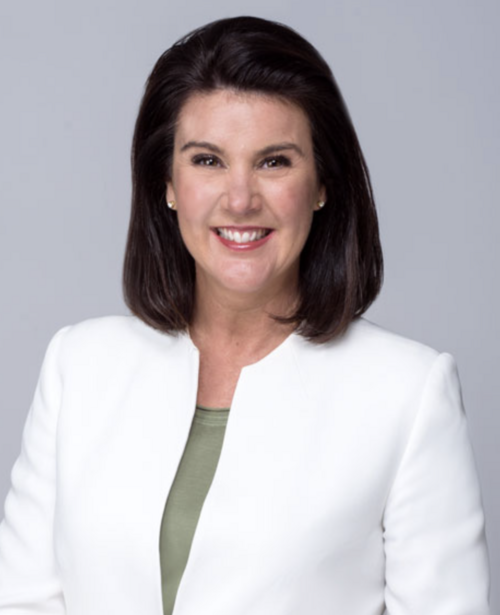
Jane Hume
Liberal Party Senator for VIC
Currently sitting
Photo: Department of Foreign Affairs and Trade, CC BY 4.0, via Wikimedia Commons
Seat and party history (1)
- Liberal Party - VIC (Senate) - 1 Jul 2016 to present
- Seat and party records: OpenAustralia member data.
Contact
Office: (03) 9428 1773
223 Bridge Road, Richmond VIC 3121
Office details: Parliament of Australia, CC BY-NC-ND 4.0.
Contact details on aph.gov.au Profile on OpenAustraliaThese counts cover what is on this site only. They do not measure electorate work or committee work.
Compared with other members
Jane Hume compared with all 76 sitting senators.
Questions asked in Question Time
Higher than 96% of senators- This member
- 26
- Average
- 10.4
- Median
- 10
Debates spoken in
Lower than 58% of senators- This member
- 35
- Average
- 44.8
- Median
- 40
Votes cast
Lower than 83% of senators- This member
- 515
- Average
- 743.0
- Median
- 730
Share of divisions voted in
Lower than 84% of senators- This member
- 46%
- Average
- 69%
- Median
- 69%
Read these with care
- The median is the middle member: half did more, half did less. It is less affected by a few very active members than the average.
- Ministers answer questions rather than ask them, and the presiding officers rarely vote, so their patterns differ.
- Government backbenchers are often given arranged "Dorothy Dixer" questions, which raises their question counts.
- Votes only record ayes and noes, so a missed vote cannot be told apart from a pair (an agreed absence).
- Counts cover only what is on this site, and do not measure electorate or committee work. New members have less history.
Question Time
Question from Jane Hume
The senator asked when the government expected inflation to return to the Reserve Bank's target band. In supplementary questions, she asked if the government accepted that higher inflation and interest rates were pressuring small businesses and why families should not be worried about the government's tax and spend agenda given internal concerns.
Background: Reports indicated Labor MPs were concerned about the inflationary impact of cost-of-living relief.
Answer from Katy Gallagher
The minister noted inflation had peaked at nearly 8 per cent in December 2022 and had since decreased to the three per cent range. She stated the government was taking responsibility for economic decisions while acknowledging global challenges. She defended cost-of-living support as targeted and non-inflationary, and accused the opposition of voting against tax cuts and wage increases while criticising the government's economic management.
Question from Jane Hume
The senator asked what rate of productivity growth the government was assuming across the forward estimates. She followed up by asking if the government agreed with the BCA's calculation that average productivity growth would only be 0.2 per cent annually even if Treasury's 1.2 per cent assumption was met. Finally, she asked what Treasury currently estimated average labour productivity growth to be for the 2020s, and what rate would be needed to make up the lost productivity.
Background: The Business Council of Australia reported that labour productivity had declined by an average of 0.1 per cent annually under the government, predicting the 2020s would be the worst decade for productivity growth since 1960.
Answer from Penny Wong
The minister acknowledged productivity as a long-standing challenge for governments of both persuasions since the Hawke-Keating era. She noted that productivity had fallen for seven quarters before the pandemic. She stated that the budget included 15 productivity reforms aimed at attracting investment and cutting regulatory costs by $10.2 billion annually. These measures included reducing red tape, building a single national market, modernizing energy markets, and unlocking data and AI opportunities. She confirmed that the long-run assumption for productivity growth was 1.2 per cent, which had been revised down in the first term based on Treasury advice. She did not provide a specific figure for the rate required to make up for lost productivity, instead focusing on the government's reform agenda.
Question from Jane Hume
The member asked when inflation would return to the Reserve Bank's target, citing warnings from the Deputy Governor about public anger over rising prices. She questioned whether the government would change its fiscal policy if interest rates rose again.
Background: The Deputy Governor of the Reserve Bank warned of persistent inflation and potential interest rate rises. The question challenged the government on its failure to reduce inflationary pressure and its impact on household purchasing power.
Answer from Penny Wong
The minister acknowledged inflation remains a challenge but noted it is lower than when the government took office. She highlighted economic progress, including low unemployment and wage growth above three per cent for 16 consecutive quarters. She criticized the opposition for opposing tax cuts, wage increases, and cost-of-living measures. She stated the government is focused on relieving inflationary pressures and cost-of-living costs, without committing to specific fiscal policy changes in response to potential rate hikes.
Question from Jane Hume
The senator asked if the Prime Minister admitted failure in allowing the illicit tobacco market to become an organized crime problem. She cited over 200 tobacco-related arsons in Victoria in three years and estimated criminal profits of $4 billion to $7 billion annually.
Background: A firebombing of an illicit tobacco shop in Richmond, Victoria, destroyed 10 small businesses. Illicit tobacco accounted for around 80 per cent of the market, with consumption rising by 30 per cent.
Answer from Penny Wong
The minister acknowledged illicit tobacco as a serious organized crime crisis. She stated the government had allocated over $365 million to improve border detection and joint enforcement activities. The Illicit Tobacco National Disruption Group was established to target criminals. The minister emphasized the need for cooperation between states and the federal government, noting that states regulate tobacco sales. She rejected opposition proposals to reduce excise, citing concerns about increasing smoking rates and the rise in vaping.
Question from Jane Hume
The senator asked the minister to guarantee that no Australian renter would pay more than $2 a week additional rent due to the government's increased taxes on housing.
Background: Treasury forecasts suggested Labor's housing tax changes would increase rents by only $2 a week, while opposition claims suggested larger impacts.
Answer from Penny Wong
The minister guaranteed that the changes were motivated by increasing housing supply and that opposition policies would have reduced supply. She clarified that existing negative gearing arrangements were grandfathered and that incentives remained for new builds. She cited ABS data showing investor lending for new constructions rose by 27 per cent in the June quarter.
Question from Jane Hume
The member asked whether the government accepted the administrator's assertion that five years was the maximum sanction available under current rules, regardless of the severity of the conduct. She sought clarification on whether the government would consider amending legislation to remove this limit.
Background: CFMEU administrator Michael Crosby stated on ABC's 7.30 that union rules limited his ability to suspend John Setka for more than five years, suggesting the rules might need changing.
Answer from Penny Wong
The minister noted that John Setka had been expelled from the Australian Labor Party years ago, a process not subject to the five-year rule. She affirmed the government's zero tolerance for corruption, criminality, and violence in the construction industry, stating that the administrator had achieved significant progress in cleaning up the union. The minister indicated that the government would carefully consider any advice from the administrator regarding necessary changes to disciplinary powers, emphasizing that the current administration had taken stronger action than previous governments.
Question from Jane Hume
The member asked why the Prime Minister refused to admit fault regarding his comments about the Japanese Prime Minister, despite video evidence and previous denials of breaking promises on energy bills, superannuation, and tax policy.
Background: The Prime Minister faced criticism for comments and gestures regarding Japan's Prime Minister, with video evidence cited by the opposition.
Answer from Penny Wong
The minister stated that the opposition had opposed energy assistance and tax cuts. She highlighted the Japanese ambassador's statement on personal trust between leaders and accused the opposition of creating a diplomatic issue through media stunts and summoning the ambassador. She emphasized the government's commitment to strengthening the strategic partnership with Japan.
Question from Jane Hume
The member asked why productivity was continuing to fall and whether increasing taxes on individuals, businesses, and construction was lowering productivity. She sought an explanation for the discrepancy between Treasury forecasts and actual productivity figures.
Background: The member cited Reserve Bank warnings about weak productivity growth and a revision of productivity growth to negative 0.5 per cent in the December quarter.
Answer from Katy Gallagher
The minister stated that the government had adopted more realistic Treasury advice on productivity assumptions, rejecting the previous government's higher assumptions. She highlighted regulatory reform bills aimed at reducing red tape and improving productivity, which she claimed the opposition had voted against. She listed budget measures including building homes, modernising energy markets, and unlocking data and AI. She rejected the proposition that tax increases were lowering productivity, citing Treasury advice that budget decisions supported productivity assumptions, and criticised the opposition for constraining wages in the past.
Question from Jane Hume
The member asked how many Australians would pay more in taxes this financial year given rising inflation. She later asked how many days it would take for bracket creep to negate tax cuts and if Australians would pay more for essentials due to government economic management.
Background: The member cited rising inflation and asked how many Australians would pay more in taxes this financial year.
Answer from Katy Gallagher
The minister stated that the government was delivering five income tax cuts, which the opposition had voted against. She argued that the opposition was not genuinely concerned about tax burdens given their voting record against wage increases and cost-of-living relief. The minister highlighted that the government was returning bracket creep through fairer tax cuts and the Working Australians Tax Offset. She stated that the government was focused on easing the cost-of-living burden through a better tax system, wage growth, and budget repair, contrasting this with the opposition's consistent rejection of reforms.
Question from Jane Hume
The senator asked whether any companies receiving Commonwealth-funded contracts were required to make payments to organised crime figures to access worksites. She followed up by asking why Mick Gatto continues to profit from taxpayer-funded projects despite the appointment of a CFMEU administrator.
Background: Media reports indicated that labour hire firms linked to Victoria's Big Build continued paying criminal figure Mick Gatto for site access. Senator Hume asked what steps the government has taken to determine if these companies worked on Commonwealth-funded projects.
Answer from Penny Wong
The minister stated the government does not tolerate corruption or criminality in the construction industry. She noted that the Minister for Infrastructure had written to states regarding these issues and that she would seek further information on specific contracts. She clarified that the conduct suggested would be illegal. She added that Mr Gatto is facing charges as a result of actions taken by the administrator appointed by the government. She confirmed that federal funding agreements now include strong governance and accountability mechanisms.
Question from Jane Hume
The member asked why the government was triggering the removal of favourable tax treatments for investment properties upon the death of a spouse, thereby imposing higher taxes on grieving women. She questioned whether this was a deliberate design feature or an error, and why the government was proceeding with these measures.
Background: The Senate had just passed legislation regarding tax reforms, which the opposition characterised as introducing a 'widow tax' by removing grandfathered capital gains tax and negative gearing benefits for surviving spouses.
Answer from Penny Wong
The minister stated that the legislation would help more Australians buy homes and deliver tax cuts to 13 million people. She indicated that the government intended to address the specific issues raised in subsequent legislation. She defended the government's record of cutting taxes for working people five times, noting that the opposition had voted against each instance. She rejected the characterisation of the policy as a 'widow tax' and highlighted government measures benefiting women, such as higher wages in care industries.
Question from Jane Hume
The member asked whether a cafe introducing new menu items or digital features would qualify as innovative under the new tax rules. She sought clarification on the specific actions required for small businesses to meet the innovation criteria and receive the tax discount.
Background: The Prime Minister announced favourable capital gains tax treatment for businesses classified as innovative, prompting questions about the criteria for such classification.
Answer from Penny Wong
The minister stated that the government had consulted with the small business sector and maintained four existing tax concessions, raising the threshold for one to include more businesses. She noted that a consultation paper on capital gains tax reforms for innovative startups had been released, with submissions open until mid-July. The minister highlighted that the government was delivering $3.8 billion in new business tax relief, including a permanent $20,000 instant asset write-off and allowing firms with sales under $1 billion to carry back losses for two years. She also mentioned increasing the turnover threshold for the 50 per cent active asset reduction capital gains tax concession from $2 million to $10 million.
Question from Jane Hume
The member asked why the government was forcing low-income Australians to pay extra tax through changes to capital gains tax and negative gearing. She further questioned why the Prime Minister was denying opportunities to young Australians that he had previously used to build wealth.
Background: The question cited budget documents regarding a hypothetical low-income earner paying additional tax on capital gains due to minimum tax rules.
Answer from Penny Wong
The minister stated the policy change aimed to address intergenerational inequity and help young Australians achieve homeownership. She clarified that negative gearing remained available for investments in new builds. The minister argued that the combination of capital gains tax discounts and negative gearing privileged investors over owner-occupiers. She highlighted that the budget included tax cuts averaging $2,800 for workers, contrasting this with the opposition's past promises of higher taxes.
Question from Jane Hume
The senator asked how many petrol stations had dropped prices by 26c per litre and what the average price of unleaded petrol was compared to the previous day.
Background: The fuel excise reduction had commenced, but many service stations were running dry.
Answer from Penny Wong
The minister stated that the excise reduction would flow through to users in the coming days or weeks. She mentioned that she had personally paid around $2.60 per litre recently. In response to supplementary questions about dry service stations, she cited a report from the Adelaide Advertiser indicating that fuel prices had dropped by 30c per litre in South Australia, with unleaded falling to $2.29. She criticized the opposition for focusing on leaked talking points rather than the government's actions.
Question from Jane Hume
The senator asked how much the unfunded fuel excise cut would add to inflation, citing Reserve Bank warnings. She asked if the Prime Minister was aware that the policy risked forcing interest rate hikes and putting pressure on mortgage holders.
Background: The Prime Minister announced a temporary fuel excise cut without identifying specific savings to fund it.
Answer from Penny Wong
The minister stated that Treasury estimates indicated the excise cut could lower headline inflation by approximately 0.5 percentage points over the year ending June 2026. She defended the government's cost-of-living measures, contrasting them with the Coalition's proposal to cut the Cheaper Home Batteries Program, which she argued would have increased electricity bills for 300,000 households. She rejected the premise that the government was failing to find savings, citing the Coalition's previous record of higher deficits and taxes.
Question from Jane Hume
The member asked why the Treasurer had not acted sooner to control inflation, given that it had already exceeded the target prior to the increase in petrol prices worsening the situation. She questioned the government's timing in addressing economic pressures.
Background: Reserve Bank Deputy Governor Andrew Hauser stated that inflation was above target before the Middle East conflict. Economists noted that fuel prices increase transport and business costs.
Answer from Katy Gallagher
The minister stated that inflation was lower than when the previous government left office, having peaked at 7.8 per cent in December 2022. She explained that the government's approach focused on repairing the budget, paying down debt, and providing cost-of-living assistance. She noted that the government continued to focus on inflation, productivity, and reform in the lead-up to the budget.
Question from Jane Hume
The member asked why the government considered current petrol prices acceptable despite previously condemning lower prices as an outrage. She further questioned why the government had increased expenditure, allegedly fueling inflation and leaving households vulnerable to external shocks.
Background: The member highlighted the disparity between the Prime Minister's previous criticism of high petrol prices in opposition and the current higher prices under the Labor government, attributing the crisis to government spending.
Answer from Penny Wong
The minister attributed high prices to the Middle East conflict, noting Iran's attacks on hydrocarbon infrastructure and threats to the Strait of Hormuz. She asserted that Australia's fuel holdings were secure and criticized the opposition for politicizing the crisis rather than focusing on national interest. In response to supplementary questions, she defended the government's spending record, challenged the opposition to specify cuts, and stated that ministers were monitoring fuel supplies and warning retailers against price gouging, with the ACCC prepared to enforce laws.
Question from Jane Hume
The member asked the minister to admit that real wages were lower under the current government, arguing that Australians were going backwards while other developed economies were improving living standards.
Background: The member cited RBA forecasts indicating that real wages were 2.1 per cent lower than when the government took office and would continue to fall.
Answer from Katy Gallagher
The minister rejected the premise, stating that real wages were falling before the government took office and that the government had reversed this trend. She noted that annual nominal wages had grown above 3 per cent for 14 consecutive quarters and that real incomes per capita had increased by 2.1 per cent over the year ending in the September quarter. She argued that living standards were growing faster than in every G7 economy and that the government was focused on managing inflation and global uncertainty.
Question from Jane Hume
The member asked whether the Treasurer was wrong to claim the worst of inflation was over given current rates. She followed up by asking why the Prime Minister would not hold the Treasurer responsible for spending that allegedly kept interest rates high. Finally, she asked if the Prime Minister was sorry that Australians were poorer under Labor.
Background: The member contrasted the Prime Minister's previous statement that the worst of inflation was over with current inflation rates of 3.8 per cent, asking if the Treasurer was wrong then or now.
Answer from Penny Wong
The minister stated that inflation was lower than the peak inherited by the government but remained higher than desired. She attributed current pressures to a mix of temporary factors and persistent housing costs, noting that the Reserve Bank cited private demand, not government spending, as the driver. She rejected the claim that Australians were poorer, highlighting government cost-of-living measures. She refused to apologize, asserting that the opposition had consistently voted against these support measures.
Question from Jane Hume
The member asked whether the minister would acknowledge that millions of Australians were being left behind under the current government, referencing election promises and recent data on homelessness and food insecurity.
Background: The member cited a 33 per cent increase in rough sleeping and a Foodbank report indicating one in three households faced food insecurity in 2025.
Answer from Penny Wong
The minister stated that the government was actively addressing cost of living pressures through tax cuts for low and middle-income earners, significant investments in Medicare to expand bulk-billing, and substantial funding for social and affordable housing via the Housing Australia Future Fund. She attributed the current housing crisis to years of neglect by the previous government and highlighted ongoing efforts to increase housing supply.
Question from Jane Hume
The member asked when the government would fulfil its commitment to cheaper mortgages, noting that households were facing significant price rises across essential categories.
Background: The member claimed mortgage holders were paying approximately $1,800 more per month since the election and cited increases in food, health, housing, and electricity costs.
Answer from Penny Wong
The minister highlighted the $9.3 billion National Agreement on Social Housing and Homelessness, which provides $1.8 billion annually to states and territories, and noted additional budget funding for food relief. She pointed to wage increases for minimum and award wage workers, totaling over $9,000, as well as rises in the superannuation guarantee, energy bill relief, and boosts to Medicare. She argued these measures demonstrated the government was honouring its commitments to assist households.
Question from Jane Hume
The member asked whether the superannuation performance test would be watered down to allow investment in government political priorities. She questioned the integrity of superannuation management.
Background: Contradictory statements were made by the Treasurer regarding changes to the superannuation performance test.
Answer from Katy Gallagher
The minister stated that Labor supported strengthening superannuation and ensuring good returns for members. She did not directly address the specific concern about watering down the performance test, instead affirming the government's support for super.
Question from Jane Hume
The senator asked what specific adjustments the government intended to make to the performance test, noting that the current framework protects members' financial interests while preventing political agendas from influencing investments.
Background: The Treasurer announced a review of the superannuation performance test to facilitate investment in national needs like housing.
Answer from Katy Gallagher
The minister stated that the issue arose from the Treasurer's economic roundtable discussions regarding capital investment and flows. She confirmed the Treasurer would review the test but emphasized that any changes would not compromise the fundamental objective of securing the best financial outcomes for members. The minister noted that the government had not yet concluded its thinking on the matter and that further work was underway.
Question from Jane Hume
The member asked why the government offered only a small tax cut when families were significantly worse off financially. She challenged the minister to explain how the proposed measures would restore lost living standards.
Background: Senator Hume questioned the Minister representing the Treasurer regarding the impact of the Albanese government's policies on living standards, citing a decline in real household disposable income.
Answer from Katy Gallagher
The minister defended the budget, highlighting two budget surpluses and a reduction in debt by $177 billion. She stated that the budget included cost-of-living relief, tax cuts, Medicare support, and energy bill assistance. She contrasted this with the opposition's record, noting their previous opposition to tax cuts and their current proposal for nuclear power, which she claimed would require significant spending cuts.
Question from Jane Hume
The member asked if the government had decided to keep the Public Service at current levels or if there was an $11.1 billion funding gap.
Background: Parliamentary Budget Office analysis suggested the Public Service would decrease by more than 20,000 staff over four years.
Answer from Penny Wong
The minister criticized the opposition's credibility on public service issues, citing previous cuts under the Liberal government. She explained that the budget forecasts used the same methodologies as the former government, with entities forecasting their own wage and salary expenditures. She stated that the opposition's claim of a 'black hole' was misleading and contrasted it with the opposition's proposed nuclear power plan. She reiterated that the approach to APS wages was consistent with past practices and challenged the opposition to specify where their proposed cuts would come from.
Question from Jane Hume
The member asked why the Prime Minister had ignored record business insolvencies and instead increased prices and red tape for small businesses.
Background: Statistics showed over 27,000 businesses had gone insolvent since May 2022, with the December 2024 quarter being the worst on record.
Answer from Penny Wong
The minister stated that the number of small businesses had increased to a record 2.6 million. She highlighted $640 million in targeted support, including energy bill relief which the opposition voted against. She noted updates to Commonwealth Procurement Rules to increase contract shares for small businesses and investments in cyber support.
Other Parliamentary Activity
-
Regulatory Reform Omnibus Bill 2026; In Committee
Senate · Monday 14 September 2026 · In Committee
Responded as shadow minister
-
Wine and Other Legislation Amendment Bill 2026; Second Reading
Senate · Thursday 10 September 2026 · Second Reading
Opened this debate
-
Regulatory Reform Omnibus Bill 2026; In Committee
Senate · Thursday 10 September 2026 · In Committee
Opened this debate
-
Fair Work Amendment (Disqualified Officers) Bill 2026; Second Reading
Senate · Wednesday 9 September 2026 · Second Reading
Opened this debate
-
Superannuation Legislation Amendment (Fair Super for Young Workers) Bill 2026; Second Reading
Senate · Thursday 20 August 2026 · Second Reading
Responded as shadow minister
-
Taxation
Senate · Tuesday 11 August 2026 · Matter of Public Importance
Contributed to this debate · Position: support
-
Workplace Relations Legislation Amendment (Building Cooperative Workplaces No. 1) Bill 2026; Second Reading
Senate · Monday 29 June 2026 · Second Reading
Opened this debate
-
Treasurer, Minister Representing the Treasurer; Censure
Senate · Monday 29 June 2026 · General Debate
Responded as shadow minister
-
Treasury Laws Amendment (Tax Reform No. 1) Bill 2026, Income Tax Rates Amendment (Tax Reform No. 1) Bill 2026; Second Reading
Senate · Monday 22 June 2026 · Second Reading
Contributed to this debate · Position: oppose
-
Competition and Consumer Amendment (Responding to Exceptional Circumstances) Bill 2026; Second Reading
Senate · Wednesday 13 May 2026 · Second Reading
Contributed to this debate · Position: oppose
-
Fuel Security
Senate · Monday 30 March 2026 · Matter of Public Importance
Contributed to this debate · Position: oppose
-
Fair Work Amendment (Fairer Fuel) Bill 2026; Second Reading
Senate · Monday 30 March 2026 · Second Reading
Opened this debate
-
Treasury Laws Amendment (Doubling Penalties for ACCC Enforcement) Bill 2026; Second Reading
Senate · Thursday 26 March 2026 · Second Reading
Contributed to this debate · Position: support
-
Criminal Code Amendment (Keeping Australia Safe) Bill 2026; Second Reading
Senate · Wednesday 11 March 2026 · Second Reading
Contributed to this debate · Position: support
-
Treasury Laws Amendment (Building a Stronger and Fairer Super System) Bill 2026, Superannuation (Building a Stronger and Fairer Super System) Imposition Bill 2026; Second Reading
Senate · Tuesday 10 March 2026 · Second Reading
Contributed to this debate · Position: oppose
-
Allen, Dr Katrina Jane (Katie)
Senate · Wednesday 4 February 2026 · Condolence
Contributed to this debate
-
Answers to Questions
Senate · Tuesday 3 February 2026 · Take Note Debate
Opened this debate
-
Answers to Questions
Senate · Wednesday 26 November 2025 · Take Note Debate
Opened this debate
-
Minister for Climate Change and Energy
Senate · Tuesday 25 November 2025 · Matter of Public Importance
Opened this debate
-
Superannuation Legislation Amendment (Tackling the Gender Super Gap) Bill 2025; Second Reading
Senate · Wednesday 5 November 2025 · Second Reading
Opened this debate
-
Construction, Forestry and Maritime Employees Union
Senate · Wednesday 5 November 2025 · Matter of Public Importance
Contributed to this debate · Position: oppose
-
Migration, Economy
Senate · Tuesday 4 November 2025 · Take Note Debate
Contributed to this debate · Position: oppose
-
Housing Australia Amendment (Accountability) Bill 2025; Second Reading
Senate · Thursday 30 October 2025 · Second Reading
Contributed to this debate · Position: support
-
Superannuation Legislation Amendment (Tackling the Gender Super Gap) Bill 2025; Second Reading
Senate · Thursday 4 September 2025 · Second Reading
Opened this debate
-
Superannuation Legislation Amendment (Tackling the Gender Super Gap) Bill 2025; First Reading
Senate · Thursday 4 September 2025 · First Reading
Contributed to this debate
-
Answers to Questions
Senate · Thursday 4 September 2025 · Take Note Debate
Opened this debate
-
Cost of Living
Senate · Monday 1 September 2025 · Matter of Public Importance
Opened this debate
-
Economic Reform Roundtable
Senate · Monday 25 August 2025 · Matter of Public Importance
Contributed to this debate · Position: oppose
-
Energy
Senate · Wednesday 30 July 2025 · Matter of Public Importance
Contributed to this debate · Position: oppose
-
Health Legislation Amendment (Improved Medicare Integrity and Other Measures) Bill 2025; Second Reading
Senate · Monday 28 July 2025 · Second Reading
Contributed to this debate · Position: support
-
Answers to Questions
Senate · Monday 28 July 2025 · Take Note Debate
Contributed to this debate · Position: oppose
-
Workplace Gender Equality Amendment (Setting Gender Equality Targets) Bill 2024; Second Reading
Senate · Thursday 13 February 2025 · Second Reading
Opened this debate
-
Electoral Legislation Amendment (Electoral Reform) Bill 2024; Second Reading
Senate · Wednesday 12 February 2025 · Second Reading
Opened this debate
-
Electoral Legislation Amendment (Electoral Reform) Bill 2024; In Committee
Senate · Wednesday 12 February 2025 · In Committee
Contributed to this debate
-
Andrews, Hon. Kevin James, AM
Senate · Tuesday 11 February 2025 · Condolence
Contributed to this debate
- Votes recorded
- 515
- Aye votes (58.8%)
- 303
- No votes (41.2%)
- 212
Showing the latest 50 votes.
-
Military Rehabilitation and Compensation Amendment (Veterans' Healthcare With...
17 Sep 2026 · Ayes 33, Noes 19 · Passed
VOTED AYE -
Military Rehabilitation and Compensation Amendment (Veterans' Healthcare With...
17 Sep 2026 · Ayes 34, Noes 19 · Passed
VOTED AYE -
Census; Order for the Production of Documents
16 Sep 2026 · Ayes 23, Noes 30 · Failed
VOTED AYE -
ASECA Judicial Seminar; Order for the Production of Documents
16 Sep 2026 · Ayes 12, Noes 28 · Failed
VOTED NO -
Middle East; Order for the Production of Documents
16 Sep 2026 · Ayes 13, Noes 27 · Failed
VOTED NO -
North to East Australia Pipeline; Order for the Production of Documents
16 Sep 2026 · Ayes 18, Noes 25 · Failed
VOTED NO -
Artificial Intelligence Joint Select Committee; Appointment
16 Sep 2026 · Ayes 17, Noes 25 · Failed
VOTED NO -
Artificial Intelligence Joint Select Committee; Appointment
16 Sep 2026 · Ayes 17, Noes 26 · Failed
VOTED NO -
Improved Native Forest Management; Order for the Production of Documents
16 Sep 2026 · Ayes 26, Noes 31 · Failed
VOTED AYE -
Rural and Regional Affairs and Transport References Committee; Reference
16 Sep 2026 · Ayes 27, Noes 31 · Failed
VOTED AYE -
Economy
15 Sep 2026 · Ayes 31, Noes 20 · Passed
VOTED AYE -
Consideration of Legislation
15 Sep 2026 · Ayes 22, Noes 32 · Failed
VOTED AYE -
Cybersafety Legislation; Order for the Production of Documents
15 Sep 2026 · Ayes 34, Noes 19 · Passed
VOTED AYE -
Executive Remuneration; Order for the Production of Documents
15 Sep 2026 · Ayes 17, Noes 26 · Failed
VOTED NO -
Waste Management and Recycling; Order for the Production of Documents
15 Sep 2026 · Ayes 34, Noes 19 · Passed
VOTED AYE -
Environment and Communications References Committee; Reference
15 Sep 2026 · Ayes 21, Noes 33 · Failed
VOTED AYE -
Red Lines Package Omnibus Bill 2026; First Reading
15 Sep 2026 · Ayes 39, Noes 14 · Passed
VOTED NO -
Artificial Intelligence
15 Sep 2026 · Ayes 35, Noes 20 · Passed
VOTED AYE -
Wage Justice for Early Childhood Education and Care Workers (Special Account)...
15 Sep 2026 · Ayes 25, Noes 36 · Failed
VOTED AYE -
Intergenerational Trust Fund for the People of the Republic of Nauru; Order f...
14 Sep 2026 · Ayes 35, Noes 19 · Passed
VOTED AYE -
Rural and Regional Affairs and Transport References Committee; Reference
14 Sep 2026 · Ayes 35, Noes 19 · Passed
VOTED AYE -
Wage Justice for Early Childhood Education and Care Workers (Special Account)...
14 Sep 2026 · Ayes 24, Noes 35 · Failed
VOTED AYE -
Regulatory Reform Omnibus Bill 2026; In Committee
10 Sep 2026 · Ayes 12, Noes 24 · Failed
VOTED NO -
Regulatory Reform Omnibus Bill 2026; Second Reading
10 Sep 2026 · Ayes 6, Noes 32 · Failed
VOTED NO -
Regulatory Reform Omnibus Bill 2026; Second Reading
10 Sep 2026 · Ayes 4, Noes 34 · Failed
VOTED NO -
Regulatory Reform Omnibus Bill 2026; Second Reading
10 Sep 2026 · Ayes 4, Noes 34 · Failed
VOTED NO -
Regulatory Reform Omnibus Bill 2026; Second Reading
10 Sep 2026 · Ayes 23, Noes 32 · Failed
VOTED AYE -
Treasury Laws Amendment (Strengthening Accountability for Tax Adviser Miscond...
10 Sep 2026 · Ayes 35, Noes 4 · Passed
VOTED AYE -
Online Safety Amendment (Strengthening Enforcement for the Social Media Minim...
10 Sep 2026 · Ayes 20, Noes 30 · Failed
VOTED AYE -
Online Safety Amendment (Strengthening Enforcement for the Social Media Minim...
10 Sep 2026 · Ayes 33, Noes 23 · Passed
VOTED NO -
Protecting Australians from Foreign Terrorist Fighters Bill 2026; Second Read
10 Sep 2026 · Ayes 21, Noes 32 · Failed
VOTED AYE -
Superannuation
9 Sep 2026 · Ayes 21, Noes 34 · Failed
VOTED NO -
Taxation; Order for the Production of Documents
9 Sep 2026 · Ayes 27, Noes 33 · Failed
VOTED AYE -
Senate Estimates: Questions on Notice; Order for the Production of Documents
9 Sep 2026 · Ayes 37, Noes 22 · Passed
VOTED AYE -
Rural and Regional Affairs and Transport References Committee; Reference
9 Sep 2026 · Ayes 23, Noes 35 · Failed
VOTED AYE -
Defence Properties
8 Sep 2026 · Ayes 39, Noes 23 · Passed
VOTED AYE -
Consideration of Legislation
7 Sep 2026 · Ayes 25, Noes 33 · Failed
VOTED AYE -
Treasury Laws Amendment (Strengthening Accountability for Tax Adviser Miscond...
7 Sep 2026 · Ayes 25, Noes 32 · Failed
VOTED AYE -
Australian Security Intelligence Organisation Amendment Bill (No. 2) 2025; Li...
20 Aug 2026 · Ayes 26, Noes 36 · Failed
VOTED AYE -
Combatting Illicit Tobacco Bill 2026; Limitation of Debate
20 Aug 2026 · Ayes 27, Noes 36 · Failed
VOTED AYE -
Customs Tariff Amendment (Incorporation of Proposals) Bill (No. 1) 2026; Limi...
20 Aug 2026 · Ayes 28, Noes 35 · Failed
VOTED AYE -
Interactive Gambling Amendment (Gambling Reform) Bill 2026, National Self-exc...
19 Aug 2026 · Ayes 37, Noes 13 · Passed
VOTED AYE -
Interactive Gambling Amendment (Gambling Reform) Bill 2026, National Self-exc...
19 Aug 2026 · Ayes 21, Noes 39 · Failed
VOTED AYE -
Interactive Gambling Amendment (Gambling Reform) Bill 2026, National Self-exc...
19 Aug 2026 · Ayes 39, Noes 21 · Passed
VOTED NO -
Therapeutic Goods Administration; Order for the Production of Documents
19 Aug 2026 · Ayes 24, Noes 33 · Failed
VOTED AYE -
Prime Minister; Order for the Production of Documents
19 Aug 2026 · Ayes 26, Noes 23 · Passed
VOTED AYE -
Economics References Committee; Reference
19 Aug 2026 · Ayes 26, Noes 32 · Failed
VOTED AYE -
Select Committee on Corruption in the Construction Industry; Appointment
18 Aug 2026 · Ayes 24, Noes 31 · Failed
VOTED AYE -
Aged Care
18 Aug 2026 · Ayes 34, Noes 23 · Passed
VOTED AYE -
National Disability Insurance Scheme Amendment (Securing the NDIS for Future ...
18 Aug 2026 · Ayes 36, Noes 24 · Passed
VOTED AYE
About this page
This page tracks Jane Hume's parliamentary activity: questions asked and answered in Question Time, debates spoken in, and votes in divisions. Summaries are in reported speech, not transcripts; each one links to the official record.