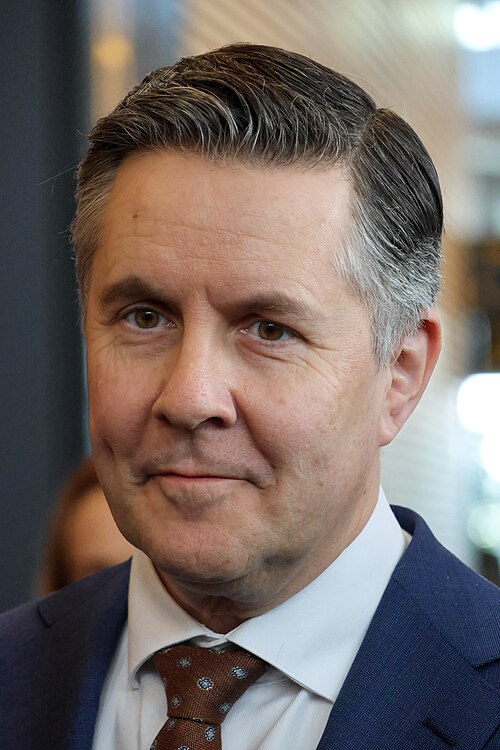
Mark Butler
Australian Labor Party Member for Hindmarsh
Currently sitting
Photo: Yu Chu Chin, CC BY-SA 4.0, via Wikimedia Commons
Seat and party history (2)
- Australian Labor Party - Hindmarsh (House) - 18 May 2019 to present
- Australian Labor Party - Port Adelaide (House) - 24 Nov 2007 to 18 May 2019
- Seat and party records: OpenAustralia member data.
Contact
Electorate office: (08) 8241 0190
21 Commercial Road, Port Adelaide SA 5015
Office details: Parliament of Australia, CC BY-NC-ND 4.0.
Contact details on aph.gov.au Profile on OpenAustraliaNot sure if this is your member? Find your electorate (AEC)
These counts cover what is on this site only. They do not measure electorate work or committee work.
Compared with other members
Mark Butler compared with all 150 sitting House members.
Questions asked in Question Time
Lower than 74% of House members- This member
- 2
- Average
- 11.2
- Median
- 12
Debates spoken in
Higher than 55% of House members- This member
- 34
- Average
- 35.9
- Median
- 30.5
Votes cast
Higher than 54% of House members- This member
- 272
- Average
- 253.0
- Median
- 265
Share of divisions voted in
Higher than 52% of House members- This member
- 82%
- Average
- 79%
- Median
- 81%
Read these with care
- The median is the middle member: half did more, half did less. It is less affected by a few very active members than the average.
- Ministers answer questions rather than ask them, and the presiding officers rarely vote, so their patterns differ.
- Government backbenchers are often given arranged "Dorothy Dixer" questions, which raises their question counts.
- Votes only record ayes and noes, so a missed vote cannot be told apart from a pair (an agreed absence).
- Counts cover only what is on this site, and do not measure electorate or committee work. New members have less history.
Question Time
Question from Mark Butler
The member asked for further details on the government's response to the college's concerns and the rationale for the rebate changes.
Background: Follow-up to the previous question regarding private health insurance rebate changes.
Answer from Mark Butler (Minister for Health and Ageing)
The minister stated that the changes were necessary to fund additional aged care beds and support at home packages. He argued that the changes restored the rebate to its original design, which did not differentiate based on age. He dismissed concerns about membership drops as misinformation, citing government modelling and independent analysis from the University of Melbourne, and noted that previous industry predictions of mass exodus from insurance had not materialised.
Question from Mark Butler
The minister outlined the government's efforts to compress a decade of reform into three years, attributing the previous neglect to budget cuts initiated by the former Minister for Aged Care, who was now the Leader of the Opposition.
Background: The Minister for Health and Aged Care provided context on the doubling of home care packages over five years and the need for continued reform due to the ageing baby boomer population.
Answer from Hon. Members
Honourable members interjected, preventing a formal answer from being recorded.
Question from Zaneta Mascarenhas
The member asked how new medicine listings on the PBS were assisting women with breast cancer and endometriosis.
Background: A government member asked the Health Minister about new PBS listings for breast cancer and endometriosis treatments.
Answer from Mark Butler
The minister explained that the government secured an expedited PBS listing for triptorelin, an alternative to Zoladex, which was being withdrawn. The new drug will be available from 1 October at a cost of $25 per script, compared to the previous price of $1,350. He highlighted the anxiety caused by the withdrawal of Zoladex and the government's collaboration with health communities to find an equivalent treatment to prevent women from making irreversible surgical decisions.
Question from Monique Ryan
The member asked if cutting healthcare supports to pensioners was the only place the government could find budget savings, citing PBO analysis that 1.5 million pensioners would lose $1.5 billion in support.
Background: Parliamentary Budget Office analysis suggested half the savings from private health insurance rebate cuts would come from pensioners.
Answer from Mark Butler
The minister stated that hard decisions were necessary to fund significant additional investment in aged care, including more beds and support at home packages. He argued that the changes restored the rebate to its original design, removing age-based differentiation introduced by the Howard government. He cited government modelling indicating an average impact of 70 cents per day and around 44,000 people potentially withdrawing from insurance, dismissing industry predictions as self-serving and inaccurate.
Question from Darren Chester
The member asked why the government was making life harder for age pensioners by cutting their private health insurance rebate during a cost-of-living crisis.
Background: The government proposed cutting the private health insurance rebate for older Australians to fund aged care.
Answer from Mark Butler
The minister explained that the $3 billion saved would be invested in aged care beds, Support at Home packages, and reversing co-contributions for hygiene services. He stated that the decision was necessary to provide adequate care for an ageing population and that the rebate would revert to its initial structure, which was not age-discriminatory.
Question from Sam Lim
The member asked how new PBS listings were helping Australians living with motor neurone disease.
Background: New medicines were being listed on the Pharmaceutical Benefits Scheme to help patients with MND.
Answer from Mark Butler
The minister announced that a new drug, Qalsody, would be listed on the PBS from 1 October for patients with a specific SOD1 protein mutation. He noted that the drug had shown extraordinary results in halting disease progression for some patients. He stated that the treatment would cost $25 per script instead of over $28,000, benefiting approximately 70 patients per year.
Question from Andrew Wallace
The member asked why the government would not review its stance on the private health insurance rebate, citing the financial impact on older Australians.
Background: A regional couple claimed the private health rebate cut would leave them $800 out of pocket annually.
Answer from Mark Butler
The minister stated that the rebate changes were necessary to fund $3 billion in aged care services. He explained that the reform returned the rebate to its original design, removing age-based differentiation so that subsidies were based solely on income. He noted that the average affected member would pay an extra 70 cents per day. He challenged the opposition to explain how they would fund the aged care expansion without the rebate savings.
Question from Mary Aldred
The member asked why the Prime Minister would not give a straight answer on whether he would cut the tobacco excise.
Background: The member alleged the Prime Minister had refused to answer whether he would cut the tobacco excise on multiple occasions.
Answer from Mark Butler
The Minister noted that the current government had increased tobacco excise by just under 40 per cent, compared to a 215 per cent increase under the former government. He argued that the previous government did not reinvest excise revenue into enforcement or public health campaigns, leading to a flood of illicit tobacco and vapes. He stated that the current government was boosting enforcement resources and cooperating with state governments to combat organised crime. He expressed openness to sensible ideas that did not prejudice public health campaigns.
Question from Jerome Laxale
The member asked how the government was reducing medicine costs and how new PBS listings for advanced cancers would change lives.
Background: The member asked how the government was making medicines cheaper and how new PBS listings for advanced cancers would affect patients.
Answer from Mark Butler
The Minister highlighted the expansion of PBS listings for Keytruda to cover every cancer type, eliminating previous gaps where patients faced high out-of-pocket costs. He noted that similar pan-tumour listings had been made for Opdivo and Yervoy earlier in the year. He described this as a world-first achievement that delivered equity in cancer care. He expressed confidence that other immunotherapies would follow suit, ensuring affordable access to effective treatments for all Australians.
Question from Dai Le
The member asked whether the government would allow an exceptional circumstances review for her electorate to enable recruitment of doctors, given that high bulk-billing rates did not reflect actual access due to GP shortages.
Background: The member highlighted that despite high bulk-billing rates in her electorate, there was a shortage of GPs and that the area was excluded from priority recruitment zones.
Answer from Mark Butler
The minister acknowledged the high bulk-billing rates in Fowler but noted the challenge of training more GPs, stating that 350 additional Commonwealth supported places had been added to medical schools. He explained that current distribution levers prioritized rural and regional areas for overseas doctors, which sometimes disadvantaged outer-suburban areas with low doctor-to-population ratios. He stated that the government was engaging with medical and patient groups to find a more forensic way to address these shortages, though he noted the complexity of balancing rural and metropolitan needs.
Question from Angus Taylor
The member asked whether the Prime Minister would agree with the New South Wales Premier that the current policy was failing and join the coalition to reduce tobacco taxes and combat organized crime.
Background: The member quoted the New South Wales Premier criticizing the government's illicit tobacco policy and asked if the Prime Minister would join the coalition to crush organized crime.
Answer from Mark Butler
The minister stated that the government would not join the coalition in a price-discounting war with organized crime, arguing that the opposition's policy assumed criminals would not lower prices and failed to consider public health impacts. He cited evidence from Canada where smoking rates among young people increased after tax cuts. He criticized the opposition for not funding enforcement during their time in government and stated that the government's focus was on shutting down illicit stores and taking legal action, rather than lowering taxes.
Question from Mary Aldred
The member asked whether the minister would admit that government tobacco policies had led to more Australians smoking illicit cigarettes, citing the New South Wales Premier's comments.
Background: The member quoted the New South Wales Premier claiming the policy was driving more people to smoke illicit cigarettes.
Answer from Mark Butler
The minister acknowledged that the illicit share of tobacco smoking had grown but disputed the claim that overall smoking rates had increased. He cited the Institute of Health and Welfare, which reported that daily adult smoking rates had declined by about half a million over the last three years. He noted that tobacco excise had increased by 215 per cent under the previous government and less than 40 per cent under the current one. He criticized New South Wales and Victoria for being slow to implement enforcement powers compared to Queensland and South Australia.
Question from Jess Teesdale
The member asked how the government was delivering better healthcare for Australian women and why this was important for strengthening Medicare.
Background: The member asked about government actions to deliver better healthcare for women and strengthen Medicare.
Answer from Mark Butler
The minister said that female patients used roughly 60 per cent of healthcare services and pointed to new PBS listings for birth control, menopause care, and endometriosis drugs. He noted that over 400,000 women had obtained lower-cost prescriptions for contraception and more than 500,000 had gained access to budget-friendly menopause care. He referred to the rollout of bulk-billed IUDs and contraceptive implants, as well as an extended menopause health assessment used by 140,000 women. He confirmed that all 33 endometriosis and pelvic pain clinics were open, claiming these measures corrected years of oversight.
Question from Mary Aldred
The member asked when the Prime Minister would join the Coalition to crush organised crime gangs profiting from illicit tobacco.
Background: The member cited nearly 200 tobacco-related arson attacks in Victoria and profits made by gangs from illicit tobacco.
Answer from Mark Butler
The Minister noted that tobacco excise had increased by less than 40 per cent under the current government, compared to over 215 per cent under the previous administration. He highlighted a $350 million increase in enforcement activity and tripling of border interceptions. He pointed to Queensland and South Australia as leaders in enforcement, contrasting them with slower responses in other states. He emphasised that smoking rates were still declining and warned that cutting excise, as proposed by the opposition, would likely increase consumption, particularly among young people.
Question from Libby Coker
The member asked how the government was delivering on its commitments to strengthen Medicare, improve bulk-billing rates, and ensure the future of the NDIS.
Background: The member asked about government efforts to strengthen Medicare, restore bulk-billing, and secure the National Disability Insurance Scheme.
Answer from Mark Butler
The Minister highlighted the opening of the Torquay Medicare Urgent Care Clinic, which provides seven-day-a-week bulk-billed urgent care. He reported that bulk-billing rates in Corangamite had risen from 65 per cent to over 80 per cent following government investments. He thanked the member for her work on the NDIS joint standing committee, which informed recent reforms to tighten controls on fraud and integrity. The Minister affirmed that despite these changes, the NDIS would continue to grow as a major social program.
Question from Rob Mitchell
The member asked how the government was securing the NDIS's future and working with jurisdictions to deliver support for people with disability.
Background: The member asked about the government's efforts to secure the NDIS's future and collaborate with states on disability support.
Answer from Mark Butler
The minister stated that the Senate had passed reforms to make the NDIS sustainable, addressing issues of cost and fraud. He assured participants that the scheme would remain the largest social program outside the aged pension. He highlighted that new eligibility tests were being developed to focus on significant and permanent disability, while state governments were rebuilding support systems for lower-needs individuals. He noted that all states except Queensland had finalized plans for the Thriving Kids program, with rollout expected by the end of next year ahead of eligibility changes in January 2028.
Question from Mike Freelander
The member asked how the government was securing the future of the NDIS and why it was important to protect the scheme for future generations.
Background: Reforms to secure the future of the NDIS were being considered by the Senate.
Answer from Mark Butler
The Minister stated that the NDIS had grown too large and costly, becoming a target for fraud. He reported that the Senate would consider legislation to make the scheme sustainable, including 33 additional amendments to clarify protections for high-support-need participants and tighten fraud controls. He thanked the shadow minister for constructive engagement on fraud and integrity amendments, emphasizing that the reforms would ensure the scheme's long-term viability.
Question from Sophie Scamps
The member asked the Minister for Health and Ageing how the government would ensure no NDIS participant was exited from the scheme until appropriate foundation supports were fully funded and operational.
Background: The member cited warnings from a Senate inquiry that alternative foundational supports were not ready or fully funded before NDIS participants were moved off the scheme.
Answer from Mark Butler
The minister stated that foundational supports were agreed to be in place by 1 January 2028, following a 2023 National Cabinet decision. He noted that $10 billion had been committed to fund these supports, shared between the Commonwealth and states. He mentioned that Thriving Kids was underway and would ramp up from 1 October, with full rollout expected by 1 January 2028 for children under nine. He affirmed that the government would ensure no Australians were left without adequate assistance.
Question from Henry Pike
The member asked why Australians were being punished with a tax grab due to government spending issues.
Background: A shadow minister claimed changes to private health rebates would add $1,000 to annual bills for elderly couples.
Answer from Mark Butler
The Minister disputed the $1,000 figure, stating the average impact would be $220 to $250 per year. He explained the changes were necessary to fund aged-care services, including more beds and Support at Home packages. He noted the reforms returned the rebate to its original design, ensuring equal subsidies for households on the same income regardless of age.
Question from Anne Webster
The member asked why the Prime Minister was imposing a tax on private health insurance that she claimed would increase premiums by 21 per cent and out-of-pocket costs significantly.
Background: The member cited concerns from older Australians about a tax on private health insurance leading to premium surges.
Answer from Mark Butler
The Minister stated the decision was necessary to fund aged-care expansion, addressing neglect from the previous government. He explained the change returned subsidies to their original position, removing age differentiation. He cited Treasury modelling predicting only 44,000 people leaving private health insurance, less than half a per cent of membership, and noted that membership was increasing. He challenged the opposition to propose an alternative funding source for aged care.
Question from Jess Teesdale
The member asked how the government was bolstering Medicare and simplifying access to free medical consultations.
Background: A government member asked about strengthening Medicare after a decade of cuts.
Answer from Mark Butler
The Minister highlighted the success of urgent care clinics, citing over 65,000 visits in Launceston. He reported that bulk-billing rates for retirees and concession card holders in Bass had risen from 80 per cent to over 90 per cent, with increases for non-concession holders. He stated bulk-billing was up in every state and territory. He contrasted this with the opposition's history of cuts and lack of health policy, noting the shadow minister had asked the department for a definition of Medicare.
Question from Sophie Scamps
The member asked when the government would implement a sugar-sweetened beverage reformulation levy to protect children's dental health.
Background: The member cited high rates of childhood tooth decay and asked for a sugar-sweetened beverage levy.
Answer from Mark Butler
The Minister said the government did not intend to levy a charge on sugary drinks. He pointed out the low take-up of the childhood dental benefits scheme and noted that front-of-packet labelling would become compulsory. He referred to talks with industry about reformulating foods to cut sugar, citing differences in beverage sugar levels between Australia and the UK.
Question from Carol Berry
The member asked how the government was increasing bulk-billing rates and strengthening Medicare after a period of reduced funding.
Background: A government member asked about efforts to improve access to free doctor visits and strengthen the Medicare system.
Answer from Mark Butler
The Minister reported that bulk-billing rates for pensioners, children, and concession card holders had risen to over 93 per cent nationally, up from a low of 75 per cent. He noted that recent extensions of bulk-billing support to all Australians had lifted the national rate to 84 per cent. The Minister highlighted significant increases in specific electorates, including a 25 per cent rise in Whitlam. He contrasted this with the opposition's lack of understanding of Medicare, referencing a recent inquiry where the shadow minister questioned the definition of the system.
Question from Pat Conaghan
The member asked how many older Australians would be worse off due to the cut in the private health insurance rebate.
Background: The government cut the private health insurance rebate for Australians over 65.
Answer from Mark Butler
The minister explained that the change addressed inequities where households with the same income received different support based on age. He stated that modelling indicated approximately 44,000 people, or 0.4 per cent of health insurance membership, would change their status. He noted that overall health insurance membership has been growing by two per cent annually and would continue to do so.
Question from Anne Urquhart
The member asked how the government is delivering a stronger Medicare after a decade of cuts.
Background: The government is increasing funding for public hospitals and bulk-billing.
Answer from Mark Butler
The minister highlighted that Tasmania's public hospitals received an additional $160 million, a 20 per cent increase, freeing them from previous funding caps. He noted that bulk-billing rates had increased significantly, reaching over 93 per cent for pensioners and 97 per cent for those without concession cards. He criticized the opposition for attempting to rebrand themselves as the party of Medicare despite their history of cuts.
Question from Cassandra Fernando
The member asked what measures starting that day would strengthen Medicare and deliver cost-of-living relief, citing previous neglect.
Background: The member asked about measures to strengthen Medicare and provide cost-of-living relief starting that day.
Answer from Mark Butler
The Minister highlighted a bulk-billing rate over 94 per cent in the member's electorate. He noted that public hospitals received $37 billion in funding, triple the previous agreement. He mentioned new menopause and perimenopause support items and clinics. He also stated that 10 new medicines were added to the PBS, including treatments for cancer, growth hormone deficiency, severe asthma, and myasthenia gravis.
Question from Helen Haines
The member asked if the government could guarantee that rural communities without Medicare urgent care clinics would not lose access to after-hours care.
Background: The member noted that Murray Primary Health Network had its after-hours funding cut, citing the rollout of Medicare urgent care clinics, but pointed out that rural areas like Indi still lack access to these clinics.
Answer from Mark Butler
The Minister explained that funding adjustments were due to a transformation in health access, particularly the rollout of 1800MEDICARE, which provides 24/7 nurse advice and free telehealth GP services after 6 pm. He noted that 1800MEDICARE had responded to 700,000 episodes of service since January. While acknowledging that urgent care clinics do not cover every regional community, he stated that the combination of 1800MEDICARE, urgent care clinics, and bulk-billing incentives was delivering a stronger Medicare service. He confirmed that the specific service in question would receive reduced funding for 2026-27 reflecting lower service volumes.
Question from Rebekha Sharkie
The member asked how the government could improve education for youth regarding early onset bowel cancer and what assistance could be given to GPs to promote earlier screening.
Background: The member noted that young Australians are being diagnosed with bowel cancer at the highest rate in the world, and GPs are often reluctant to screen young patients.
Answer from Mark Butler
The Minister stated that the government had funded Cancer Australia to research the causes of the increase in early onset bowel cancer. He noted that the causes were not yet fully understood. The Minister mentioned that the government was working with the college of GPs to provide materials and resources to help doctors recognize symptoms in young patients. He also highlighted the role of campaign groups in raising awareness among young Australians to report symptoms.
Question from Gordon Reid
The member asked for details on the impact of Medicare urgent care clinics and the importance of strengthening Medicare.
Background: The member asked how Medicare urgent care clinics were helping Australians and why strengthening Medicare was important after a decade of cuts.
Answer from Mark Butler
The Minister stated that bulk-billing rates had climbed by more than 10 per cent for non-concession card holders since November. He noted that 137 urgent care clinics had been delivered, with over 3.2 million Australians using them. The clinics were staffed by doctors and nurses, open seven days a week, and fully bulk-billed. The Minister emphasized that these clinics were a permanent feature of Medicare, backed by the trusted Medicare brand.
Question from Josh Burns
The member asked how the government was making medicines cheaper and how new PBS listings were changing lives.
Background: A government member asked the Minister for Health about making medicines cheaper and the impact of new PBS listings.
Answer from Mark Butler
The minister noted that over 460 new medicines had been listed on the PBS since the government took office, with 10 more to be listed on 1 July. He highlighted the listing of Tezspire for severe asthma, which affects one in 10 Australians. He stated that without the PBS listing, patients would pay up to $1,600 per injection, but with the listing, they would pay PBS prices. He emphasised that this would provide life-saving relief to patients who could not control their asthma with inhalers alone.
Question from Claire Clutterham
The member asked what measures the government was taking to protect public health from H5 bird flu and why it was important to take the threat seriously.
Background: A government member asked the Minister for Health about steps to safeguard people's wellbeing following the identification of H5 avian influenza.
Answer from Mark Butler
The Minister noted that H5N1 had been detected in migratory birds and that the government had been preparing for years across portfolios including Agriculture, Environment, and Health. He emphasized the seriousness of the risk to industries and public health, citing international experience. He criticized a Liberal senator for dismissing the threat as a pharmaceutical conspiracy and accused the Leader of the Opposition of lacking leadership by not addressing the issue.
Question from Renee Coffey
The member asked how urgent care clinics were improving access to doctors and strengthening Medicare after years of neglect.
Background: A government member asked the Minister for Health how urgent care clinics were making it easier to see a doctor and strengthening Medicare.
Answer from Mark Butler
The Minister reported that all 137 committed urgent care clinics were open, operating seven days a week with extended hours and bulk-billing. He noted they had treated over 3.2 million patients, with four in five Australians living within a 20-minute drive. He stated that half of patients would otherwise have visited emergency departments, reducing pressure on hospitals.
Question from Lisa Chesters
The member asked how the government was providing increased bulk-billing for Australians following ten years of reductions.
Background: A government member asked about the government's efforts to increase bulk-billing rates.
Answer from Mark Butler
The Minister highlighted investments in Medicare urgent care clinics and cheaper medicines. He stated that bulk-billing incentives for GPs had been tripled for pensioners and concession card holders in 2023 and extended to all Australians in November. He noted that in Bendigo, the general bulk-billing rate had increased from 68 per cent to 89 per cent since 2023. He emphasized that these investments were improving access to healthcare and reducing costs for households.
Question from Zhi Soon
The member asked how the government is delivering cheaper medicines.
Background: The member sought to highlight the government's record on cheaper medicines after a decade of cuts.
Answer from Mark Butler
The Minister reported that 450 new or amended PBS listings had been made since the government took office. He highlighted new listings for blood cancer treatments, Blincyto and Calquence, which reduce costs from $230,000 and $7,000 per month respectively to PBS prices. He stated that nearly $3 billion in co-payment savings had been achieved by Australians, and pensioners have received 90 million additional free scripts. The maximum co-pay for concession card holders is frozen at $7.70, and non-concession holders pay no more than $25.
Question from Luke Gosling
The member asked how government investments in bulk-billing and urgent care were simplifying access to medical consultations for Australians.
Background: A government member asked the Minister for Health how investments in bulk-billing and urgent care were improving access to doctors after a decade of cuts.
Answer from Mark Butler
The Minister noted that the bulk-billing rate in the member's electorate had reached 90 per cent, a 23 per cent increase since 2023. He highlighted the opening of the 136th urgent care clinic in Darwin and a 30 per cent increase in hospital funding for the Northern Territory. The Minister emphasized that these investments were reversing previous underfunding and improving access to care, particularly for those without concession cards.
Question from Gordon Reid
The member asked how the government was strengthening Medicare after a decade of cuts and what additional budget support was provided to lift bulk-billing rates in the Central Coast and Hunter region.
Background: A government member asked the Minister for Health how the government was strengthening Medicare and what additional support the budget provided for bulk-billing in specific regions.
Answer from Mark Butler
The Minister stated that bulk-billing rates had plummeted under the previous government due to frozen Medicare rebates. He noted that the government had tripled the bulk-billing incentive for pensioners and concession card holders, raising the rate to around 93 per cent, and extended support to all Australians. He reported that over 1,400 general practices had shifted to 100 per cent bulk-billing since November. He acknowledged that bulk-billing rates in Newcastle, Lake Macquarie, the Hunter, and the Central Coast were below the NSW average and announced funding for six new clinics in those regions that would fully bulk bill to increase competition and spread benefits.
Question from Bob Katter
The member asked whether the Minister had done everything he could to reverse Australia's failure to meet international obligations regarding the bone marrow donor registry.
Background: The member for Kennedy asked the Health Minister if he had done everything possible to grow the bone marrow donor registry, citing the loss of 18,000 lives in three years.
Answer from Mark Butler
The Minister acknowledged the member's personal loss and the campaigners' efforts. He stated that additional funds had been released, resulting in double-digit growth in donor recruitment in 2024 and a 30 per cent expansion in the current financial year. He addressed the question of raising the age limit for registrants from 35 to 40, noting that clinical advice favored younger donors but that the need for a wider donor base was also important. He committed to reviewing progress and directing the new provider to seek clinical advice on raising the age limit and other ideas from the Life-saving List campaign.
Question from Meryl Swanson
The member asked what actions the government has taken to support women experiencing menopause and perimenopause and why open discussion is important.
Background: A government member asked the Minister for Health and Ageing about actions taken to help women going through menopause and perimenopause.
Answer from Mark Butler
The Minister highlighted the launch of a national information campaign to break the silence around menopause. He noted that a new Medicare item has been used by over 105,000 women and that three new treatments were added to the PBS, saving users up to $580 annually. He also mentioned updated clinical guidelines and increased training for health professionals to improve care.
Question from Joanne Ryan
The member sought an update on government measures to safeguard Australians and assist passengers impacted by the hantavirus outbreak.
Background: A government member asked the Minister for Health and Ageing for an update on steps taken to protect Australians from the hantavirus outbreak linked to the MV Hondius cruise ship.
Answer from Mark Butler
The Minister reported that 11 people had contracted hantavirus, with three deaths, all from the ship. He stated that human-to-human transmission is rare. Six passengers were being repatriated to Australia, with a flight landing in the Netherlands before heading to RAAF Base Pearce in Perth. The passengers were symptom-free and tested negative. They would be quarantined at the Centre for National Resilience in Bullsbrook for at least three weeks under strict conditions developed by the CDC.
Question from Rebekha Sharkie
The member asked why the government was treating older Australians badly by ending the rebate, which could increase premiums by up to $1,600 for couples, forcing them to choose between food and health insurance.
Background: The member for Mayo questioned the Minister for Health and Ageing about the removal of the private health insurance rebate for older Australians, citing concerns about affordability.
Answer from Mark Butler
The Minister disputed the $1,600 figure, stating the average impact would be between $230 and $250 per year. He explained that the government does not see a rationale for providing different levels of support based on age for households on the same income. He stated that the $3 billion in savings would be invested in aged care services, including more beds and better care, to address rising demand.
Question from Anne Urquhart
The member asked how the government was continuing to strengthen Medicare following a decade of cuts and neglect.
Background: A government member asked the Minister for Health how the government was strengthening Medicare after a decade of cuts.
Answer from Mark Butler
The Minister stated that the budget provisioned $25 billion in additional hospital funding, with Tasmania receiving almost $1 billion. He noted that Medicare urgent care clinics were made permanent, with the Devonport clinic seeing more than 40,000 people. The Minister highlighted that in Braddon, seven out of 10 general practices bulk-billed all patients, and 212 million cheaper scripts had been provided. He also mentioned investments in mental health, including a new centre in Devonport and upgrades in Burnie.
Question from Dai Le
The member asked about the impact of NDIS cuts on Australians with disability and how much of the Inclusive Communities Fund was allocated to the CALD community.
Background: The member for Fowler asked about the impact of NDIS cuts on 160,000 Australians and how much of the Inclusive Communities Fund was quarantined for the CALD community.
Answer from Mark Butler
The Minister stated that the government was determined to get the NDIS back on track due to rapid cost growth and fraud. He announced that legislation would be introduced to implement financial controls. The Minister noted that only nine per cent of NDIS participants were registered as CALD, despite 30 per cent of the population identifying as such. He mentioned that a CALD strategy had been co-designed with over 800 people and that an expert advisory group would be expanded to include reforms relevant to the CALD community.
Question from Carol Berry
The member asked how the government was working to secure the NDIS for future generations.
Background: A government member asked the Minister for Disability how the government was working to secure the NDIS for future generations.
Answer from Mark Butler
The Minister stated that the NDIS was growing too fast and costing too much, with costs blowing out by more than $13 billion since December. He announced that legislation would be introduced to control scheme and plan inflation. The Minister outlined four pillars: fighting fraud, slowing cost increases, clarifying eligibility, and delivering quality supports. He projected that the NDIS would cost $55 billion by the end of the decade, down from $70 billion, but would continue to grow annually.
Question from Monique Ryan
The member asked when the national health and medical research strategy would be released, given the additional funding for medical research in the budget.
Background: The member for Kooyong asked when the national health and medical research strategy would be released, following the budget's additional funding for medical research.
Answer from Mark Butler
The Minister stated that the budget included approximately $500 million in new funding to increase Medical Research Future Fund disbursements to $1 billion annually by the end of the decade. He noted that a unified strategy had been delivered to the government by Rosemary Huxtable. The Minister indicated that he would wait for budget outcomes regarding MRFF disbursements and the one-stop shop for clinical trials before releasing the strategy, but would have more to say in the coming days.
Question from Luke Gosling
The member inquired about measures to protect Australians and quarantine arrangements for passengers repatriated from the hantavirus-affected cruise ship.
Background: The member asked about government actions to protect Australians and support quarantine for passengers affected by the hantavirus outbreak on a cruise ship.
Answer from Mark Butler
The Minister stated that hantavirus had been listed as a human disease under the Biosecurity Act, allowing for quarantine orders. Five Australians and one New Zealander were being repatriated from Tenerife to the Netherlands and then to Australia. They would be flown into RAAF Base Pearce and transferred to the national resilience centre at Bullsbrook for a three-week quarantine, staffed by personnel from Darwin. This was described as the strongest quarantine arrangement among governments receiving repatriated passengers.
Question from Ali France
The member inquired about the role of urgent care clinics in improving access to doctors and strengthening Medicare after previous cuts.
Background: The member asked how the government was making it easier for Australians to access urgent care and how urgent care clinics were strengthening Medicare.
Answer from Mark Butler
The Minister highlighted the Murrumba Downs Medicare urgent care clinic, which was 100 per cent bulk-billing and had seen almost 35,000 patients. He noted that 135 clinics were open, with two more opening soon, totaling 137. These clinics had seen about three million patients, with half reporting they would otherwise have used emergency departments. The clinics were fully bulk-billed and open seven days a week. The budget would lock in urgent care as a permanent part of Medicare with $1.8 billion over five years.
Question from Jerome Laxale
The member asked how the government was delivering cost-of-living relief through cheaper medicines and new PBS listings for cancer treatments.
Background: A government member asked about cost-of-living relief through cheaper medicines and new PBS listings for cancer treatments.
Answer from Mark Butler
The Minister thanked the member and highlighted a new PBS listing for Keytruda covering three new cancer types: locally advanced cervical cancer, renal cell carcinoma, and locally advanced head and neck cancer. The listing took effect the next day, reducing the cost from over $15,000 per infusion to $25. Over 10,000 patients annually were expected to benefit. The Minister shared testimonials from patients who expressed relief and hope due to the listing. He emphasized the government's commitment to making medicines affordable.
Question from Susan Templeman
The member asked how the government was making medicines cheaper for all Australians and how new PBS listings for multiple myeloma were improving patient lives.
Background: A government member asked how the government was delivering cost-of-living relief through cheaper medicines and how new PBS listings were helping Australians with multiple myeloma.
Answer from Mark Butler
The Minister noted that over 20,000 Australians battled myeloma, with a five-year survival rate of 60 per cent. He highlighted the listing of Darzalex in November, reducing treatment costs from $440,000 to PBS prices for around 1,300 to 1,400 patients annually. He announced the upcoming listing of Elrexfio for relapsed cases, reducing script costs from $5,000 to no more than $25. He also mentioned progress in finalizing a deal for Carvykti, a CAR-T cell therapy. The Minister thanked community leaders and clinicians for their advocacy and emphasized the value of the PBS in providing affordable access to new medicines.
Question from Matt Burnell
The member asked how the government was facilitating free GP access for Australians and why this mattered following ten years of reductions.
Background: A government member asked the Minister for Health and Ageing how the government was facilitating free GP access for Australians.
Answer from Mark Butler
The minister reported that bulk-billing had improved since the government tripled the bulk-billing incentive and extended payments to all Australians. He stated that the count of Spence general practices providing full bulk-billing to every patient had tripled since November, with two out of three practices now 100 per cent bulk-billing. Nationally, 3,621 general practices were bulk-billing all patients, achieving the 2028 target early. He highlighted new health services in Adelaide's north, including an urgent care clinic, a headspace service, and a perinatal mental health centre.
Question from Bob Katter
The member asked the minister to act immediately to stop what he described as genocide, citing diabetes deaths and the abolition of mission market gardens and restrictions on local food sources.
Background: The member for Kennedy asked the Minister for Health and Ageing about diabetes deaths in the Cape York region and the impact of government policies on food security.
Answer from Mark Butler
The minister rejected the characterization of genocide but acknowledged the member's interest in the area. He stated that the government was working to improve food security through the Low-Cost Essentials Subsidy Scheme, which subsidized essential items in remote communities, saving up to 50 per cent in about 113 stores. He noted that the government was seeking to build renal services in remote communities to allow dialysis on country. He emphasized the commitment to addressing the public health challenge of diabetes and improving access to affordable food.
Question from Matt Smith
The member asked how the government was making it easier to see a doctor for urgent care and why the new model was introduced.
Background: Australians were seeking easier access to urgent medical care.
Answer from Mark Butler
The minister stated that 134 Medicare urgent care clinics were open, having seen more than 2.7 million Australians, all bulk-billed. He noted that over 60 per cent of general practices were bulk-billing 100 per cent of patients. He highlighted the success of clinics in Cairns and Melbourne, contrasting the government's approach with the opposition's lack of health policy.
Question from Sarah Witty
The member asked how the government was reducing medicine costs and how these measures supported Medicare after a decade of neglect.
Background: A government member asked the Minister for Health how the government was making medicines cheaper and how this strengthened Medicare.
Answer from Mark Butler
The Minister highlighted the listing of over 400 new medicines on the PBS, including Ultomiris for myasthenia gravis, reducing costs from $25,000 to $25 per script. He noted that pensioners and concession cardholders had received 90 million free scripts due to safety net changes, with maximum script prices locked at $7.70. For general patients, script prices were capped at $25, saving Australians over $2.3 billion. The Minister emphasized that these measures improved affordability and health outcomes.
Other Parliamentary Activity
-
Private Health Insurance Amendment (Modernising the Private Health Insurance Rebate) Bill 2026; Third Reading
House of Representatives · Wednesday 16 September 2026 · Third Reading
Contributed to this debate
-
Health Legislation Amendment (Improving Choice and Transparency for Private Health Consumers) Bill 2026; Consideration of Senate Message
House of Representatives · Wednesday 16 September 2026 · Consideration of Senate Message
Contributed to this debate
-
National Disability Insurance Scheme Amendment (Securing the NDIS for Future Generations) Bill 2026; Consideration of Senate Message
House of Representatives · Wednesday 19 August 2026 · Consideration of Senate Message
Opened this debate
-
Health Insurance Amendment (Incentive Payments and Other Measures) Bill 2026; Second Reading
House of Representatives · Thursday 2 July 2026 · Second Reading
Responded as minister
-
National Disability Insurance Scheme Amendment (Securing the NDIS for Future Generations) Bill 2026; Third Reading
House of Representatives · Thursday 2 July 2026 · Third Reading
Contributed to this debate
-
Health Insurance Amendment (Incentive Payments and Other Measures) Bill 2026; Third Reading
House of Representatives · Thursday 2 July 2026 · Third Reading
Contributed to this debate
-
Scolyer, Professor Richard, AO
House of Representatives · Wednesday 1 July 2026 · Condolence
Contributed to this debate
-
National Disability Insurance Scheme Amendment (Securing the NDIS for Future Generations) Bill 2026; Consideration in Detail
House of Representatives · Wednesday 1 July 2026 · Consideration in Detail
Responded as minister
-
Health Legislation Amendment (Prescribing of Pharmaceutical Benefits) Bill 2025; Consideration of Senate Message
House of Representatives · Wednesday 1 July 2026 · Consideration of Senate Message
Opened this debate
-
Private Health Insurance Amendment (Modernising the Private Health Insurance Rebate) Bill 2026; Second Reading
House of Representatives · Thursday 25 June 2026 · Second Reading
Opened this debate
-
Health Legislation Amendment (Improving Choice and Transparency for Private Health Consumers) Bill 2026; Third Reading
House of Representatives · Thursday 25 June 2026 · Third Reading
Contributed to this debate
-
Health Legislation Amendment (Improving Choice and Transparency for Private Health Consumers) Bill 2026; Second Reading
House of Representatives · Thursday 25 June 2026 · Second Reading
Responded as minister
-
Health Legislation Amendment (Improving Choice and Transparency for Private Health Consumers) Bill 2026; Consideration in Detail
House of Representatives · Thursday 25 June 2026 · Consideration in Detail
Responded as minister
-
National Disability Insurance Scheme Amendment (Securing the NDIS for Future Generations) Bill 2026; Second Reading
House of Representatives · Thursday 28 May 2026 · Second Reading
Contributed to this debate
-
National Disability Insurance Scheme Amendment (Securing the NDIS for Future Generations) Bill 2026; Second Reading
House of Representatives · Wednesday 27 May 2026 · Second Reading
Contributed to this debate
-
Health Insurance Amendment (Incentive Payments and Other Measures) Bill 2026; Second Reading
House of Representatives · Wednesday 27 May 2026 · Second Reading
Opened this debate
-
National Disability Insurance Scheme Amendment (Securing the NDIS for Future Generations) Bill 2026; Second Reading
House of Representatives · Thursday 14 May 2026 · Second Reading
Opened this debate
-
Health Legislation Amendment (Improving Choice and Transparency for Private Health Consumers) Bill 2026; Second Reading
House of Representatives · Thursday 12 February 2026 · Second Reading
Opened this debate
-
Health Legislation Amendment (Prescribing of Pharmaceutical Benefits) Bill 2025; Third Reading
House of Representatives · Thursday 5 February 2026 · Third Reading
Contributed to this debate
-
Health Legislation Amendment (Prescribing of Pharmaceutical Benefits) Bill 2025; Second Reading
House of Representatives · Thursday 5 February 2026 · Second Reading
Responded as minister
-
Health Legislation Amendment (Prescribing of Pharmaceutical Benefits) Bill 2025; Consideration in Detail
House of Representatives · Thursday 5 February 2026 · Consideration in Detail
Responded as minister · Position: oppose
-
Bolkus, Hon. Nick
House of Representatives · Wednesday 4 February 2026 · Condolence
Contributed to this debate
-
Bondi Beach Attack Victims
House of Representatives · Monday 19 January 2026 · Condolence
Contributed to this debate
-
Health Legislation Amendment (Prescribing of Pharmaceutical Benefits) Bill 2025; Second Reading
House of Representatives · Wednesday 26 November 2025 · Second Reading
Opened this debate
-
Australian Centre for Disease Control Bill 2025; Third Reading
House of Representatives · Monday 27 October 2025 · Third Reading
Contributed to this debate
-
Australian Centre for Disease Control Bill 2025, Australian Centre for Disease Control (Consequential Amendments and Transitional Provisions) Bill 2025; Second Reading
House of Representatives · Monday 27 October 2025 · Second Reading
Responded as minister
-
Australian Centre for Disease Control Bill 2025, Australian Centre for Disease Control (Consequential Amendments and Transitional Provisions) Bill 2025; Consideration in Detail
House of Representatives · Monday 27 October 2025 · Consideration in Detail
Responded as minister
-
Australian Centre for Disease Control (Consequential Amendments and Transitional Provisions) Bill 2025; Third Reading
House of Representatives · Monday 27 October 2025 · Third Reading
Contributed to this debate
-
Australian Centre for Disease Control (Consequential Amendments and Transitional Provisions) Bill 2025; Second Reading
House of Representatives · Monday 27 October 2025 · Second Reading
Opened this debate
-
Australian Centre for Disease Control Bill 2025; Second Reading
House of Representatives · Wednesday 3 September 2025 · Second Reading
Opened this debate
-
Australian Centre for Disease Control (Consequential Amendments and Transitional Provisions) Bill 2025; Second Reading
House of Representatives · Wednesday 3 September 2025 · Second Reading
Opened this debate
-
National Health Amendment (Cheaper Medicines) Bill 2025; Third Reading
House of Representatives · Thursday 28 August 2025 · Third Reading
Contributed to this debate
-
National Health Amendment (Cheaper Medicines) Bill 2025; Second Reading
House of Representatives · Thursday 28 August 2025 · Second Reading
Opened this debate
-
National Health Amendment (Cheaper Medicines) Bill 2025; Second Reading
House of Representatives · Wednesday 30 July 2025 · Second Reading
Opened this debate
- Votes recorded
- 272
- Aye votes (54.0%)
- 147
- No votes (46.0%)
- 125
Showing the latest 50 votes.
-
Military Rehabilitation and Compensation Amendment (Veterans' Healthcare With...
17 Sep 2026 · Ayes 85, Noes 40 · Passed
VOTED AYE -
Rearrangement
17 Sep 2026 · Ayes 42, Noes 87 · Failed
VOTED NO -
Suspension of Standing and Sessional Orders
17 Sep 2026 · Ayes 42, Noes 89 · Failed
VOTED NO -
Suspension of Standing and Sessional Orders
16 Sep 2026 · Ayes 85, Noes 44 · Passed
VOTED AYE -
Private Health Insurance Amendment (Modernising the Private Health Insurance ...
16 Sep 2026 · Ayes 88, Noes 48 · Passed
VOTED AYE -
Private Health Insurance Amendment (Modernising the Private Health Insurance ...
16 Sep 2026 · Ayes 87, Noes 48 · Passed
VOTED AYE -
Private Health Insurance Amendment (Modernising the Private Health Insurance ...
16 Sep 2026 · Ayes 9, Noes 85 · Failed
VOTED NO -
Private Health Insurance Amendment (Modernising the Private Health Insurance ...
16 Sep 2026 · Ayes 86, Noes 47 · Passed
VOTED AYE -
Private Health Insurance Amendment (Modernising the Private Health Insurance ...
16 Sep 2026 · Ayes 45, Noes 87 · Failed
VOTED NO -
Private Health Insurance Amendment (Modernising the Private Health Insurance ...
16 Sep 2026 · Ayes 46, Noes 86 · Failed
VOTED NO -
Rearrangement
16 Sep 2026 · Ayes 84, Noes 13 · Passed
VOTED AYE -
Rearrangement
15 Sep 2026 · Ayes 49, Noes 87 · Failed
VOTED NO -
Consideration of Legislation
14 Sep 2026 · Ayes 43, Noes 87 · Failed
VOTED NO -
Regulatory Reform Omnibus Bill 2026; Consideration of Senate Message
14 Sep 2026 · Ayes 95, Noes 43 · Passed
VOTED AYE -
Regulatory Reform Omnibus Bill 2026; Consideration of Senate Message
14 Sep 2026 · Ayes 95, Noes 42 · Passed
VOTED AYE -
Albanese Government; Attempted Censure
14 Sep 2026 · Ayes 46, Noes 86 · Failed
VOTED NO -
Statute Update Bill 2026; Consideration of Senate Message
14 Sep 2026 · Ayes 84, Noes 48 · Passed
VOTED AYE -
Online Safety Amendment (Strengthening Enforcement for the Social Media Minim...
10 Sep 2026 · Ayes 95, Noes 37 · Passed
VOTED AYE -
Online Safety Amendment (Strengthening Enforcement for the Social Media Minim...
10 Sep 2026 · Ayes 96, Noes 36 · Passed
VOTED AYE -
Carbon Credits (Carbon Farming Initiative-Improved Forest Management in Multi...
10 Sep 2026 · Ayes 38, Noes 92 · Failed
VOTED NO -
Telecommunications Legislation Amendment (Universal Outdoor Mobile Obligation...
9 Sep 2026 · Ayes 52, Noes 86 · Failed
VOTED NO -
Gun Control
9 Sep 2026 · Ayes 88, Noes 47 · Passed
VOTED AYE -
Veterans
7 Sep 2026 · Ayes 88, Noes 49 · Passed
VOTED AYE -
Cash Distribution Framework Bill 2026; Consideration of Senate Message
20 Aug 2026 · Ayes 84, Noes 34 · Passed
VOTED AYE -
Economy
20 Aug 2026 · Ayes 41, Noes 85 · Failed
VOTED NO -
Universities Accord (Opening the Doors of Opportunity) Bill 2026; Considerati...
20 Aug 2026 · Ayes 90, Noes 36 · Passed
VOTED AYE -
Counter-Terrorism Legislation Amendment Bill 2026; Report from Federation Cha...
20 Aug 2026 · Ayes 39, Noes 90 · Failed
VOTED NO -
Australia's Foreign Relations (State and Territory Arrangements) Amendment Bi...
19 Aug 2026 · Ayes 38, Noes 80 · Failed
VOTED NO -
Combatting Illicit Tobacco Bill 2026; Report from Federation Chamber
19 Aug 2026 · Ayes 41, Noes 84 · Failed
VOTED NO -
Minister for Veterans' Affairs
19 Aug 2026 · Ayes 83, Noes 44 · Passed
VOTED AYE -
News Journalism Payments Bill 2026; Consideration in Detail
19 Aug 2026 · Ayes 11, Noes 69 · Failed
VOTED NO -
News Journalism Payments Bill 2026; Second Reading
19 Aug 2026 · Ayes 40, Noes 83 · Failed
VOTED NO -
Interactive Gambling Amendment (Gambling Reform) Bill 2026; Consideration in ...
18 Aug 2026 · Ayes 33, Noes 95 · Failed
VOTED NO -
Interactive Gambling Amendment (Gambling Reform) Bill 2026; Second Reading
18 Aug 2026 · Ayes 12, Noes 86 · Failed
VOTED NO -
Interactive Gambling Amendment (Gambling Reform) Bill 2026; Second Reading
18 Aug 2026 · Ayes 12, Noes 85 · Failed
VOTED NO -
Royal Commission on Antisemitism and Social Cohesion
18 Aug 2026 · Ayes 87, Noes 48 · Passed
VOTED AYE -
Minister for Veterans' Affairs and Defence Personnel; Attempted Censure
17 Aug 2026 · Ayes 86, Noes 43 · Passed
VOTED AYE -
Cash Distribution Framework Bill 2026; Reference to Federation Chamber
12 Aug 2026 · Ayes 40, Noes 83 · Failed
VOTED NO -
International Relations: Australia and Japan
12 Aug 2026 · Ayes 88, Noes 41 · Passed
VOTED AYE -
Aged Care Amendment (Restoring Human Override for Aged Care Needs Assessments...
11 Aug 2026 · Ayes 42, Noes 87 · Failed
VOTED NO -
Suspension of Standing and Sessional Orders
11 Aug 2026 · Ayes 74, Noes 12 · Passed
VOTED AYE -
Rearrangement
11 Aug 2026 · Ayes 86, Noes 47 · Passed
VOTED AYE -
Rearrangement
2 Jul 2026 · Ayes 90, Noes 42 · Passed
VOTED AYE -
Minister for Defence Industry; Attempted Censure
2 Jul 2026 · Ayes 90, Noes 41 · Passed
VOTED AYE -
Health Insurance Amendment (Incentive Payments and Other Measures) Bill 2026;...
2 Jul 2026 · Ayes 39, Noes 92 · Failed
VOTED NO -
Foreign Affairs, Defence and Trade Joint Committee; Appointment
2 Jul 2026 · Ayes 38, Noes 101 · Failed
VOTED NO -
National Disability Insurance Scheme Amendment (Securing the NDIS for Future ...
1 Jul 2026 · Ayes 90, Noes 33 · Passed
VOTED AYE -
National Disability Insurance Scheme Amendment (Securing the NDIS for Future ...
1 Jul 2026 · Ayes 100, Noes 9 · Passed
VOTED AYE -
National Disability Insurance Scheme Amendment (Securing the NDIS for Future ...
1 Jul 2026 · Ayes 101, Noes 7 · Passed
VOTED AYE -
National Disability Insurance Scheme Amendment (Securing the NDIS for Future ...
1 Jul 2026 · Ayes 9, Noes 64 · Failed
VOTED NO
About this page
This page tracks Mark Butler's parliamentary activity: questions asked and answered in Question Time, debates spoken in, and votes in divisions. Summaries are in reported speech, not transcripts; each one links to the official record.