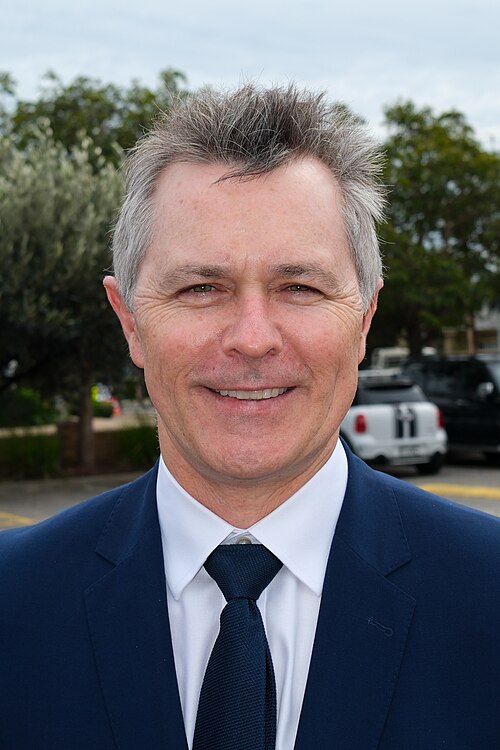
Jason Clare
Australian Labor Party Member for Blaxland
Currently sitting
Photo: Yu Chu Chin, CC BY-SA 4.0, via Wikimedia Commons
Seat and party history (1)
- Australian Labor Party - Blaxland (House) - 24 Nov 2007 to present
- Seat and party records: OpenAustralia member data.
Contact
Electorate office: (02) 9790 2466
Suite 7 Level 1, 400 Chapel Road, Bankstown NSW 2200
Office details: Parliament of Australia, CC BY-NC-ND 4.0.
Contact details on aph.gov.au Profile on OpenAustraliaNot sure if this is your member? Find your electorate (AEC)
These counts cover what is on this site only. They do not measure electorate work or committee work.
Compared with other members
Jason Clare compared with all 150 sitting House members.
Questions asked in Question Time
Lower than 81% of House members- This member
- 0
- Average
- 11.2
- Median
- 12
Debates spoken in
Higher than 53% of House members- This member
- 33
- Average
- 35.9
- Median
- 30.5
Votes cast
Lower than 59% of House members- This member
- 238
- Average
- 253.0
- Median
- 265
Share of divisions voted in
Lower than 59% of House members- This member
- 72%
- Average
- 79%
- Median
- 81%
Read these with care
- The median is the middle member: half did more, half did less. It is less affected by a few very active members than the average.
- Ministers answer questions rather than ask them, and the presiding officers rarely vote, so their patterns differ.
- Government backbenchers are often given arranged "Dorothy Dixer" questions, which raises their question counts.
- Votes only record ayes and noes, so a missed vote cannot be told apart from a pair (an agreed absence).
- Counts cover only what is on this site, and do not measure electorate or committee work. New members have less history.
Question Time
No questions recorded for this member.
Question from Rowan Holzberger
The member asked what actions the government was taking to address bullying in schools and protect children from harmful online content.
Background: A government member asked the Education Minister about actions to address school bullying and online harm.
Answer from Jason Clare
The minister announced that all schools would be required to begin addressing bullying reports within two school days from the start of the next school year. He highlighted the impact of social media algorithms on mental health and supported the digital duty of care to address online harms. He cited the case of a teenager who took her own life after experiencing bullying and algorithm-driven content.
Question from Anne Urquhart
The member asked what the government was doing to assist early childhood educators while maintaining affordable fees for families. She also asked about any risks to this approach.
Background: The parliament had approved a 15 per cent wage increase for childcare staff.
Answer from Jason Clare
The minister confirmed that the 15 per cent pay rise for childcare workers had been locked in, resulting in 20,000 more workers and a 31 per cent drop in vacancies in some areas. He stated that the legislation required centres to limit fee increases, saving the average family about $1,500 over two years. He also noted that centres must meet minimum safety standards to receive funding, including banning phones and rolling out mandatory safety training. He framed the policy as beneficial for workers, parents, and children.
Question from Josh Burns
The member asked what the government was doing to protect children from harmful online content and combat antisemitism in the education system.
Background: Concerns were raised about the rise of antisemitism online and its impact on children.
Answer from Jason Clare
The minister stated that the government had appointed David Gonski to chair the Antisemitism Education Taskforce to address teacher training and curriculum changes. He highlighted the role of algorithms in spreading hate speech and conspiracy theories, citing research that teenagers could be exposed to antisemitic content within an hour of using social media. He supported the digital duty of care to mitigate these risks.
Question from Kate Thwaites
The member asked how the government's reforms were protecting children online and helping them learn, and what the response had been.
Background: The government was implementing reforms to protect children online and improve education.
Answer from Jason Clare
The minister highlighted the New South Wales government's announcement of screen-time limits in schools, supporting the concept of a digital detox. He noted that evidence showed excessive screen time correlated with declining results. He referenced a viral speech by a principal about keeping girls safe from harmful algorithms and cited criticism of algorithms as 'force-fed speech'. He stated that teachers, parents, and principals expected the government to crack down on harmful algorithms.
Question from Sarah Witty
The member asked the Minister for Education how government reforms were strengthening online protection for children and aiding their learning, and what the response to these measures had been.
Background: The government was introducing reforms to protect children online and improve educational outcomes.
Answer from Jason Clare
The Minister stated that evidence showed excessive device use in schools correlated with lower academic results, citing PISA data where students using computers more than six hours daily scored 66 points lower. He noted that almost 40 per cent of Australian students were distracted by devices in class. The Minister announced that reducing technology use in schools would be on the agenda for the upcoming education ministers' meeting. He also highlighted the digital duty of care legislation as a measure to combat harmful algorithms affecting children.
Question from Zhi Soon
The member asked what recent results indicated about Australian students' performance compared to other countries and what this demonstrated regarding the need for reform.
Background: The member asked about recent international student performance results and the importance of education reform.
Answer from Jason Clare
The Minister reported that Australia ranked 11th in reading and science and 17th in maths in the PISA results, while noting significant improvements in the United Kingdom due to long-term reforms like phonics mandates. He argued that the results highlighted a correlation between high screen time and lower academic performance, advocating for a digital detox in schools. He linked online exposure to negative social attitudes among young men and emphasised the importance of the government's digital duty of care announcement to protect children from harmful algorithms.
Question from Mike Freelander
The member asked what the government was undertaking to assist educators in schools and aid student learning, and what the response to these measures had been.
Background: The member asked about government actions to support teachers and improve student learning outcomes.
Answer from Jason Clare
The minister stated that $20 billion had been invested in public schools over the next decade, tied to reforms such as phonics-based reading instruction. He cited an example from a school in the member's electorate where the percentage of Year 1 students on track with reading rose from 22 per cent to 84 per cent. He mentioned upcoming curriculum changes for primary school maths and discussed the need to balance technology use in classrooms, noting evidence that excessive screen time could lower results. He linked these efforts to the broader digital duty of care reforms to protect children from harmful online content.
Question from Joanne Ryan
The member asked why consent and respectful relationships education was important and whether there were opposing views on teaching respect.
Background: The member asked about the importance of consent and respectful relationships education in schools.
Answer from Jason Clare
The Minister cited recent allegations of sexual violence and praised a school principal for emphasising respect. He argued that teaching boys to respect girls and understanding consent was about common decency and the law, not 'woke' ideology. He blamed online algorithms and harmful content, rather than schools, for influencing young men negatively. He highlighted the rapid exposure to harmful content on platforms like TikTok and the need for leadership to address these issues.
Question from Rowan Holzberger
The member asked what actions the government was taking to support early childhood educators while reducing costs for parents, and what the response had been.
Background: A government member asked about support for early educators and cost containment for parents.
Answer from Jason Clare
The Minister stated that a 15 per cent pay rise had reduced attrition rates, which had previously reached 40 per cent in some areas. He reported 20,000 more childcare workers, a 30 per cent jump in job applications, and a 31 per cent drop in vacancies. He explained that new legislation required centres to cap fee increases to receive funding, saving families approximately $1,500 over two years. He also mandated that centres meet minimum safety standards to access funding, aiming for 100 per cent compliance.
Question from Basem Abdo
The member asked what measures the government was taking to support healthcare students and why these policies were superior to alternatives.
Background: A government member asked about support for students training as frontline healthcare workers.
Answer from Jason Clare
The Minister explained that unpaid practical training often forced students to give up paid work or incur additional living costs, leading some to drop out. He detailed the expansion of paid prac to ten new health-related fields, including physiotherapy, psychology, and paramedicine. He contrasted this with the opposition's plan to increase student debt, noting that the government had reduced student debt by 20 per cent and was providing direct cost-of-living support to future healthcare workers.
Question from Monique Ryan
The member asked how the minister could justify the continuation of the Job-Ready Graduates scheme and high degree costs when the scheme is acknowledged as not working.
Background: The Australian Tertiary Education Commission will not advise on degree costs until mid-2027, extending the Job-Ready Graduates scheme.
Answer from Jason Clare
The minister acknowledged that the Job-Ready Graduates scheme has failed and that work on fixing it is unfinished, noting that the ATSC is finalizing cost data next year. He highlighted that the government cut the debt of three million Australians by 20 per cent, wiping out $16 billion. He also pointed to legislation investing an extra $312 billion into the education system to help students from disadvantaged backgrounds access university.
Question from Shayne Neumann
The member asked for details on government actions to improve wages for early childhood educators and enhance safety and affordability in the sector.
Background: The member asked how the government was ensuring fair pay for early educators while strengthening safety and affordability.
Answer from Jason Clare
The Minister stated that a 15 per cent pay rise for childcare workers had resulted in 20,000 more workers in the sector. He noted that centers receiving funding must cap fees, saving the average family about $1,500 over two years. The Minister highlighted that centers must meet national safety standards to receive funding, including banning personal mobile phones and mandatory safety training, which 99 per cent of workers had completed. He stated that funding had been cut to 115 centers for non-compliance, with seven voluntarily relinquishing licenses.
Question from Anne Urquhart
The member asked what measures the government was taking to help disadvantaged and regional students attend university and what policies would reduce access.
Background: A government member asked the Minister for Education what the government was doing to increase university access for disadvantaged and regional students.
Answer from Jason Clare
The Minister stated that the government was guaranteeing funded places for eligible students from disadvantaged backgrounds and regions. He announced increased funding for support services, rising from $600 to over $1,500 per student, to help prevent dropouts. He criticized the opposition for opposing these measures and for suggesting cuts to university funding.
Question from Sam Lim
The member asked what the government was doing to improve the affordability and accessibility of quality early education and care, and what the response had been.
Background: A government member asked the Minister for Education about making early education more affordable and accessible.
Answer from Jason Clare
The Minister outlined five reforms: cheaper childcare laws saving families over $11,000; the 3 Day Guarantee helping tens of thousands of children; building childcare centres in schools; safety reforms including banning mobile phones; and a 15 per cent pay rise for workers, which added 20,000 workers to the sector. He noted that providers must cap fees and meet safety standards to receive funding, resulting in lower costs for parents and better conditions for workers.
Question from Cassandra Fernando
The member asked how the government was assisting early childhood teachers while maintaining affordable fees for families and what the response had been.
Background: The member asked about support for early educators and cost containment for parents.
Answer from Jason Clare
The Minister stated that a 15 per cent pay rise for childcare workers had reduced job vacancies by 31 per cent and increased applications by 30 per cent, adding 20,000 workers to the sector. He noted that childcare centres receiving extra funding were required to cap fees, saving the average family about $1,500 over two years. The Minister also announced a new condition requiring centres to meet the national safety standard to receive funding, aiming for 100 per cent compliance.
Question from Julie-Ann Campbell
The member asked how the government was strengthening safety in early childhood education and care settings.
Background: A government member asked about measures to improve safety in early childhood education and care.
Answer from Jason Clare
The Minister stated that personal mobile phones were now banned in all centres and CCTV was being trialled. He noted that a national register of childcare workers was operational and mandatory child safety training was rolling out, with 90 per cent of workers completing it within three months. He highlighted that legislation allowing the suspension of funding for non-compliant centres had resulted in six centres closing and 44 fixing safety issues. He stated that the percentage of centres meeting national quality standards was at a record high.
Question from Sally Sitou
The member asked how the government was investing in education and backing public school teachers.
Background: A government member asked the Minister for Education about investments in education and support for public school teachers.
Answer from Jason Clare
The Minister highlighted a $20 billion investment to fully fund public schools, tied to reforms like phonics checks and small-group tutoring. He emphasized the importance of public education in providing opportunities for all children and praised teachers for their contributions. The Minister noted that the government was reversing previous underfunding and ensuring teachers received tax cuts and proper support.
Question from Monique Ryan
The member asked if the minister would change the timing of HECS indexation to allow recent repayments to be counted before debt increases.
Background: An independent member asked the Minister for Education to fix HECS debt indexation by changing the timing so that recent repayments were counted before debt increases.
Answer from Jason Clare
The Minister stated that the government had already cut the student debt of three million Australians by 20 per cent. He highlighted reforms to make degrees cheaper and faster, particularly for those with TAFE qualifications. The Minister noted that changes to HECS indexation had already been made and announced the appointment of Professor Barney Glover to the Tertiary Education Commission to continue reform work.
Question from Carol Berry
The member asked how the government was investing in education in the budget and what factors would put this investment at risk.
Background: A government member asked the Minister for Education how the government was investing in education in the budget and what would put this at risk.
Answer from Jason Clare
The Minister stated that the budget included the biggest new investment in public education ever, $20 billion over the next decade. He claimed this was at risk because the opposition had previously cut school funding and had recently threatened to cut health and education spending again. He also noted that the opposition had threatened to remove funding for childcare centres in public schools and the three-day childcare guarantee, which he argued was essential for early education and social development.
Question from Alison Byrnes
The member asked what action the government was taking to reform higher education and build the future workforce.
Background: Reforms to higher education were underway.
Answer from Jason Clare
The Minister referenced the Australian Universities Accord and listed actions including cutting student debt, rolling out paid pracs, and expanding free TAFE. He noted the passage of legislation to establish the Australian Tertiary Education Commission (ATEC) to break down barriers between TAFE and university. He mentioned upcoming legislation to guarantee university places for students from disadvantaged backgrounds and regions. He also highlighted the National Student Ombudsman and stronger powers for TEQSA.
Question from Sally Sitou
The member asked how the government was delivering better outcomes for students through the Better and Fairer Schools Agreement after a decade of decline.
Background: A government member asked the Minister for Education how the government was delivering better outcomes for students through the Better and Fairer Schools Agreement.
Answer from Jason Clare
The minister reported that high school completion rates were increasing after a decade of decline, rising from 79 per cent. School attendance was also improving after years of decline. The number of people starting degrees to become schoolteachers had jumped by 20 per cent over three years and another 6.3 per cent this year. He highlighted improvements in reading outcomes in New South Wales, where the proportion of children on track with reading increased from one in two to two-thirds over three years due to phonics teaching. He noted that every state and territory would roll out the phonics check in Year 1 this year, and most would pilot a maths check.
Question from Jess Teesdale
The member asked how the government was progressing on reforms to improve the university system for students, making it better and fairer.
Background: Reforms to the university system.
Answer from Jason Clare
The Minister reported that student debt has been cut by 20 per cent and that more Australians are starting university degrees than ever before. He announced legislation to reduce the length and cost of degrees for those with relevant TAFE qualifications and to increase Commonwealth-supported places for students from disadvantaged or regional backgrounds. He highlighted the establishment of the National Student Ombudsman, Remuneration Tribunal involvement in vice-chancellor salaries, and strengthened powers for TEQSA. He also noted the appointment of David Gonski to chair the Antisemitism Education Taskforce.
Question from Gordon Reid
The member asked what the government was doing to increase healthcare worker education and how this strengthened Medicare.
Background: A government member asked about government efforts to increase education for healthcare workers.
Answer from Jason Clare
The minister reported increases in enrolments for science, engineering, pharmacy, dentistry, and medicine degrees. He highlighted the opening of new medical schools in Darwin and Launceston and announced 1,800 additional medical training places. He also noted that 20,000 nursing students were receiving paid practical training.
Question from Anne Urquhart
The member asked about progress in boosting high school completion rates and student attendance, and what risks remained.
Background: Data indicated improvements in high school completion and attendance rates.
Answer from Jason Clare
The Minister reported that high school completion rates were rising for boys, girls, and students across all school sectors, reversing a decade-long decline. He noted that attendance rates were also increasing after dropping to 86 per cent under the previous government. He highlighted improvements in teacher supply and announced significant new funding for public schools tied to reforms like phonics checks and small-group tutoring.
Question from Sam Lim
The member asked what the government was doing to improve university accessibility and affordability.
Background: The member asked about making university more accessible and affordable.
Answer from Jason Clare
The minister highlighted that student debt had been cut by 20 per cent and that free university bridging courses were available. He announced that the Australian Tertiary Education Commission would develop a national credit recognition framework to allow TAFE qualifications to count towards university degrees, potentially making the first year of university free for those with relevant TAFE credentials.
Question from Carina Garland
The member asked about progress on implementing safety reforms in early education and care and what other approaches were being considered.
Background: A government member asked about reforms to keep children safe in early education and care settings.
Answer from Jason Clare
The minister reported that personal mobile phones were now banned in centres and CCTV trials were underway. He stated that 63 centres had been put on notice, with 19 fixing issues after the threat of funding cuts. He highlighted the launch of the National Early Childhood Worker Register and mandatory child safety training for all staff and board members.
Question from Matt Burnell
The member asked about government actions on student debt and accessibility.
Background: The member asked about cutting student debt and making university more accessible.
Answer from Jason Clare
The minister stated that student debt had been cut by 20 per cent for three million Australians. He highlighted the expansion of university study hubs to 69 locations across the country, including in Elizabeth, South Australia, to bring tertiary education closer to regional and outer suburban communities.
Question from Mary Doyle
The member asked what the government is doing to cut student debt and make skills training cheaper and quicker.
Background: The government is implementing measures to reduce student debt and improve skills training.
Answer from Jason Clare
The Minister highlighted a 20 per cent cut to student debt, reducing the average debt by $5,500. He noted that annual repayments for those earning $70,000 would decrease by $1,300. He mentioned that universities like Western Sydney University were shortening degree lengths and reducing costs for students with TAFE qualifications in relevant fields.
Question from Rob Mitchell
The member asked what reforms were being delivered to help disadvantaged children access early education and to improve safety in the early education and care system.
Background: A government member asked the Minister for Education about reforms to improve access to early education for disadvantaged children and enhance safety in the sector.
Answer from Jason Clare
The minister announced the delivery of the three-day child care guarantee, which would save families earning between $50,000 and $100,000 approximately $1,500 a year. Regarding safety, he stated that personal mobile phones were banned in centres, compliance officers were conducting spot checks, and a national CCTV trial had started. He noted that the national educator register and mandatory safety training would begin at the end of the month, and that funding notices had been sent to over 60 services failing to meet safety standards.
Question from Alice Jordan-Baird
The member asked what the government was doing to ensure a good start for students and why delivery was important.
Background: Students are returning to school, with a focus on improving literacy and numeracy outcomes.
Answer from Jason Clare
The Minister highlighted agreements with states and territories to fix public school funding. He emphasized the rollout of phonics checks for six-year-olds and numeracy checks for Year 1 students, citing success in South Australia where standards improved from 43 per cent to 66 per cent. He also noted increases in teacher training applications and offers, and reforms to teacher training to better prepare educators.
Question from David Smith
The member asked what the government was doing to provide cost-of-living relief to university students and why delivering on education promises was important.
Background: The government had implemented student debt relief and paid practical training.
Answer from Jason Clare
The Minister reported that student debt had been cut by 20 per cent for over three million Australians, averaging $5,500 in relief per person. He noted that annual repayments were being reduced, for example by $1,300 for those earning $70,000. He also highlighted the rollout of paid practical training for students in teaching, nursing, midwifery, and social work to help cover living costs during placements.
Question from Gabriel Ng
The member asked what actions the government was taking to assist Australians with student debt and how the policy was being received.
Background: The government had recently implemented a significant cut to student debt. The question sought to outline the government's actions and the response to this policy.
Answer from Jason Clare
The minister stated that 1.5 million Australians had their student debt reduced by 20 per cent, with another 1.12 million set to receive the same cut the following week. He described this as the largest student debt reduction in Australian history, averaging $5,500 off for those affected. He attributed the policy to the Prime Minister's commitment and criticized opposition members for opposing the measure.
Question from Julie-Ann Campbell
The member asked how the government was fulfilling its pledge to reduce student debt by 20 per cent and ensure tertiary education was fairer, and what the response to these measures had been.
Background: The government had committed to reducing student debt and improving the fairness of the tertiary education system.
Answer from Jason Clare
The Minister announced that 112 million Australians would have their student debt reduced by 20 per cent in the coming days, describing it as the largest cut in history. He noted that paid practical training had commenced for students in teaching, nursing, midwifery, and social work. He highlighted increased places for medical students and 25,000 free bridging courses to prepare students for university. He also mentioned legislation to create the Australian Tertiary Education Commission to integrate TAFE and university pathways, citing an example where completing a diploma could save a year and approximately $6,000 off a degree cost.
Question from Matt Smith
The member asked what measures were being taken to reduce student debt and make the education system fairer.
Background: The member asked about government actions to help Australians with student debt and improve the education system.
Answer from Jason Clare
The minister announced that 20 per cent of student debt, totaling $16 billion, would be cut for millions of Australians in two stages. He highlighted agreements with states to fix public school funding, the rollout of phonics and numeracy checks in Year 1, and the creation of an Australian Teaching and Learning Commission. He also mentioned curriculum reforms focusing on basic maths skills.
Question from Rowan Holzberger
The member inquired about government actions to build a fairer education system and reduce student debt, as well as alternative approaches considered.
Background: A government member asked the Minister for Education about measures to improve the education system and assist with student debt.
Answer from Jason Clare
The minister stated that student debt for 100,000 Australians was reduced by 20 per cent, with a further 112 million Australians anticipated to receive cuts in the coming days. He noted that the average debt reduction would be approximately $512,000. He outlined plans to train more doctors and expand university places by 912,000 next year and 16,000 the following year, targeting a 27 per cent rise in university attendance over ten years.
Question from Josh Burns
The member asked what the government was doing to reduce student debt and make the education system fairer.
Background: The member asked about government actions to help Australians with student debt and improve the education system.
Answer from Jason Clare
The Minister stated that student debt would be cut by 20 per cent in the coming weeks, averaging a reduction of $5,120 per person. He highlighted the introduction of paid practical training for nursing and teaching students, with over 65,000 applicants. He also noted the opening of new medical schools and university study hubs in regional areas.
Question from Matt Gregg
The member asked what the government was doing to help Australians with student debt and build a fairer education system.
Background: The government passed legislation to cut student debt.
Answer from Jason Clare
The minister stated that legislation to cut student debt by 20 per cent, worth $16 billion, was being implemented by the tax office. He noted that agreements with states and territories would fix public school funding, tied to reforms like phonics and numeracy checks. He also mentioned that education ministers decided to accelerate development of the national curriculum, beginning with mathematics for the initial three years.
Question from Josh Burns
The member asked what the government is doing to help Australians with student debt and make university education fairer.
Background: The question aimed to showcase the government's student debt reduction policy.
Answer from Jason Clare
The Minister stated that the government is cutting HECS debts by 20 per cent, with reductions starting in November and most completed by Christmas. He noted the average cut is about $512. He also highlighted reduced annual repayments, saving approximately $1,300 for those earning $70,000. He emphasized that these measures were voted for by Australians and criticized opposition members for opposing them.
Question from Claire Clutterham
The member asked what action the government was taking to address bullying in schools and make them safer for all children.
Background: A government member asked about government actions to address bullying in schools and improve safety for children.
Answer from Jason Clare
The minister cited statistics showing one in four students had been bullied at school and one in two online. He highlighted the implementation of a social media ban for children under 16 and an antibullying rapid review led by Dr Charlotte Keating and Professor Jo Robinson. He noted that the review had received over 1,700 submissions and would present recommendations and a proposed national standard on bullying to education ministers the following week.
Question from Renee Coffey
The member asked what the government was doing to help Australians with student debt and what other higher education reforms were being made.
Background: The government had promised to cut student debt and introduce paid practical placements.
Answer from Jason Clare
The minister stated that the government was cutting student debt by 20 per cent, with the Australian Taxation Office beginning the process in November. He noted that the average student debt was about $27,000, and the cut would reduce it significantly. He also highlighted the rollout of paid practical placements for teaching, nursing, midwifery, and social work students, with over 50,000 applications received. Additionally, he mentioned the doubling of university study hubs in regional and outer suburban areas.
Question from Josh Burns
The member inquired about government measures to educate additional medical staff to bolster Medicare for the long term.
Background: The government had pledged to educate additional medical staff to bolster Medicare.
Answer from Jason Clare
The minister announced that paid practical training for nursing, midwifery, teaching, and social work students had started on 1 July, with more than 30,000 people having applied. He confirmed that a new medical school at the Queensland University of Technology would start training doctors from 2027. End-to-end medical training at the University of Tasmania in Launceston would begin in 2026, and a new medical school at Charles Darwin University in the Northern Territory would also start next year. Additionally, 100 extra medical Commonwealth supported places would be rolled out next year, with applications opening the previous week.
Question from Sarah Witty
The member asked how the government was assisting Australians with student debt to achieve homeownership and what the response to these measures had been.
Background: A government member asked the Minister for Education how the government was helping students with debt to buy homes and the response to these reforms.
Answer from Jason Clare
The minister stated that legislation had been passed to cut student debt by 20 per cent, benefiting three million Australians. He noted that for someone earning $70,000, annual repayments would decrease by approximately $1,300. He explained that APRA and ASIC had updated guidance for banks to make it easier for those with student debt to secure mortgages. He estimated that a dual-income couple with student debt could borrow up to $150,000 more for a first home, combining these changes with recent tax and interest rate cuts.
Question from Lisa Chesters
The member asked what the government was doing to improve safety in childcare centers.
Background: A government member asked the Minister for Education about strengthening safety in early childhood education and care.
Answer from Jason Clare
The minister reported that 37 childcare centers had been placed on notice for failing safety standards. He outlined new measures agreed upon by education ministers, including a national educator register, mandatory child safety training, a CCTV trial in 300 centers, a ban on personal mobile phones in centers, and more inspections. He stated the government was investing an extra $189 million in these reforms to build confidence in the system.
Question from David Moncrieff
The member asked how the government was helping Australians with student debt and what support the initiative had received.
Background: A government member asked the Minister for Education about the government's actions to assist Australians with student debt and the support received for these measures.
Answer from Jason Clare
The minister stated that the 20 per cent student debt cut, passed that day, would benefit over three million Australians, including specific numbers in various electorates. He noted that the average Higher Education Loan Program debt of $27,000 would be reduced by approximately $5,500. He explained that the Australian Taxation Office would implement the changes, which would be backdated to 1 June before indexation. He confirmed that the cut was now guaranteed and that affected individuals would receive notification via text message.
Question from Matt Gregg
The member asked what actions the government was taking to improve safety standards in early education and care settings.
Background: A government member asked the Minister for Education about measures to strengthen safety in early education and care.
Answer from Jason Clare
The minister stated that legislation passed that day would allow the government to cut funding to childcare centers failing to meet quality and safety standards. He noted that the childcare subsidy covers about 70 per cent of operating costs. He emphasized that the goal was to raise standards, not shut centers. He mentioned upcoming work on a national educator register, consistent working-with-children checks, and mandatory child safety training.
Question from Basem Abdo
The member asked what the government was doing to create a more equitable and improved education system and enhance student wellbeing, and what other approaches were being considered.
Background: A government member asked about the government's actions to improve the education system and student wellbeing.
Answer from Jason Clare
The Minister reported improvements in NAPLAN literacy and numeracy results, the first in nearly 10 years. He noted that one in three children from poor or regional families were below minimum standards, prompting agreements with states and territories for targeted funding. Reforms included phonics and numeracy checks in Year 1, evidence-based teaching, and catch-up tutoring. He also mentioned the ban on mobile phones in schools and ongoing social media reforms to protect children's mental health.
Question from Sarah Witty
The member asked the minister to detail the government's efforts to deliver on its commitment to reduce student debt and the positive response from the community.
Background: The member asked the Minister for Education about the government's actions to help Australians with student debt and the response to these measures.
Answer from Jason Clare
The minister confirmed that legislation to cut student debt by 20 per cent had passed the House, benefiting three million Australians. He noted that the average HECS debt of $27,000 would be reduced by approximately $5,120, with those owing $50,000 seeing a $10,000 reduction. He highlighted structural changes, including raising the repayment threshold from $54,000 to $67,000 and reducing annual repayments for those earning $70,000 by $1,300.
Question from Monique Ryan
The member asked whether the government would accept her amendment to the student debt reduction bill to scrap the Job-Ready Graduates scheme.
Background: An independent member asked about an amendment to scrap the Job-Ready Graduates scheme for law and arts students.
Answer from Jason Clare
The minister recognised the law reducing student debt by 20 per cent for three million Australians. He said the Job-Ready Graduates scheme follows recommendations in the Universities Accord report. He observed that 31 of 47 recommendations from the report had already been implemented or were in progress. He indicated that further work on the recommendations would continue with advice from the Tertiary Education Commission.
Question from Shayne Neumann
The member asked how the government was helping young Australians with student debt and why this commitment was important.
Background: A government member asked about helping young Australians with student debt.
Answer from Jason Clare
The minister highlighted legislation to cut student debt by 20 per cent, benefiting millions of young Australians. He contrasted this with the opposition's policy to increase HECS debt by charging for paid practical placements. He cited election results and public support for the debt reduction measure. He encouraged the opposition to support the legislation.
Question from Sarah Witty
The member asked how the government was delivering on its commitment to reduce student debt for Australians.
Background: A government member asked the Minister for Education about the government's commitment to helping Australians with student debt.
Answer from Jason Clare
The Minister announced the introduction of legislation to cut student debt by 20 per cent for over three million Australians, including university and vocational education students. He noted that the average HECS debt of $27,000 would be reduced by approximately $5,120. He also explained that the bill would reduce minimum annual repayments, citing an example of a $1,300 reduction for someone earning $70,000.
Other Parliamentary Activity
-
Wage Justice for Early Childhood Education and Care Workers (Special Account) (Extending Support and Strengthening Safety) Bill 2026; Third Reading
House of Representatives · Thursday 10 September 2026 · Third Reading
Contributed to this debate
-
Wage Justice for Early Childhood Education and Care Workers (Special Account) (Extending Support and Strengthening Safety) Bill 2026; Second Reading
House of Representatives · Thursday 10 September 2026 · Second Reading
Opened this debate
-
Tertiary Education Quality and Standards Agency Amendment (National Student Ombudsman Levy) Bill 2026; Second Reading
House of Representatives · Thursday 10 September 2026 · Second Reading
Contributed to this debate
-
National Student Ombudsman Levy Bill 2026; Second Reading
House of Representatives · Thursday 10 September 2026 · Second Reading
Opened this debate
-
Universities Accord (Opening the Doors of Opportunity) Bill 2026; Third Reading
House of Representatives · Thursday 20 August 2026 · Third Reading
Contributed to this debate
-
Universities Accord (Opening the Doors of Opportunity) Bill 2026; Consideration in Detail
House of Representatives · Thursday 20 August 2026 · Consideration in Detail
Responded as minister
-
Wage Justice for Early Childhood Education and Care Workers (Special Account) (Extending Support and Strengthening Safety) Bill 2026; Second Reading
House of Representatives · Wednesday 12 August 2026 · Second Reading
Opened this debate
-
Universities Accord (Opening the Doors of Opportunity) Bill 2026; Second Reading
House of Representatives · Thursday 25 June 2026 · Second Reading
Opened this debate
-
Universities Accord (Australian Tertiary Education Commission) Bill 2025; Consideration of Senate Message
House of Representatives · Tuesday 31 March 2026 · Consideration of Senate Message
Opened this debate
-
Better and Fairer Schools Agreement; Reference to Federation Chamber
House of Representatives · Wednesday 25 March 2026 · Ministerial Statement
Contributed to this debate
-
Universities Accord (Australian Tertiary Education Commission) Bill 2025; Third Reading
House of Representatives · Tuesday 10 February 2026 · Third Reading
Contributed to this debate
-
Universities Accord (Australian Tertiary Education Commission) (Consequential and Transitional Provisions) Bill 2025; Third Reading
House of Representatives · Tuesday 10 February 2026 · Third Reading
Contributed to this debate
-
Universities Accord (Australian Tertiary Education Commission) Bill 2025; Consideration in Detail
House of Representatives · Monday 9 February 2026 · Consideration in Detail
Responded as minister
-
Universities Accord (Australian Tertiary Education Commission) Bill 2025, Universities Accord (Australian Tertiary Education Commission) (Consequential and Transitional Provisions) Bill 2025; Second Reading
House of Representatives · Monday 9 February 2026 · Second Reading
Contributed to this debate
-
Bondi Beach Attack Victims
House of Representatives · Monday 19 January 2026 · Condolence
Contributed to this debate
-
Universities Accord (Australian Tertiary Education Commission) Bill 2025; Second Reading
House of Representatives · Wednesday 26 November 2025 · Second Reading
Opened this debate
-
Universities Accord (Australian Tertiary Education Commission) (Consequential and Transitional Provisions) Bill 2025; Second Reading
House of Representatives · Wednesday 26 November 2025 · Second Reading
Contributed to this debate
-
Education Legislation Amendment (Integrity and Other Measures) Bill 2025; Second Reading
House of Representatives · Thursday 9 October 2025 · Second Reading
Opened this debate
-
Education Legislation Amendment (Integrity and Other Measures) Bill 2025; First Reading
House of Representatives · Thursday 9 October 2025 · First Reading
Contributed to this debate
-
Universities Accord (National Higher Education Code to Prevent and Respond to Gender-based Violence) Bill 2025; Second Reading
House of Representatives · Monday 25 August 2025 · Second Reading
Opened this debate
-
Universities Accord (National Higher Education Code to Prevent and Respond to Gender-based Violence) Bill 2025, Universities Accord (National Higher Education Code to Prevent and Respond to Gender-based Violence) (Consequential Amendments) Bill 2025; Second Reading
House of Representatives · Monday 25 August 2025 · Second Reading
Responded as minister
-
Universities Accord (National Higher Education Code to Prevent and Respond to Gender-based Violence) Bill 2025, Universities Accord (National Higher Education Code to Prevent and Respond to Gender-based Violence) (Consequential Amendments) Bill 2025; Third Reading
House of Representatives · Monday 25 August 2025 · Third Reading
Contributed to this debate
-
Universities Accord (National Higher Education Code to Prevent and Respond to Gender-based Violence) (Consequential Amendments) Bill 2025; Third Reading
House of Representatives · Monday 25 August 2025 · Third Reading
Contributed to this debate
-
Universities Accord (National Higher Education Code to Prevent and Respond to Gender-based Violence) (Consequential Amendments) Bill 2025; Second Reading
House of Representatives · Monday 25 August 2025 · Second Reading
Contributed to this debate
-
Universities Accord (Cutting Student Debt by 20 Per Cent) Bill 2025; Third Reading
House of Representatives · Tuesday 29 July 2025 · Third Reading
Contributed to this debate
-
Universities Accord (Cutting Student Debt by 20 Per Cent) Bill 2025; Second Reading
House of Representatives · Tuesday 29 July 2025 · Second Reading
Responded as minister
-
Early Childhood Education and Care (Strengthening Regulation of Early Education) Bill 2025; Third Reading
House of Representatives · Tuesday 29 July 2025 · Third Reading
Contributed to this debate
-
Early Childhood Education and Care (Strengthening Regulation of Early Education) Bill 2025; Second Reading
House of Representatives · Tuesday 29 July 2025 · Second Reading
Responded as minister
-
Universities Accord (Cutting Student Debt by 20 Per Cent) Bill 2025; Second Reading
House of Representatives · Wednesday 23 July 2025 · Second Reading
Opened this debate
-
Early Childhood Education and Care (Strengthening Regulation of Early Education) Bill 2025; Second Reading
House of Representatives · Wednesday 23 July 2025 · Second Reading
Opened this debate
-
Early Childhood Education and Care (Three Day Guarantee) Bill 2025; Second Reading
House of Representatives · Thursday 13 February 2025 · Second Reading
Responded as minister
-
Universities Accord (National Higher Education Code to Prevent and Respond to Gender-based Violence) Bill 2025; Second Reading
House of Representatives · Thursday 6 February 2025 · Second Reading
Opened this debate
-
Universities Accord (National Higher Education Code to Prevent and Respond to Gender-based Violence) (Consequential Amendments) Bill 2025; Second Reading
House of Representatives · Thursday 6 February 2025 · Second Reading
Contributed to this debate
- Votes recorded
- 238
- Aye votes (56.7%)
- 135
- No votes (43.3%)
- 103
Showing the latest 50 votes.
-
Military Rehabilitation and Compensation Amendment (Veterans' Healthcare With...
17 Sep 2026 · Ayes 85, Noes 40 · Passed
VOTED AYE -
Rearrangement
17 Sep 2026 · Ayes 42, Noes 87 · Failed
VOTED NO -
Suspension of Standing and Sessional Orders
17 Sep 2026 · Ayes 42, Noes 89 · Failed
VOTED NO -
Suspension of Standing and Sessional Orders
16 Sep 2026 · Ayes 85, Noes 44 · Passed
VOTED AYE -
Private Health Insurance Amendment (Modernising the Private Health Insurance ...
16 Sep 2026 · Ayes 88, Noes 48 · Passed
VOTED AYE -
Private Health Insurance Amendment (Modernising the Private Health Insurance ...
16 Sep 2026 · Ayes 87, Noes 48 · Passed
VOTED AYE -
Private Health Insurance Amendment (Modernising the Private Health Insurance ...
16 Sep 2026 · Ayes 9, Noes 85 · Failed
VOTED NO -
Private Health Insurance Amendment (Modernising the Private Health Insurance ...
16 Sep 2026 · Ayes 86, Noes 47 · Passed
VOTED AYE -
Private Health Insurance Amendment (Modernising the Private Health Insurance ...
16 Sep 2026 · Ayes 45, Noes 87 · Failed
VOTED NO -
Private Health Insurance Amendment (Modernising the Private Health Insurance ...
16 Sep 2026 · Ayes 46, Noes 86 · Failed
VOTED NO -
Rearrangement
16 Sep 2026 · Ayes 84, Noes 13 · Passed
VOTED AYE -
Rearrangement
15 Sep 2026 · Ayes 49, Noes 87 · Failed
VOTED NO -
Consideration of Legislation
15 Sep 2026 · Ayes 69, Noes 10 · Passed
VOTED AYE -
Consideration of Legislation
14 Sep 2026 · Ayes 43, Noes 87 · Failed
VOTED NO -
Regulatory Reform Omnibus Bill 2026; Consideration of Senate Message
14 Sep 2026 · Ayes 95, Noes 43 · Passed
VOTED AYE -
Regulatory Reform Omnibus Bill 2026; Consideration of Senate Message
14 Sep 2026 · Ayes 95, Noes 42 · Passed
VOTED AYE -
Albanese Government; Attempted Censure
14 Sep 2026 · Ayes 46, Noes 86 · Failed
VOTED NO -
Statute Update Bill 2026; Consideration of Senate Message
14 Sep 2026 · Ayes 84, Noes 48 · Passed
VOTED AYE -
Online Safety Amendment (Strengthening Enforcement for the Social Media Minim...
10 Sep 2026 · Ayes 95, Noes 37 · Passed
VOTED AYE -
Online Safety Amendment (Strengthening Enforcement for the Social Media Minim...
10 Sep 2026 · Ayes 96, Noes 36 · Passed
VOTED AYE -
Carbon Credits (Carbon Farming Initiative-Improved Forest Management in Multi...
10 Sep 2026 · Ayes 38, Noes 92 · Failed
VOTED NO -
Telecommunications Legislation Amendment (Universal Outdoor Mobile Obligation...
9 Sep 2026 · Ayes 52, Noes 86 · Failed
VOTED NO -
Gun Control
9 Sep 2026 · Ayes 88, Noes 47 · Passed
VOTED AYE -
Veterans
7 Sep 2026 · Ayes 88, Noes 49 · Passed
VOTED AYE -
Economy
20 Aug 2026 · Ayes 41, Noes 85 · Failed
VOTED NO -
Universities Accord (Opening the Doors of Opportunity) Bill 2026; Considerati...
20 Aug 2026 · Ayes 90, Noes 36 · Passed
VOTED AYE -
Counter-Terrorism Legislation Amendment Bill 2026; Report from Federation Cha...
20 Aug 2026 · Ayes 39, Noes 90 · Failed
VOTED NO -
News Journalism Payments Bill 2026; Second Reading
19 Aug 2026 · Ayes 40, Noes 83 · Failed
VOTED NO -
Interactive Gambling Amendment (Gambling Reform) Bill 2026; Consideration in ...
18 Aug 2026 · Ayes 33, Noes 95 · Failed
VOTED NO -
Interactive Gambling Amendment (Gambling Reform) Bill 2026; Second Reading
18 Aug 2026 · Ayes 12, Noes 86 · Failed
VOTED NO -
Interactive Gambling Amendment (Gambling Reform) Bill 2026; Second Reading
18 Aug 2026 · Ayes 12, Noes 85 · Failed
VOTED NO -
Royal Commission on Antisemitism and Social Cohesion
18 Aug 2026 · Ayes 87, Noes 48 · Passed
VOTED AYE -
Minister for Veterans' Affairs and Defence Personnel; Attempted Censure
17 Aug 2026 · Ayes 86, Noes 43 · Passed
VOTED AYE -
Cash Distribution Framework Bill 2026; Reference to Federation Chamber
12 Aug 2026 · Ayes 40, Noes 83 · Failed
VOTED NO -
International Relations: Australia and Japan
12 Aug 2026 · Ayes 88, Noes 41 · Passed
VOTED AYE -
Aged Care Amendment (Restoring Human Override for Aged Care Needs Assessments...
11 Aug 2026 · Ayes 42, Noes 87 · Failed
VOTED NO -
Rearrangement
11 Aug 2026 · Ayes 86, Noes 47 · Passed
VOTED AYE -
Rearrangement
2 Jul 2026 · Ayes 90, Noes 42 · Passed
VOTED AYE -
Minister for Defence Industry; Attempted Censure
2 Jul 2026 · Ayes 90, Noes 41 · Passed
VOTED AYE -
Health Insurance Amendment (Incentive Payments and Other Measures) Bill 2026;...
2 Jul 2026 · Ayes 39, Noes 92 · Failed
VOTED NO -
Social Policy and Legal Affairs Committee; Reference
2 Jul 2026 · Ayes 13, Noes 78 · Failed
VOTED NO -
Social Policy and Legal Affairs Committee; Reference
2 Jul 2026 · Ayes 72, Noes 12 · Passed
VOTED AYE -
Foreign Affairs, Defence and Trade Joint Committee; Appointment
2 Jul 2026 · Ayes 38, Noes 101 · Failed
VOTED NO -
National Disability Insurance Scheme Amendment (Securing the NDIS for Future ...
1 Jul 2026 · Ayes 90, Noes 33 · Passed
VOTED AYE -
Health Legislation Amendment (Prescribing of Pharmaceutical Benefits) Bill 20...
1 Jul 2026 · Ayes 90, Noes 43 · Passed
VOTED AYE -
Health Legislation Amendment (Prescribing of Pharmaceutical Benefits) Bill 20...
1 Jul 2026 · Ayes 90, Noes 43 · Passed
VOTED AYE -
Online Safety Amendment (Strengthening Enforcement for the Social Media Minim...
1 Jul 2026 · Ayes 43, Noes 92 · Failed
VOTED NO -
National Anti-Corruption Commission Joint Committee; Consideration of Senate ...
1 Jul 2026 · Ayes 93, Noes 45 · Passed
VOTED AYE -
Member for Groom
30 Jun 2026 · Ayes 102, Noes 33 · Passed
VOTED AYE -
Treasury Laws Amendment (Financial Reporting System Reform) Bill 2026; Consid...
30 Jun 2026 · Ayes 98, Noes 40 · Passed
VOTED AYE
About this page
This page tracks Jason Clare's parliamentary activity: questions asked and answered in Question Time, debates spoken in, and votes in divisions. Summaries are in reported speech, not transcripts; each one links to the official record.