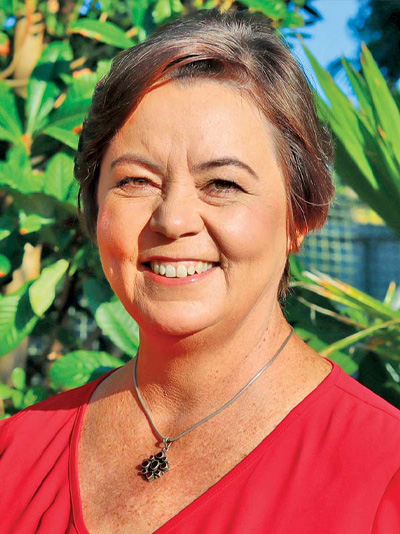
Madeleine King
Australian Labor Party Member for Brand
Currently sitting
Photo: Commonwealth of Australia, CC BY 3.0 au, via Wikimedia Commons
Seat and party history (1)
- Australian Labor Party - Brand (House) - 2 Jul 2016 to present
- Seat and party records: OpenAustralia member data.
Contact
Electorate office: (08) 9527 9377
Unit 1 & 2, 1-3 Kent Street, Rockingham WA 6168
Office details: Parliament of Australia, CC BY-NC-ND 4.0.
Contact details on aph.gov.au Profile on OpenAustraliaNot sure if this is your member? Find your electorate (AEC)
These counts cover what is on this site only. They do not measure electorate work or committee work.
Compared with other members
Madeleine King compared with all 150 sitting House members.
Questions asked in Question Time
Lower than 81% of House members- This member
- 0
- Average
- 11.2
- Median
- 12
Debates spoken in
Lower than 84% of House members- This member
- 14
- Average
- 35.9
- Median
- 30.5
Votes cast
Lower than 58% of House members- This member
- 241
- Average
- 253.0
- Median
- 265
Share of divisions voted in
Lower than 58% of House members- This member
- 73%
- Average
- 79%
- Median
- 81%
Read these with care
- The median is the middle member: half did more, half did less. It is less affected by a few very active members than the average.
- Ministers answer questions rather than ask them, and the presiding officers rarely vote, so their patterns differ.
- Government backbenchers are often given arranged "Dorothy Dixer" questions, which raises their question counts.
- Votes only record ayes and noes, so a missed vote cannot be told apart from a pair (an agreed absence).
- Counts cover only what is on this site, and do not measure electorate or committee work. New members have less history.
Question Time
No questions recorded for this member.
Question from Bob Katter
The member asked if the government agreed that a genuine reserve resource policy should mandate gas exporters to supply domestic households and industry first.
Background: The member questioned whether a gas reservation policy could reduce east coast gas prices to levels comparable with Western Australia.
Answer from Anthony Albanese; Madeleine King
The Prime Minister affirmed that gas reservation is an important part of the policy solution and noted ongoing consultations with industry. The Minister for Resources confirmed that the government is developing a national gas reservation scheme to mandate that exporters supply Australian households and businesses first. She cited the success of the Western Australian model and noted that the scheme had provided commercial confidence for projects like the Phosphate Hill fertiliser plant.
Question from Lisa Chesters
The member asked the Minister for Resources how the government was ensuring affordable gas for households and industry while creating jobs, and why this was necessary after a decade of neglect.
Background: The government released an exposure draft for a national gas reservation scheme.
Answer from Madeleine King
The Minister stated that the national gas reservation scheme would secure gas for Australian households, businesses, and industry, driving jobs in manufacturing and resources. She explained that the policy required exporters to set aside a portion of gas for domestic use before exporting the rest. She attributed the need for reform to a poor gas policy inherited from the previous government, which left Australia unprepared for global energy crises. She emphasized that the scheme would provide energy security and support local manufacturing.
Question from Tania Lawrence
The member asked how the government was working with industry and partners to build critical minerals capability and create jobs.
Background: The member asked about building sovereign critical minerals capability and creating jobs.
Answer from Madeleine King
The Minister highlighted the government's focus on building processing capacity and securing supply chains through international partnerships. She cited the US-Australia framework agreement, which supported the Sunrise Energy Metals scandium project in New South Wales, creating 100 construction jobs. She also mentioned the Alcoa gallium recovery project in Western Australia and the Arafura Nolans rare earths project in Alice Springs, supported by multiple international partners. She emphasised Australia's potential to meet global demand for critical minerals while supporting national security and net zero goals.
Question from Allegra Spender
The member asked when the government would ensure companies set aside funds to fully cover the cleanup of their oil and gas projects.
Background: The member cited the administration of a gas producer and the lack of financial provisions for environmental cleanup.
Answer from Madeleine King
The Minister addressed the specific case of the Cliff Head project, stating it was currently safe and hydrocarbon-free. She confirmed that NOPSEMA was exercising powers to address breaches of safety directions. She emphasized that taxpayers would not bear the cost of decommissioning if companies failed to plan for it, as legislation implemented in opposition now holds title holders accountable. She stated the government was pursuing all legal options to ensure responsible parties covered the costs.
Question from Andrew Wilkie
The member asked if companies had provided for mine closure costs and whether taxpayers would be left to pay for remediation.
Background: A CSIRO report predicted significant costs for mine closures, raising concerns about taxpayer liability.
Answer from Madeleine King
The Minister stated that state and territory governments regulate mining rehabilitation and require financial assurances from companies. She clarified that Commonwealth taxpayers do not foot the bill for legacy mines, which are managed by states. She highlighted Commonwealth support through research bodies like CRC TiME and examples of successful rehabilitation projects.
Question from Bob Katter
The member asked if the government would save the Mount Isa phosphate plant and 17,000 jobs, or if it would continue with a free-market approach leading to 100 per cent fertiliser imports.
Background: The member for Kennedy raised concerns about the Mount Isa diammonium phosphate plant being threatened by monopolistic gas supply issues and asked if the government would save the plant and 17,000 jobs.
Answer from Anthony Albanese; Madeleine King
The Prime Minister stated that the government had intervened in a bipartisan way with the Queensland government to defend the phosphate industry in Mount Isa, noting that without intervention, the situation would have been dire. The Minister for Resources added that the budget included a $7.5 billion package for fuel and fertiliser security. She noted that 90,000 tonnes of urea had been secured for Australia through Export Finance Australia, along with 250,000 tonnes from Indonesia. The Minister highlighted a $475 million federal commitment to the Perdaman urea facility in Karratha, including loans to Perdaman, the Pilbara Ports Authority, and the Water Corporation, aiming for urea independence by the middle of next year.
Question from Meryl Swanson
The member inquired how the government was ensuring affordable gas prices and what alternative policies were available.
Background: The member asked about government actions to secure affordable gas for households and businesses and whether alternative approaches existed.
Answer from Madeleine King
The Minister stated that the government would introduce a policy reserving 20 per cent of domestic gas to ensure more supply for Australian households and industry at affordable prices. Existing export contracts would be respected. The measure would separate domestic and international gas prices, shielding users from global volatility. The Minister criticized the previous government for allowing the Domestic Gas Security Mechanism to expire and for voting against lower gas prices and market reforms.
Question from Zaneta Mascarenhas
The member asked how the government was creating jobs and strengthening economic resilience by growing the critical minerals industry.
Background: A government member asked about job creation and economic resilience through the critical minerals industry.
Answer from Madeleine King
The Minister thanked the member and highlighted government support for the resources sector. She noted over $28 billion committed to the critical minerals industry, including the Critical Minerals Production Tax Incentive and the $1.2 billion Critical Minerals Strategic Reserve. The $3.4 billion Resourcing Australia's Prosperity program had found potential rare earth deposits. Investments included $1 billion through the National Reconstruction Fund for projects like Liontown and Alpha alumina, and $885 million in loans for six projects via the Northern Australia Infrastructure Facility. Grants of over $150 million were provided for development and research, creating over 3,000 jobs.
Question from Tania Lawrence
The member asked how the government was fulfilling its pledge to establish a critical minerals strategic reserve for job creation and supply chain diversification.
Background: The government had committed to implementing a critical minerals strategic reserve.
Answer from Madeleine King
The Minister announced the delivery of a $1.2 billion Critical Minerals Strategic Reserve, with legislation introduced to make it operational. Export Finance Australia would use new financial tools, including offtake agreements, to support projects. The reserve would first target antimony, gallium, and rare earth elements to strengthen national resilience and security.
Question from David Moncrieff
The member asked how the agreement delivers real economic benefits to Australian workers and families.
Background: The government signed a free trade agreement with the European Union.
Answer from Madeleine King
The minister stated that the agreement removes $20 billion in trade impediments and lowers tariffs on imports, including grocery items, which helps ease cost-of-living pressures. She noted that farmers and businesses would benefit from cheaper machinery and equipment sourced from the EU. The agreement also protects the use of terms like 'parmesan' and 'prosecco' for Australian products, with long phase-out periods for other terms like 'feta'.
Question from Renee Coffey
The member asked whether the Prime Minister would implement a 25 per cent tax on gas exports to address corporate profiteering linked to global conflicts.
Background: A government member asked the Prime Minister if he would impose a 25 per cent tax on gas exports, citing corporate profiteering during the Ukraine invasion and the conflict in Iran.
Answer from Madeleine King
The Minister declined to comment on budget processes ahead of the May budget. She stated that the oil and gas sector paid nearly $12 billion in levies during 2023-24. The Minister highlighted reforms to the Petroleum Resources Rent Tax (PRRT) to ensure offshore gas companies pay more tax sooner. She emphasized that these changes provide policy certainty for industry while ensuring a fair return for the Australian community. The Minister clarified that PRRT applies to offshore exporters, while onshore companies in Queensland are subject to different arrangements, but all gas companies pay significant tax and employ over 80,000 Australians.
Question from Dan Tehan
The member asked whether the Minister for Resources could guarantee that Australia would not run out of fuel due to the Iran war and whether this constituted a national crisis.
Background: The Minister for Resources refused to guarantee fuel supply on ABC radio.
Answer from Madeleine King
The Minister guaranteed that Australians are better placed to withstand international shocks under the current government than under the opposition. She criticized the opposition for voting against reforms to access fuel stockpiles and for previously storing fuel in Texas. She asserted that Labor MPs always fight in the national interest to ensure fuel supply.
Question from Matt Smith
The member asked how the government was building a future made in Australia to create jobs and boost regional economies, and how this compared to other approaches.
Background: The member asked about the government's strategy for building a future made in Australia to boost regional economies.
Answer from Madeleine King
The Minister highlighted the Perdaman urea project in Karratha, supported by the Northern Australia Infrastructure Facility with $475 million in funding. She noted the project would create 2,000 construction jobs and 200 ongoing jobs, securing fertilizer supply for farmers. She criticized the opposition for opposing the NAIF legislation and for failing to support regional development, asserting that the government was strengthening national resilience and sovereign capability.
Question from Tania Lawrence
The member asked how the government was working with partners like Canada to strengthen critical minerals supply chains and create secure jobs, and whether there were threats to the industry.
Background: The government was engaging with international partners like Canada on critical minerals supply chains.
Answer from Madeleine King
The Minister highlighted Australia and Canada as reliable mining partners committed to processing minerals domestically. She noted commitments to collaborate on standards, capital investment, strategic reserves, and geoscience expertise. She mentioned Australia's inclusion in the G7 Critical Minerals Production Alliance and cited government investments of $1 billion through the National Reconstruction Fund and $1.2 billion for a Critical Minerals Strategic Reserve, which the opposition had opposed.
Question from Elizabeth Watson-Brown
The member asked if the Prime Minister would impose a 25 per cent levy on gas exports, as the ACTU had advocated, to stop profiteering.
Background: Concerns were raised about corporate profiteering in the gas sector following geopolitical conflicts.
Answer from Madeleine King
The Minister stated that imposing new costs or taxes on the gas industry would freeze production and discourage investment needed for the transition to net zero. She emphasized that gas serves as firming capacity for renewables, a view supported by the International Energy Agency and AEMO. She noted that the industry already pays significant tax and employs many Australians.
Question from Zaneta Mascarenhas
The member asked how the government is working with trading partners to secure supply chains and create jobs, and what threatens the industry.
Background: The government is working to strengthen global supply chains for critical minerals.
Answer from Madeleine King
The Minister described Australia's leadership at the Critical Minerals Ministerial in Washington, DC, and highlighted a framework agreement with the US. She listed domestic policies including production tax credits, geoscience investment, and the Critical Minerals Strategic Reserve. She contrasted this with the opposition's inconsistent stance and lack of consultation on resource policies.
Question from Sophie Scamps
The member asked the minister to confirm that the Santos Gladstone LNG export contract would not be extended beyond 2031, as recommended by the ACCC, given its impact on domestic gas prices.
Background: Concerns were raised about gas exports driving up domestic prices. The question concerned a specific export contract with Santos.
Answer from Madeleine King
The minister stated that the government was undertaking a review of the gas market to examine policies and regulatory mechanisms. She noted that the arrangements with KOGAS and Gladstone LNG expire in 2031 and that any future arrangements must meet Australian law obligations. She did not confirm whether the contract would be extended.
Question from Trish Cook
The member asked how the government was supporting the critical minerals sector, why reliable energy was important for it, and what other proposals existed for the industry.
Background: The government is supporting the critical minerals sector, which is central to the global net zero transition. Reliable energy is identified as crucial for this sector's operations.
Answer from Madeleine King
The minister highlighted that Australia's resources are essential for the global clean energy transition. She cited Liontown's Kathleen Valley lithium project, which is 87 per cent powered by renewables, and the Bellevue gold mine, which achieved 100 per cent renewable power and net zero emissions by August. She stated that government policies were attracting private capital and creating jobs. She criticized the opposition's nuclear proposal as a rejected fantasy and noted their opposition to the production tax credit for critical minerals.
Question from Angie Bell
The member asked the Minister for Resources whether she would listen to Western Australian Premier Roger Cook regarding the EPBC bills and critical minerals, or to her left-wing backbench.
Background: Western Australian Premier Roger Cook had urged ministers not to cave to the Labor left backbench on the EPBC bills. The question focused on whether the minister would listen to the Premier or her backbench regarding critical minerals.
Answer from Madeleine King
The minister stated that she and the Premier were aligned on critical minerals development. She defended the Labor backbench as working in the interests of the resources sector and net zero goals. She highlighted the importance of EPBC reforms for critical minerals projects and the framework agreement with the United States. She criticized the opposition for doing nothing to help the resources sector or the environment, accusing them of division and chaos.
Question from Matt Smith
The member asked how the government was ensuring a strong resources sector and what proposals threatened it.
Background: The member asked about the government's support for the resources sector and job creation.
Answer from Madeleine King
The Minister stated that the government was investing $17 billion in critical minerals through a production tax incentive. She highlighted the Arafura Nolans rare earths project in Alice Springs, which would create 600 construction jobs and 350 ongoing roles. She argued that the opposition's policy chaos threatened investment in the sector.
Question from Tom French
The member asked how the government is diversifying global supply chains for critical minerals and rare earths and boosting the Australian resource sector.
Background: A government member asked the Minister for Resources how the government is diversifying global supply chains for critical minerals and rare earths to boost the domestic resource sector.
Answer from Madeleine King
The Minister stated that the government has invested $28 billion in the critical minerals industry and is leading efforts in the G7, G20, and Quad to diversify global supply. She highlighted the historic Australia-US critical minerals framework agreed upon with President Trump, representing an $8 billion pipeline of projects. She mentioned attending a G7 ministers' meeting in Toronto to discuss the critical minerals production alliance and signing a joint declaration with Canada to deepen collaboration. She also noted a heads of agreement between Ucore, Wyloo, and Hastings for the Yangibana rare earths project. The Minister emphasized that Australia's commitment to net zero emissions, environmental protection, and sustainable production secures its role in these international discussions.
Question from Dan Repacholi
The member asked how the government was collaborating with allies to secure reliable supply chains for critical minerals and rare earths.
Background: The government had recently signed a critical minerals framework agreement with the United States.
Answer from Madeleine King
The minister described the US-Australia critical minerals framework as a historic agreement to reduce dependency on unstable supply chains. She stated it would mobilise billions of dollars to support a $13 billion pipeline of projects across multiple states. She listed government investments including a $17 billion Critical Minerals Production Tax Incentive, a $5 billion Critical Minerals Facility, and a $3 billion investment in Geoscience Australia. She also mentioned $735 million invested by the NAIF and a $1.2 billion Critical Minerals Strategic Reserve.
Question from Bob Katter
The member asked if stopping migration and implementing resource reservations would save money and create economic development.
Background: The member questioned the cost of migration and proposed resource reservations and coal projects as alternatives.
Answer from Anthony Albanese; Madeleine King
The Prime Minister rejected the figures cited, noting that net overseas migration had fallen 37 per cent annually in 2024. He emphasized that diversity was a strength and that elections determined the will of the people. The Minister for Resources discussed the government's review of gas market regulations and the Critical Minerals Strategic Reserve. She noted that the opposition had previously opposed the Western Australian gas reservation policy but now supported a similar concept.
Question from Trish Cook
The member asked the Minister for Resources how the government was creating jobs through the critical minerals industry and what proposals might threaten the sector.
Background: The government invested in critical minerals to support net zero and national security.
Answer from Madeleine King
The Minister highlighted $17 billion in production tax credits and a total $28 billion investment in the resources sector. She cited NAIF investments in projects like Alpha HPA's alumina project and Arafura's rare earths project. She identified the Coalition's opposition to production tax credits and their proposal to classify gas as a critical mineral as threats to the sector. She stated no government had done more for the resources industry.
Question from Sam Lim
The member asked how the government was building a future made in Australia by supporting the resources sector.
Background: A government member asked about supporting a strong and resilient resources sector.
Answer from Madeleine King
The minister highlighted that the iron ore industry exports over $100 billion annually. She cited Mitsui's $8.4 billion investment in Rio Tinto's Rhodes Ridge project and Rio's $2 billion Western Ridge mine. She noted the government's support for critical minerals through production tax credits, citing projects in Eneabba and Kathleen Valley. She criticized the opposition for opposing these investments and trading relationships.
Question from Zaneta Mascarenhas
The member asked how the government's critical minerals policies would benefit Australia and what approaches would harm workers and the sector.
Background: A government member asked about the impact of critical minerals policies on the future of the industry.
Answer from Madeleine King
The Minister noted that the production tax credits for critical minerals had passed the Senate, providing a 10 per cent tax incentive to boost processing facilities and jobs. She cited support from industry leaders, including the CEO of the Association of Mining and Exploration Companies. She identified the opposition's vote against the legislation as the approach that would leave workers and the sector worse off.
Other Parliamentary Activity
-
Appropriation Bill (No. 1) 2026-2027; Consideration in Detail
House of Representatives · Wednesday 3 June 2026 · Consideration in Detail
Responded as minister
-
Customs Legislation Amendment (False Trade Marks Infringement Notices) Bill 2026; Third Reading
House of Representatives · Wednesday 1 April 2026 · Third Reading
Contributed to this debate
-
Export Finance and Insurance Corporation Amendment (Strategic Reserve) Bill 2026, Appropriation (Fuel Security Response) Bill (No. 1) 2025-2026, Appropriation (Fuel Security Response) Bill (No. 2) 2025-2026; Second Reading
House of Representatives · Monday 30 March 2026 · Second Reading
Responded as minister
-
Northern Australia Infrastructure Facility Amendment Bill 2026; Third Reading
House of Representatives · Wednesday 11 March 2026 · Third Reading
Contributed to this debate
-
Northern Australia Infrastructure Facility Amendment Bill 2026; Second Reading
House of Representatives · Wednesday 11 March 2026 · Second Reading
Responded as minister
-
Northern Australia Infrastructure Facility Amendment Bill 2026; Consideration in Detail
House of Representatives · Wednesday 11 March 2026 · Consideration in Detail
Responded as minister
-
Northern Australia Infrastructure Facility Amendment Bill 2026; Second Reading
House of Representatives · Wednesday 4 March 2026 · Second Reading
Opened this debate
-
Jonceski, Mr Ljupco (Luch)
House of Representatives · Tuesday 10 February 2026 · Condolence
Contributed to this debate
-
Bondi Beach Attack Victims
House of Representatives · Monday 19 January 2026 · Condolence
Contributed to this debate
-
Northern Australia; Reference to Federation Chamber
House of Representatives · Monday 24 November 2025 · Ministerial Statement
Contributed to this debate
-
Appropriation Bill (No. 1) 2025-2026; Consideration in Detail
House of Representatives · Wednesday 8 October 2025 · Consideration in Detail
Contributed to this debate · Position: support
-
Northern Australia Infrastructure Facility; Reference to Federation Chamber
House of Representatives · Thursday 28 August 2025 · Ministerial Statement
Contributed to this debate
-
His Holiness Pope Francis
House of Representatives · Wednesday 30 July 2025 · Condolence
Contributed to this debate
-
Labor Government
House of Representatives · Wednesday 23 July 2025 · Matter of Public Importance
Responded as minister
- Votes recorded
- 241
- Aye votes (58.9%)
- 142
- No votes (41.1%)
- 99
Showing the latest 50 votes.
-
Military Rehabilitation and Compensation Amendment (Veterans' Healthcare With...
17 Sep 2026 · Ayes 85, Noes 40 · Passed
VOTED AYE -
Rearrangement
17 Sep 2026 · Ayes 42, Noes 87 · Failed
VOTED NO -
Suspension of Standing and Sessional Orders
17 Sep 2026 · Ayes 42, Noes 89 · Failed
VOTED NO -
Suspension of Standing and Sessional Orders
16 Sep 2026 · Ayes 85, Noes 44 · Passed
VOTED AYE -
Private Health Insurance Amendment (Modernising the Private Health Insurance ...
16 Sep 2026 · Ayes 88, Noes 48 · Passed
VOTED AYE -
Private Health Insurance Amendment (Modernising the Private Health Insurance ...
16 Sep 2026 · Ayes 87, Noes 48 · Passed
VOTED AYE -
Private Health Insurance Amendment (Modernising the Private Health Insurance ...
16 Sep 2026 · Ayes 9, Noes 85 · Failed
VOTED NO -
Private Health Insurance Amendment (Modernising the Private Health Insurance ...
16 Sep 2026 · Ayes 86, Noes 47 · Passed
VOTED AYE -
Private Health Insurance Amendment (Modernising the Private Health Insurance ...
16 Sep 2026 · Ayes 45, Noes 87 · Failed
VOTED NO -
Private Health Insurance Amendment (Modernising the Private Health Insurance ...
16 Sep 2026 · Ayes 46, Noes 86 · Failed
VOTED NO -
Rearrangement
16 Sep 2026 · Ayes 84, Noes 13 · Passed
VOTED AYE -
Rearrangement
15 Sep 2026 · Ayes 49, Noes 87 · Failed
VOTED NO -
Consideration of Legislation
14 Sep 2026 · Ayes 43, Noes 87 · Failed
VOTED NO -
Regulatory Reform Omnibus Bill 2026; Consideration of Senate Message
14 Sep 2026 · Ayes 95, Noes 43 · Passed
VOTED AYE -
Regulatory Reform Omnibus Bill 2026; Consideration of Senate Message
14 Sep 2026 · Ayes 95, Noes 42 · Passed
VOTED AYE -
Albanese Government; Attempted Censure
14 Sep 2026 · Ayes 46, Noes 86 · Failed
VOTED NO -
Statute Update Bill 2026; Consideration of Senate Message
14 Sep 2026 · Ayes 84, Noes 48 · Passed
VOTED AYE -
Online Safety Amendment (Strengthening Enforcement for the Social Media Minim...
10 Sep 2026 · Ayes 95, Noes 37 · Passed
VOTED AYE -
Online Safety Amendment (Strengthening Enforcement for the Social Media Minim...
10 Sep 2026 · Ayes 96, Noes 36 · Passed
VOTED AYE -
Carbon Credits (Carbon Farming Initiative-Improved Forest Management in Multi...
10 Sep 2026 · Ayes 38, Noes 92 · Failed
VOTED NO -
Telecommunications Legislation Amendment (Universal Outdoor Mobile Obligation...
9 Sep 2026 · Ayes 52, Noes 86 · Failed
VOTED NO -
Gun Control
9 Sep 2026 · Ayes 88, Noes 47 · Passed
VOTED AYE -
Veterans
7 Sep 2026 · Ayes 88, Noes 49 · Passed
VOTED AYE -
Cash Distribution Framework Bill 2026; Consideration of Senate Message
20 Aug 2026 · Ayes 84, Noes 34 · Passed
VOTED AYE -
Economy
20 Aug 2026 · Ayes 41, Noes 85 · Failed
VOTED NO -
Universities Accord (Opening the Doors of Opportunity) Bill 2026; Considerati...
20 Aug 2026 · Ayes 90, Noes 36 · Passed
VOTED AYE -
Counter-Terrorism Legislation Amendment Bill 2026; Report from Federation Cha...
20 Aug 2026 · Ayes 39, Noes 90 · Failed
VOTED NO -
Australia's Foreign Relations (State and Territory Arrangements) Amendment Bi...
19 Aug 2026 · Ayes 38, Noes 80 · Failed
VOTED NO -
Combatting Illicit Tobacco Bill 2026; Report from Federation Chamber
19 Aug 2026 · Ayes 41, Noes 84 · Failed
VOTED NO -
Minister for Veterans' Affairs
19 Aug 2026 · Ayes 83, Noes 44 · Passed
VOTED AYE -
News Journalism Payments Bill 2026; Consideration in Detail
19 Aug 2026 · Ayes 11, Noes 69 · Failed
VOTED NO -
News Journalism Payments Bill 2026; Second Reading
19 Aug 2026 · Ayes 40, Noes 83 · Failed
VOTED NO -
Interactive Gambling Amendment (Gambling Reform) Bill 2026; Third Reading
18 Aug 2026 · Ayes 103, Noes 14 · Passed
VOTED AYE -
Interactive Gambling Amendment (Gambling Reform) Bill 2026; Consideration in ...
18 Aug 2026 · Ayes 102, Noes 14 · Passed
VOTED AYE -
Interactive Gambling Amendment (Gambling Reform) Bill 2026; Consideration in ...
18 Aug 2026 · Ayes 33, Noes 95 · Failed
VOTED NO -
Interactive Gambling Amendment (Gambling Reform) Bill 2026; Second Reading
18 Aug 2026 · Ayes 12, Noes 86 · Failed
VOTED NO -
Interactive Gambling Amendment (Gambling Reform) Bill 2026; Second Reading
18 Aug 2026 · Ayes 12, Noes 85 · Failed
VOTED NO -
Royal Commission on Antisemitism and Social Cohesion
18 Aug 2026 · Ayes 87, Noes 48 · Passed
VOTED AYE -
Minister for Veterans' Affairs and Defence Personnel; Attempted Censure
17 Aug 2026 · Ayes 86, Noes 43 · Passed
VOTED AYE -
Cash Distribution Framework Bill 2026; Reference to Federation Chamber
12 Aug 2026 · Ayes 40, Noes 83 · Failed
VOTED NO -
International Relations: Australia and Japan
12 Aug 2026 · Ayes 88, Noes 41 · Passed
VOTED AYE -
Aged Care Amendment (Restoring Human Override for Aged Care Needs Assessments...
11 Aug 2026 · Ayes 42, Noes 87 · Failed
VOTED NO -
Rearrangement
11 Aug 2026 · Ayes 86, Noes 47 · Passed
VOTED AYE -
Rearrangement
2 Jul 2026 · Ayes 90, Noes 42 · Passed
VOTED AYE -
Minister for Defence Industry; Attempted Censure
2 Jul 2026 · Ayes 90, Noes 41 · Passed
VOTED AYE -
Health Insurance Amendment (Incentive Payments and Other Measures) Bill 2026;...
2 Jul 2026 · Ayes 39, Noes 92 · Failed
VOTED NO -
Social Policy and Legal Affairs Committee; Reference
2 Jul 2026 · Ayes 13, Noes 78 · Failed
VOTED NO -
Foreign Affairs, Defence and Trade Joint Committee; Appointment
2 Jul 2026 · Ayes 38, Noes 101 · Failed
VOTED NO -
National Disability Insurance Scheme Amendment (Securing the NDIS for Future ...
1 Jul 2026 · Ayes 90, Noes 33 · Passed
VOTED AYE -
Health Legislation Amendment (Prescribing of Pharmaceutical Benefits) Bill 20...
1 Jul 2026 · Ayes 90, Noes 43 · Passed
VOTED AYE
About this page
This page tracks Madeleine King's parliamentary activity: questions asked and answered in Question Time, debates spoken in, and votes in divisions. Summaries are in reported speech, not transcripts; each one links to the official record.